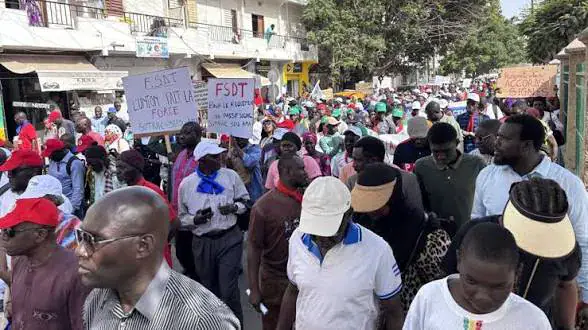
The Front Syndical pour la Défense du Travail (FSDT), a coalition of Senegalese trade unions, has announced its determination to take action against the government over unmet demands. At a press conference held at the headquarters of the Confédération des Syndicats Autonomes (CSA) in Dakar, FSDT representatives accused the government of showing contempt for their demands and failing to follow through on promises.
The FSDT's porte-parole, Yvette Keita, emphasized that the unions remain open to dialogue but will no longer accept empty promises. She warned that if there is no tangible progress, the unions will collectively decide on the next steps, including potential strikes and protests. The FSDT has scheduled tours in localities across the country to mobilize workers and outline future plans.
Elimane Diouf, secretary general of the CSA, echoed Keita's sentiments, threatening to organize marches in Dakar and other parts of the country, as well as a 72-hour strike. Diouf and other union leaders expressed frustration with the government's handling of the social crisis, citing unfulfilled commitments and a lack of progress on key issues such as equitable salaries and job security.
The FSDT has a long list of demands, including the implementation of agreements reached within the Conseil Consultatif National du Travail et de la Sécurité Sociale (CCNTSS) and the revision of the Labor Code. The unions are also seeking improvements in social protection, including the maintenance of consensus on the governance of the Code Unique de Sécurité Sociale and the suspension of the renewal process for social security institutions.
On the economic and social fronts, the FSDT is calling for a reduction in the prices of essential goods, payment of domestic debt, defense of national production, and lower taxes on wages and salaries. The unions also want a re-evaluation of retirement pensions, the generalization of the retirement age to 65, and the reintegration of workers who were unfairly dismissed.
The FSDT's demands also cover specific sectors, such as the health and education sectors, where they are seeking better working conditions and the payment of outstanding rights. In the private sector, the unions are demanding the payment of debts owed to companies in the construction and oil sectors and an end to what they see as abusive practices in the importation of food products.
The standoff between the FSDT and the government has significant implications for Senegal, where labor relations have been tense in recent years. The FSDT's actions could potentially disrupt key sectors of the economy and put pressure on the government to address the unions' demands.
Key points
- The FSDT is demanding the implementation of agreements reached within the Conseil Consultatif National du Travail et de la Sécurité Sociale (CCNTSS) and the revision of the Labor Code.
Reporting sources
- WalFadjri · WalFadjri