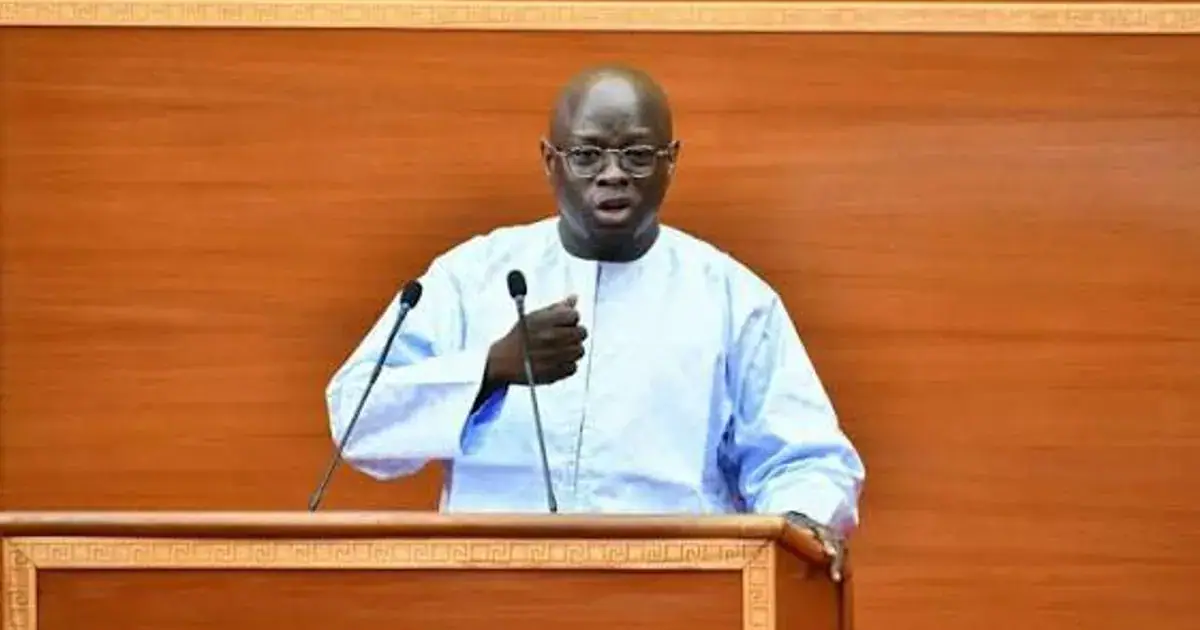
The Senegalese parliament recently witnessed heated debates over the 2026 rectified finance bill, which was ultimately rejected by lawmakers. Finance Minister Cheikh Diba vigorously defended the bill, countering opposition claims of insincere budgeting and lack of financial management rigor. During the session, Diba expressed frustration with certain interventions, prompting him to tell critics "Thiakhane bakhoul!" or "enough of childishness!"
The rejection of the rectified finance bill followed criticisms from opposition lawmakers who argued that the government's budget was insincere and lacked proper financial planning. In response, Minister Diba explained that rectified finance bills are standard tools for adjusting public finances, as outlined in Senegal's Constitution and Organic Law on Finance Laws. He emphasized that such bills allow for necessary adjustments to account for discrepancies between projected and actual revenues and expenditures.
Diba provided context on the budget execution process, highlighting that rectified finance bills are essential for realigning financial projections with reality. He stressed that the sincerity of the budget lies in accurately accounting for changes in revenue and expenditure projections. According to Diba, the current rectified finance bill aimed to address these discrepancies and ensure a more accurate financial trajectory.
The Finance Minister also addressed concerns over public revenue collection, revealing that as of September, the government had collected 173.3 billion CFA francs, falling short of the projected 762 billion CFA francs. This significant shortfall sparked concerns among lawmakers about the state's budget performance. Despite these challenges, Diba defended his team's efforts and dismissed criticism targeting his department's officials.
During the debate, Diba engaged in a tense exchange with lawmakers, citing his working relationships with former Prime Minister Ousmane Sonko and Parliamentary session President El Hadji Malick Ndiaye to demonstrate his commitment to his role. He argued that his team's performance should not be questioned, emphasizing that even his former Prime Minister would attest to their hard work.
The Finance Minister reiterated that rectified finance bills are not inherently indicative of insincere budgeting but rather a necessary response to changing financial realities. He emphasized that distinguishing between execution difficulties and accusations against the financial administration is crucial. Diba's strong reaction to opposition criticism underscores the challenges facing Senegal's financial management.
The rejection of the 2026 rectified finance bill and the ensuing debate highlight the complexities of Senegal's budgetary processes. As the government moves forward, it will need to address concerns over financial management and work towards achieving its revenue projections. The controversy underscores the importance of effective communication and collaboration between the executive and legislative branches in managing the country's finances.
Key points
- The Senegalese government faces challenges in achieving its revenue projections, with a significant shortfall in public revenue collection reported as of September.