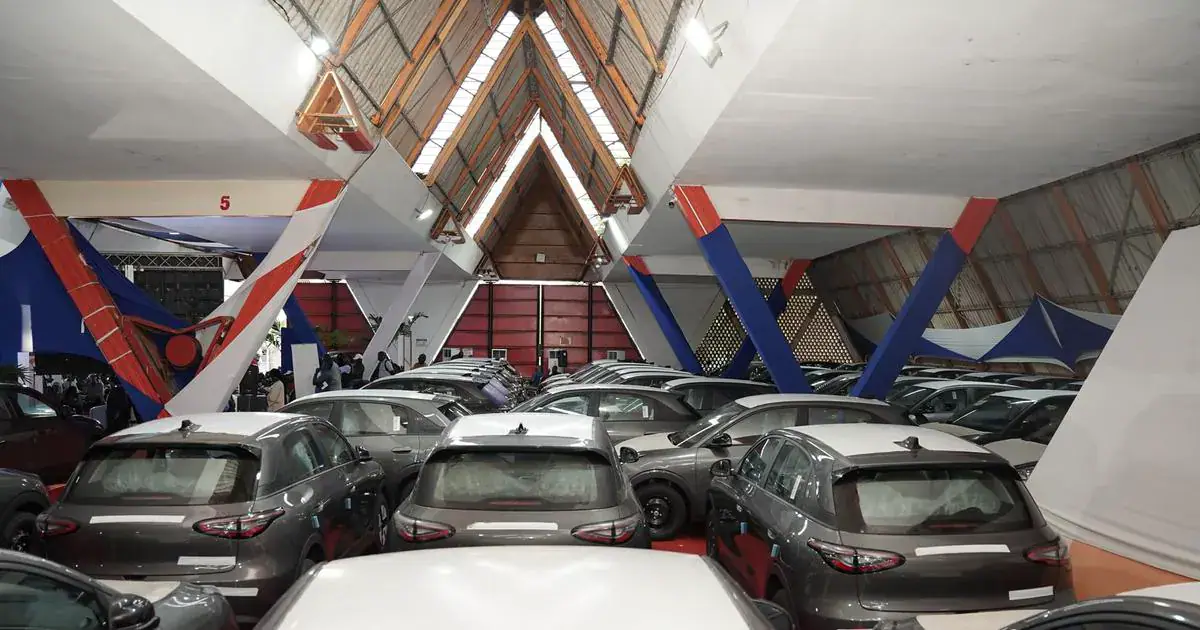
The Fonds de développement des transports terrestres (FDTT) in Senegal has officially received a first batch of 100 electric taxis, marking the beginning of a larger program aimed at modernizing urban transportation. This initiative, conducted in partnership with the Banque pour le Commerce et l’Industrie (BCI) and the Office national de formation professionnelle (ONFP), seeks to facilitate access to financing for professionals, enhance their training, and promote a transition towards less thermally-dependent urban transport.
The program, which aims to acquire 1,000 electric vehicles for transport professionals, is part of a broader effort to gradually renew the taxi fleet while integrating energy transition challenges. According to Bara Sow, administrator of the FDTT, this first step goes beyond the reception of new vehicles, as it represents an effort to experiment with a model that combines fleet renewal, sector modernization, and energy transition.
Financing is a crucial aspect of this initiative, with the FDTT partnering with the BCI to enable professionals to access these vehicles. The FDTT plans to mobilize its own resources to secure financing and facilitate the involvement of banking institutions. The goal is to have 1,000 electric taxis in circulation, requiring an estimated 13 billion CFA francs in financing. The program also aims to make it easier for drivers and sector entrepreneurs to access credit.
The FDTT places significant emphasis on training, with drivers required to undergo preparation for driving electric vehicles, as well as training on safety and management of specific situations. The ONFP provides these training sessions, which are expected to improve road practices and enhance the professionalization of the job. The project also includes a social component aimed at improving working conditions and protecting drivers.
The program does not stop at the initial 100 taxis, with the FDTT and its partners aiming to continue the gradual deployment of electric vehicles in the Senegalese market. The announced ambition is to eventually have 10,000 electric taxis. However, the development of a charging network is another significant challenge for the project, as dedicated infrastructure is needed to ensure the proper use of these vehicles.
Beyond fleet renewal, the FDTT presents this initiative as a lever for transforming urban transport, with a dual objective: improving working conditions for professionals and accompanying the sector's evolution towards less emissive mobility solutions. As Bara Sow notes, "Behind each vehicle, there is a family and an entire economy at play."
The introduction of electric taxis is seen as a strategic move to reduce the country's carbon footprint and promote sustainable transportation. With the support of partners like the BCI and ONFP, the FDTT is confident that this initiative will have a positive impact on the urban transport sector in Senegal.
Key points
- The FDTT has received a first batch of 100 electric taxis as part of a program to modernize urban transportation in Senegal.
- The program aims to acquire 1,000 electric vehicles for transport professionals and facilitate access to financing and training.
- The initiative is expected to contribute to a reduction in the country's carbon footprint and promote sustainable transportation solutions.