The Senegalese education system is struggling to overcome its structural challenges, according to a recent analysis by the Coalition of Organizations in Synergy for the Defense of Public Education (COSYDEP). The report highlights that one month after the start of the 2026-2027 school year, many schools are still dealing with the aftermath of floods, overcrowded classrooms, teacher shortages, and social tensions.
The COSYDEP analysis, based on a survey of six regions, including Dakar, Kaolack, Saint-Louis, Diourbel, Tambacounda, and Sédhiou, reveals that 52 out of 53 flooded schools have resumed classes, but 24 of them still present health risks due to stagnant water and rising groundwater. For example, at Thiaroye Gare B elementary school in Dakar, only one of two initiation course classrooms was usable, forcing two groups of students to share the available space.
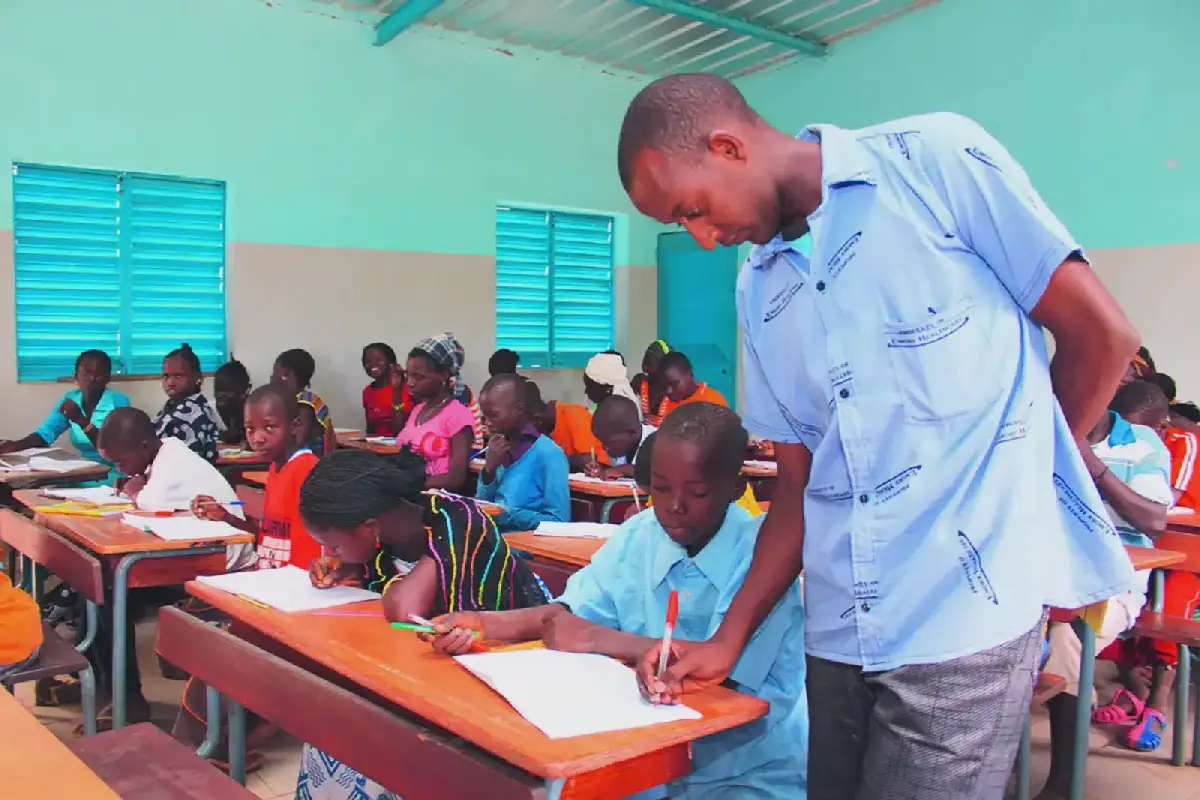
The report also raises concerns about the overcrowding of sixth-grade classes, with an average of 76 students per class this year, up from 62 in 2024-2025 and 67 in 2025-2026. This represents a 22.6% increase in two years, putting additional pressure on infrastructure, equipment, and teacher capacity. Teachers have reported difficulties with student reading levels and a decline in certain students, particularly boys.
The COSYDEP also draws attention to the issue of educational inequalities, particularly in areas prone to flooding, where students often face multiple disadvantages, including inadequate facilities, transportation difficulties, and insufficient furniture. The organization emphasizes that expanding access to college must be accompanied by measures to absorb new student numbers, such as ensuring students have mastered basic skills before progressing to secondary school.
The reform of scientific orientation is another area of concern, with the proportion of students oriented towards scientific secondary education increasing from 15% to nearly 42% between 2025-2026 and 2026-2027. The number of students in scientific streams has tripled, from 90 to 272, with an average of 68 students per class, compared to 63 in literary classes.
The COSYDEP recommends generalizing remedial courses and closely monitoring the transition rate from second to first scientific secondary education. The organization also calls for the publication of teacher deployment numbers by academy, discipline, and level to better assess the match between school needs and actual deployments.
Finally, the cost of education remains a significant burden on households, with average spending per public school student from primary to secondary school standing at 23,767 FCFA in 2026-2027, up 4.5% over two years, while private school costs have risen 8.3% to 76,790 FCFA.
Key points
- The Senegalese education system faces significant structural challenges, including flooded schools, overcrowded classrooms, and teacher shortages.
- The COSYDEP report highlights the need for measures to address these challenges and ensure that students have access to quality education.
- The organization recommends generalizing remedial courses and closely monitoring the transition rate from second to first scientific secondary education.