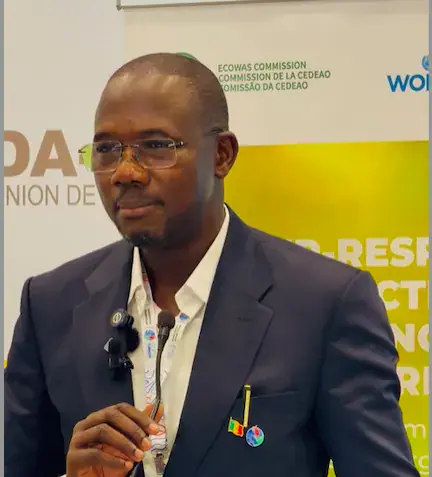
Dr. Aliou Gori Diouf, Senegal's Minister of Environment and Ecological Transition, recently participated in a panel discussion at COP31 in Antalya, Turkey. The event, titled "Promoting Women's Leadership in the Green Transition in West Africa," was organized by the Economic Community of West African States (ECOWAS) Commission and UN Women. The panel aimed to promote women's leadership in the green transition and launched a regional program focused on climate action and gender-sensitive economy in West Africa.
During the panel, Dr. Diouf emphasized that women are among the first victims of climate change effects, despite playing a crucial role in agriculture, food security, and natural resource management. Citing his 2009 research, he highlighted the inequalities that exacerbate women's vulnerability. In Senegal, women own only about 12% of agricultural land and make up 15% of farmers. Their agricultural income is estimated to be half that of men, and they face limited access to credit, technology, markets, and climate information.
Dr. Diouf stressed the need to move beyond perceiving women as mere victims of climate change. He emphasized that women are essential actors in the green transition, and their capacities must be valued. To support this, he mentioned Senegal's initiatives, including a national strategy for gender and climate change, a guide for integrating gender into adaptation planning, and the inclusion of social inclusion in the country's Nationally Determined Contribution (NDC 3.0).
The ECOWAS regional program aims to support 30 gender-sensitive reforms, establish 15 adapted financing mechanisms, and mobilize nearly $70 million in private financing for women's green activities over five years. The program targets 120,000 women and aims to enhance their economic empowerment and environmental sustainability. Dr. Diouf outlined four priorities for the program's success: facilitating women's access to financing, securing their land rights, strengthening their skills in green jobs, and improving their participation in decision-making.
Dr. Diouf stated that Senegal will collaborate with ECOWAS, UN Women, and the African Development Bank to make this initiative a success. The program is expected to be a significant lever for women's economic empowerment and acceleration of the ecological transition in West Africa. In addition to the panel discussion, Dr. Diouf engaged in other activities during COP31, including a courtesy visit from his Malian counterpart, Doumbia Mariam Tangara.
Dr. Diouf also met with Senegalese experts working in international institutions to discuss collaboration opportunities and mobilization of expertise and partnerships to support Senegal's environmental priorities. These meetings aimed to strengthen partnerships and explore ways to support Senegal's environmental goals. The minister's engagements at COP31 reflect Senegal's commitment to promoting sustainable development and addressing climate change.
The participation of Dr. Diouf in COP31 and his advocacy for women's leadership in the green transition highlight the importance of gender-sensitive approaches to addressing climate change. As the world continues to grapple with the challenges of climate change, the role of women in promoting sustainable development and environmental sustainability will be crucial. The ECOWAS regional program and Senegal's initiatives demonstrate a commitment to promoting women's empowerment and environmental sustainability in West Africa.
Key points
- Dr. Aliou Gori Diouf calls for greater involvement of women in Africa's green transition at COP31
- ECOWAS launches regional program to support women's leadership in green transition
- Senegal implements initiatives to promote gender-sensitive approaches to climate change