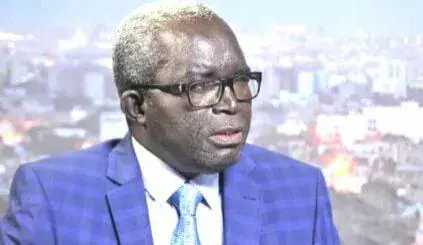
The recent 20th Sommet de la Francophonie in Phnom Penh has sparked discussions about the dynamics of international diplomacy, particularly in the context of Senegal and its role within the Francophonie. An opinion piece by Babacar Justin Ndiaye, published on Télé Futurs Médias, reflects on the interactions between French President Emmanuel Macron and Rwandan President Paul Kagamé during the summit. The article highlights the complex relationships and strategic alliances that influence diplomatic decisions.
The summit featured a performance of Molière's "Les Fourberies de Scapin" by Asian artists, which was sponsored by the Franco-Cambodian cultural center. This event was seen as a precursor to the compromise that would eventually emerge from the summit. The piece discusses the artificial tension created between Kigali and Paris, which served as a smokescreen to bolster France's credibility within the Francophonie. This move was particularly relevant given the diverse reactions of member states, including a strong response from the Democratic Republic of Congo.
A significant development from the summit was the decision regarding Louise Mushikiwabo, whose term was extended by two years. This decision was not entirely unexpected, as it had been circulating in high-level discussions within the Organisation Internationale de la Francophonie (OIF) and among French journalists close to the Élysée. However, the extent of the compromise and the reactions of various member states, including a notable dissent from the Democratic Republic of Congo, underscored the complexities of Francophonie politics.
The roles of Côte d'Ivoire and Djibouti, whose presidents Alassane Ouattara and Ismaël Omar Guelleh have longstanding military ties with France, were highlighted. Their support for Rwanda's position was seen as being subtly guided and validated by Paris. This dynamic illustrates the intricate relationships and alliances at play within the Francophonie, where national interests and historical ties significantly influence diplomatic stances.
The article also touches on the legacy of Léopold Sédar Senghor, the Senegalese president who contributed significantly to the institutional growth of the Francophonie. The current leadership of the Francophonie by Paul Kagamé, who addressed his peers in English, has raised questions about the future direction and inclusivity of the organization. This scenario prompts reflection on the evolving nature of linguistic and cultural identities within the Francophonie.
The piece critiques the current state of Senegal's diplomacy, suggesting that despite having skilled diplomats and a well-oiled diplomatic apparatus, the country's internal political instability and chaos hinder its ability to project a strong external image. The influence of domestic politics on foreign policy and the resultant challenges in asserting a unified and effective diplomatic voice are significant concerns.
Finally, the article concludes with a reflection on the implications for Senegal and the broader Francophonie. As the organization continues to evolve, the balance between maintaining linguistic and cultural heritage and embracing diversity and inclusivity will be crucial. For Senegal, navigating these dynamics effectively will require a coherent and robust diplomatic strategy that can assert its interests on the international stage.
Key points
- The Francophonie summit highlighted the complex relationships and strategic alliances that influence diplomatic decisions among member states.
- Senegal's diplomatic efforts face challenges due to internal political instability and its impact on foreign policy.
- The future direction of the Francophonie, under the leadership of Paul Kagamé, raises questions about the organization's inclusivity and linguistic identity.