Senegalese President Bassirou Diomaye Faye has been urged to enforce a ruling by the ECOWAS Court of Justice regarding Togo's contentious constitutional change. The ruling, issued on January 29, 2026, found that Togo's government, led by President Faure Gnassingbé, had carried out a coup against the constitution. The court's decision stated that the constitutional modification adopted on March 25, 2024, violated the African Charter on Democracy, Elections and Governance.
The constitutional change in Togo has been widely criticized for granting President Faure Gnassingbé unlimited power and eliminating the need for elections. The move was seen as a confirmation of the monarchization of power in the country, following a dynastic succession in 2005 that resulted in over 1,000 deaths. The ECOWAS Court of Justice ruling has been hailed as a historic decision that sets a precedent for the entire African continent.
President Diomaye Faye, who became the President-in-exercise of ECOWAS, has been urged to take necessary steps to ensure the implementation of the court's ruling. The request was made by civil society organizations and Togolese political parties, who are grouped under the National Framework for Concertation for Change (CNCC) and the "Manifeste Génération Togo" coalition. They argue that the ECOWAS court's decision must be enforced in accordance with community law and the African Charter on Democracy, Elections and Governance.
The Togolese opposition has long argued that the constitutional change was adopted without respect for the required referendum and that it undermines the country's democratic institutions. The ECOWAS court's ruling has been seen as a crucial step towards addressing the constitutional crisis in Togo. However, it remains to be seen how the ECOWAS and the African Union will follow up on the decision and ensure its implementation.
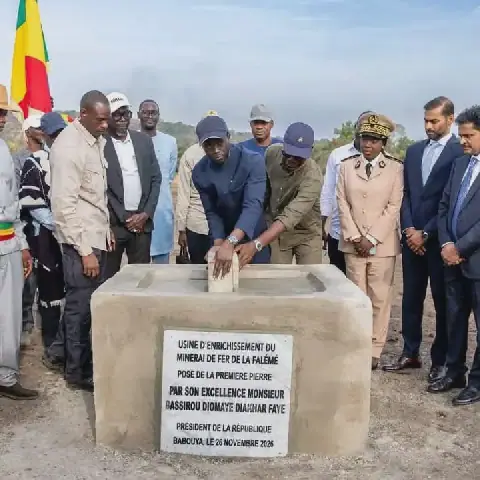
President Diomaye Faye had previously spoken out on the importance of respecting the decisions of the ECOWAS Court of Justice, stating that they deserve the respect of all parties, including member states. His stance on the matter has been seen as courageous, and his current position as President-in-exercise of ECOWAS puts him in a critical position to enforce the court's ruling.
The ECOWAS has often been firm in its response to military coups, and the court's ruling has highlighted the need for the organization to also address coups against the constitution. The case has significant implications for the region and will test the credibility of ECOWAS and the African Union in enforcing their own texts and protecting democratic institutions.
The implementation of the ECOWAS court's ruling will require President Diomaye Faye to navigate a complex and sensitive situation, given the long-standing relationship between Senegal and Togo. The outcome will be closely watched by civil society organizations, political parties, and the international community, who are eager to see whether ECOWAS and the African Union will take decisive action to protect democracy and the rule of law in the region.
Key points
- The ECOWAS Court of Justice has ruled that Togo's constitutional change was a coup against the constitution.