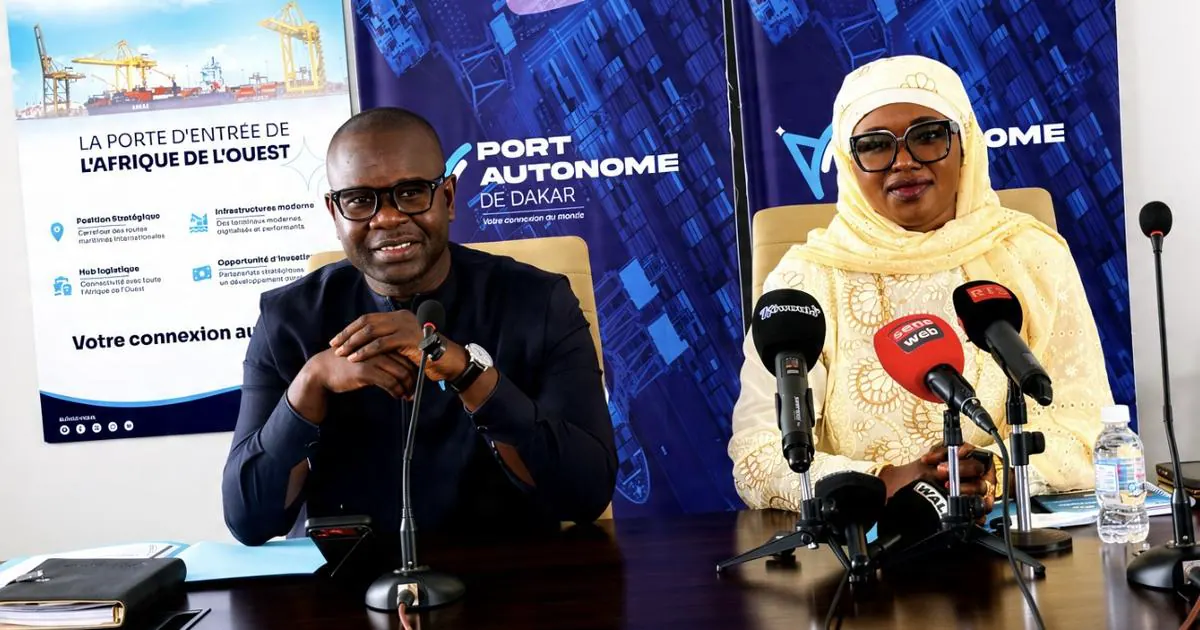
The Minister of Fisheries and Maritime Economy, Amy Mara Dièye, recently visited the Port Autonome de Dakar (PAD) to learn about the new management's plans for the port's development. The PAD's General Director, Doune Pathé Mbengue, presented the port's modernization and digitalization strategy, which aims to improve the port's infrastructure, logistics, and performance. The plan also seeks to strengthen the port's role in the regional logistics chain.
The Port of Dakar is a strategic hub in Senegal's economy, playing a central role in the country's trade. Its geographical location, situated at the intersection of major maritime routes, is a significant advantage in strengthening its position as a regional port platform. In 2025, the PAD handled 29.66 million tons of goods, with 20.03 million tons imported and 9.63 million tons exported. The port's revenue was 85.630 billion FCFA, with an operating profit of 21.587 billion FCFA.
The PAD's management aims to go beyond consolidating its current achievements and instead, embark on a systematic and significant transformation of the Senegalese port ecosystem. The plan, presented by Mamadou Ngary Bâ, Director of Strategies and Partnerships, focuses on modernizing infrastructure, logistics, terminals, and port services, as well as improving relationships with private operators. The PAD operates with several concessionaires involved in container, rolling cargo, bulk, petroleum, and liquefied natural gas activities.
The PAD's strategy also involves strengthening Senegal's presence in the capital of companies operating under concessions, allowing the country to play a greater role in the governance and development of these activities. The development of the multifunctional Port of Ndayane is another key aspect of the port's strategy, which will provide a much larger capacity than the historic Port of Dakar. The two ports are expected to complement each other, with the goal of supporting the growth of trade and meeting regional commerce needs.
The Port of Dakar plays a vital role in transporting goods to the interior of the sub-region, particularly to Mali. The port has dedicated facilities for Malian traffic and a commercial representation in Bamako. Strengthening this corridor is crucial to the PAD's regional ambitions. The port's modernization and digitalization plans also prioritize improving operational efficiency and fluidity, as well as enhancing the competence and employability of human resources.
Minister Amy Mara Dièye emphasized the importance of modernizing the port's infrastructure, digitalizing operations, and improving the fluidity of port operations. She also stressed the need for an integrated approach that brings together port infrastructure, maritime transport, fishing, aquaculture, logistics, and maritime services. The Minister called for the development of skills and employment opportunities in the maritime and port sectors, enabling the blue economy to become a genuine space for opportunities and jobs.
The PAD's General Director, Doune Pathé Mbengue, requested the support of the ministry in implementing the port's transformation plan. The plan aims to drive the port's growth, innovation, and value creation, ultimately contributing to Senegal's economic development. With the PAD's strategic importance in the region, its modernization and digitalization plans are expected to have a significant impact on the country's economy and trade.
Key points
- The Port Autonome de Dakar handled 29.66 million tons of goods in 2025.
- The PAD's modernization plan prioritizes digitalization, logistics, and performance.
- The development of the Port of Ndayane will provide a larger capacity than the historic Port of Dakar.