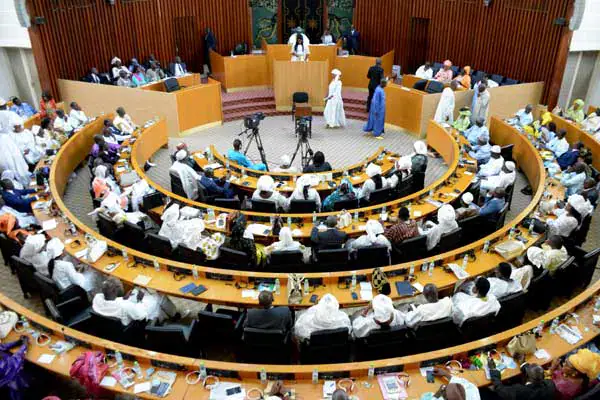
Senegal's Commission of Finance and Budgetary Control has rejected the government's proposed 2027 budget bill, citing inconsistencies and insufficient data. The commission, after hearing from relevant ministers, expressed concerns over the bill's coherence and feasibility. While some members praised efforts to reduce the budget deficit from 7.6% to 4.7% of GDP, others pointed out significant shortcomings.
The commission identified major discrepancies between the bill, the Economic and Financial Report (REF), and budget annexes. These inconsistencies relate to growth forecasts, tax revenues, current transfers, internal resource investments, and budget deficits. For example, the bill and annexes present different deficit figures, ranging from 1,341 billion to 1,351.7 billion FCFA.
The commission also criticized the government's growth rate projections, which vary between 1.5% and 2.4%. This lack of clarity affects the overall macroeconomic framework, making it difficult to assess the bill's feasibility. The commission demanded that the government harmonize its data and provide revised documents.
Another issue is the connection between the 2027 budget bill and the 2026 rectified budget bill, which was previously invalidated by the National Assembly. The commission noted that the new bill relies heavily on adjustments from the invalidated text, with over 120 references to it. This raises concerns about the 2027 bill's legitimacy.
The government was urged to clarify its intentions regarding the 2026 rectified budget bill, either by submitting a new bill or using decrees that can be regularized later. The commission also expressed disappointment over the late submission of the 2026 rectified budget bill.
Despite these concerns, the commission emphasized its willingness to support the government's efforts to preserve public debt viability, in consultation with technical and financial partners like the IMF. The commission's decision reflects its commitment to ensuring that the budget bill is coherent, feasible, and aligns with the country's economic goals.
The rejection of the 2027 budget bill is a setback for the government, which will need to address the commission's concerns and resubmit a revised bill. The commission's scrutiny highlights the importance of transparency and accountability in budget planning, and the need for the government to provide accurate and consistent data.
Key points
- The commission rejected the 2027 budget bill due to inconsistencies and insufficient data.
- The government's growth rate projections vary between 1.5% and 2.4%, affecting the bill's feasibility.
- The commission demands that the government harmonize its data and provide revised documents.
Reporting sources
- WalFadjri · WalFadjri