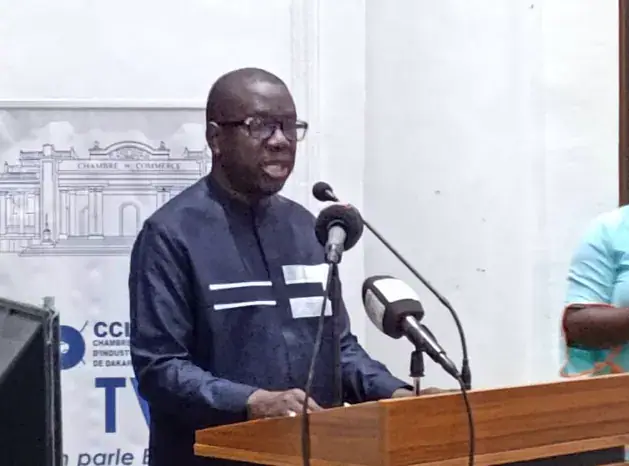
The Chamber of Commerce, Industry, and Agriculture of Dakar (CCIAD) recently hosted a presentation day for agro-food and culinary innovations in partnership with the University Gaston Berger (UGB) of Saint-Louis and Wallonie-Bruxelles International. The event, held on November 26, 2026, brought together researchers and local transformers to bridge the gap between scientific research and practical applications. The focus was on innovative fermentation processes for dried fish (Guédji) and milk, two staples of Senegal's gastronomic heritage and food economy.
The partnership aims to address the challenges faced by traditional transformation methods, including limited control over fermentation, sanitary safety, conservation, and standardization. These limitations hinder access to modern markets. Dr. Mbaye Chimère Ndiaye, Secretary General of CCIAD, emphasized the need to transition from artisanal to more structured and professional activities while preserving the richness of Senegal's culinary traditions.
The project involves a collaboration between the University of Liège (Belgium) and UGB, focusing on transferring technologies and competencies between Belgian and Senegalese researchers. The goal is to deploy "starter cultures" developed from local protective bacteria to ensure the sanitary and nutritional quality of Guédji and milk products. Awa Dia Sow, Director of UGB's Dakar annex, explained that this approach will help secure fermentation processes.
The partnership also involves Wallonie-Bruxelles International, which praised CCIAD's credibility in connecting research, production, and market stakeholders. This connection is crucial for guaranteeing the socio-economic viability of scientific discoveries. Ibrahima Diouf, representative of Wallonie-Bruxelles International's General Delegate in Dakar, highlighted the importance of this collaboration.
The event concluded with a tasting session, where economic and industrial actors tested and validated the organoleptic quality of dishes prepared using these new controlled fermentation processes. This step is essential in ensuring that the innovations meet market demands and consumer expectations.
The CCIAD, UGB, and Wallonie-Bruxelles partnership demonstrates a commitment to modernizing Senegal's agro-food sector while preserving its cultural heritage. By industrializing fermentation processes, the partners aim to improve product quality, safety, and market access, ultimately contributing to the country's economic development.
The success of this partnership will depend on the effective transfer of technologies and competencies between researchers and local transformers. If successful, it could serve as a model for similar initiatives in other sectors, promoting sustainable economic growth and food security in Senegal.
Key points
- The partnership aims to industrialize fermentation processes for dried fish and milk products.
- The project involves a collaboration between the University of Liège, UGB, and Wallonie-Bruxelles International.
- The goal is to improve product quality, safety, and market access while preserving Senegal's culinary traditions.