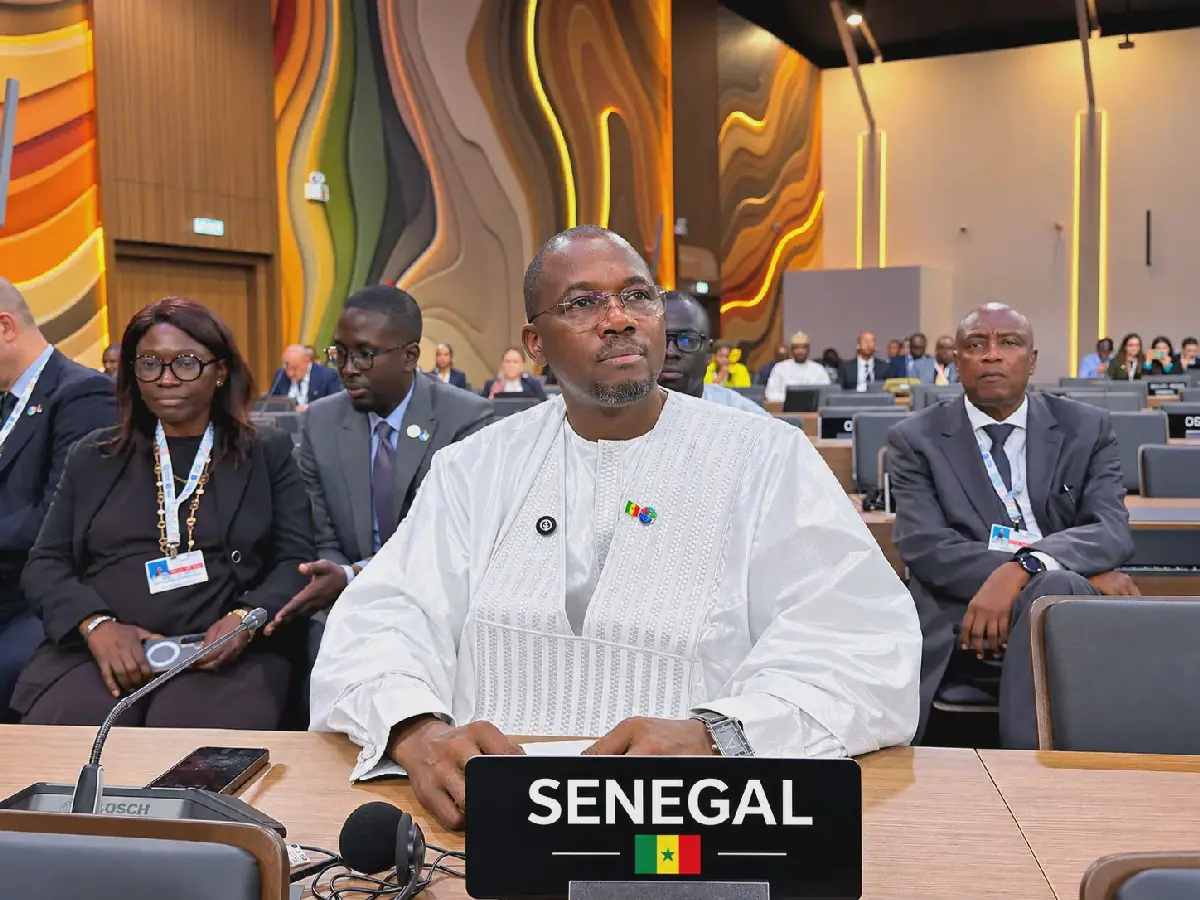
The 31st Conference of the Parties (COP31) in Antalya marks a critical moment for global environmental governance. Dr. Aliou Gori Diouf, in his opinion piece, reflects on Africa's role in defining international environmental policies and its capacity to assert its priorities and interests. Africa has actively participated in global efforts to combat climate change, preserve biodiversity, and protect natural resources for decades. However, the continent faces significant challenges, including recurrent droughts, floods, coastal erosion, desertification, and land degradation, which threaten its economies, ecosystems, and human well-being.
Dr. Diouf highlights the paradox that Africa, which contributes relatively little to global greenhouse gas emissions, is among the regions most severely affected by climate change. He stresses the need for climate justice, calling for international solidarity to translate into predictable, accessible, and effectively mobilized financial commitments, adapted technology transfers, and sustained institutional and scientific capacity building in African countries. The African continent seeks recognition of its rights, respect for historical responsibilities, and the necessary means to pursue its own ecological transition.
The author advocates for a shift from defensive diplomacy to a proactive African diplomacy that can constructively engage in defining the rules and orientations that affect its future. This involves leveraging Africa's natural resources, renewable energy potential, biodiversity, and human capacities to drive structural transformation, economic sovereignty, innovation, and job creation. The transition to a green economy should not be seen as a new constraint on African economies but as a powerful lever for sustainable development.
For Senegal, this vision aligns with its Vision Sénégal 2050, which prioritizes sovereignty, sustainability, and the valorization of natural capital. The country aims to make ecological transition a pillar of its economic and social transformation, balancing environmental protection, energy security, industrial development, and improved living conditions. Dr. Diouf emphasizes that international climate policies must consider the economic and social realities of developing countries.
The article highlights the need for fair and adapted financing mechanisms to support Africa's transition to a low-carbon economy. Dr. Diouf criticizes the excessive reliance on loans, which can exacerbate debt in beneficiary countries, and stresses that new international commercial and environmental rules should not hinder the competitiveness of African economies. The global ecological transition should create opportunities for African producers, promote local resource transformation, and enable the continent to capture a greater share of the value created.
Dr. Diouf calls for an independent review of over thirty years of international environmental negotiations to assess commitments, mobilized financing, technology transfers, and the economic costs borne by African countries. This review, led by the African Union and the African Ministerial Conference on the Environment (AMCEN), should result in a common African doctrine based on clearly defined priorities, shared red lines, and collective negotiation capacity. African unity must be backed by scientific, legal, economic, and financial expertise to become a powerful instrument for advancing the continent's interests.
Dr. Diouf underscores three fundamental requirements for Africa: climate justice, ecological sovereignty, and value creation on the continent. Climate justice demands respect for the principle of common but differentiated responsibilities and respective capacities. Ecological sovereignty requires African states to control their development choices, natural resources, and transition paths. Value creation involves protecting natural heritage alongside productive investments, competency transfers, technological innovations, and decent jobs for African youth. The goal is to transform Africa from a vulnerable continent to a strategic partner in constructing global environmental solutions.
Key points
- Dr. Aliou Gori Diouf emphasizes the need for climate justice and ecological sovereignty in Africa.
- The continent requires predictable and accessible financial commitments to support its ecological transition.
- Africa must become a strategic partner in constructing global environmental solutions, rather than just a beneficiary of international assistance.