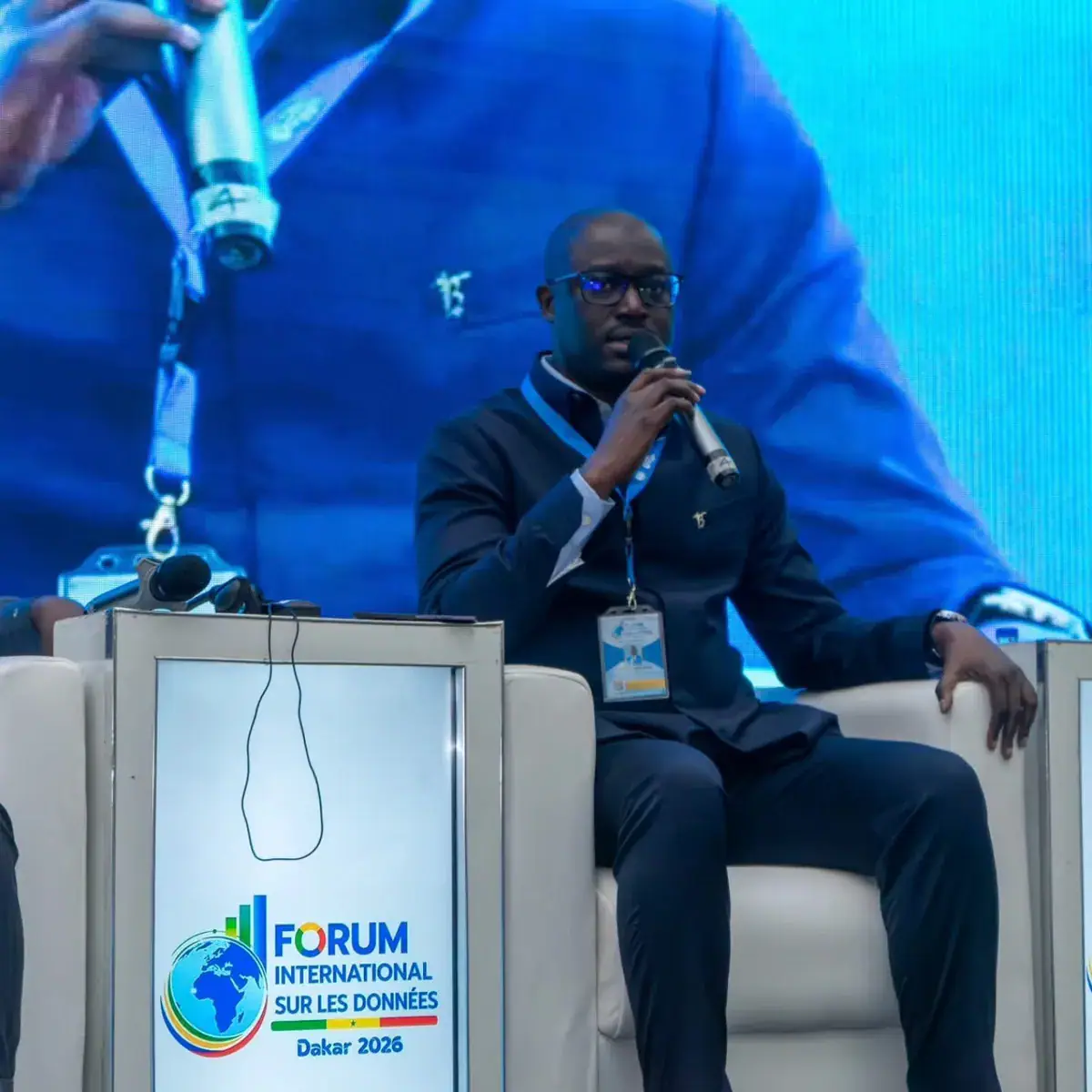
The Director General of Senegal's telecommunications regulator, ARTP, Cheikh Tidiane Sarr, has called for the integration of cellular and geospatial data into national statistical production. Speaking at the International Data Forum organized by the National Agency for Statistics and Demography (ANSD) on November 24, 2026, Sarr highlighted the potential of these data sources to improve knowledge of territories and inform public policies. The forum's panel 5 focused on "new data sources: integration of geospatial data and cellular data, what opportunities?"
According to the ARTP, Senegal had nearly 23.9 million active mobile lines and over 23.3 million Internet lines as of December 2025. The regulator believes that these data, when exploited for statistical purposes, can be used in four key areas: anticipating population movements during major events, improving territorial access to healthcare, better tracking population movements during floods, and supporting the design of public infrastructure and services.
The ARTP aims to strengthen its collaboration with the ANSD and other stakeholders, leveraging its expertise in networks and data collection and processing capabilities, particularly with MONIX. To achieve this, the regulator has set three requirements: data reliability, protection of personal data, and technological innovation. By integrating telecom data into national statistics, the ARTP seeks to transform the potential of these data into reliable and useful information for public decision-making.
Sarr recommended addressing the issue at the community level and encouraging the construction of big data infrastructure for the production, processing, and sharing of public statistics data. This approach would enable the creation of a robust data ecosystem that supports informed decision-making and benefits the population and Senegal's development.
The ARTP's push for integrating telecom data into national statistics aligns with Senegal's efforts to enhance data sovereignty. Recently, the Prime Minister announced a Statistics Development Fund, which aims to support the development of a robust statistical system in the country. The fund is expected to provide resources for data collection, processing, and analysis, ultimately contributing to more informed decision-making.
The use of telecom data in national statistics has the potential to improve the accuracy and timeliness of statistical data, enabling policymakers to make more informed decisions. By leveraging these data sources, Senegal can enhance its statistical capabilities and support sustainable development. The ARTP's efforts in this area are expected to contribute to the country's statistical development and inform policies that benefit the population.
The International Data Forum provided a platform for stakeholders to discuss the opportunities and challenges associated with integrating new data sources into national statistics. The forum highlighted the need for collaboration and coordination among stakeholders to ensure the effective use of these data sources. As Senegal continues to explore new ways to leverage data for development, the ARTP's push for integrating telecom data into national statistics is expected to play a key role.
Key points
- The ARTP is advocating for the use of cellular and geospatial data in national statistics to improve knowledge of territories and inform public policies.
- Senegal had nearly 23.9 million active mobile lines and over 23.3 million Internet lines as of December 2025.
- The ARTP aims to strengthen its collaboration with the ANSD and other stakeholders to leverage its expertise in networks and data collection and processing capabilities.