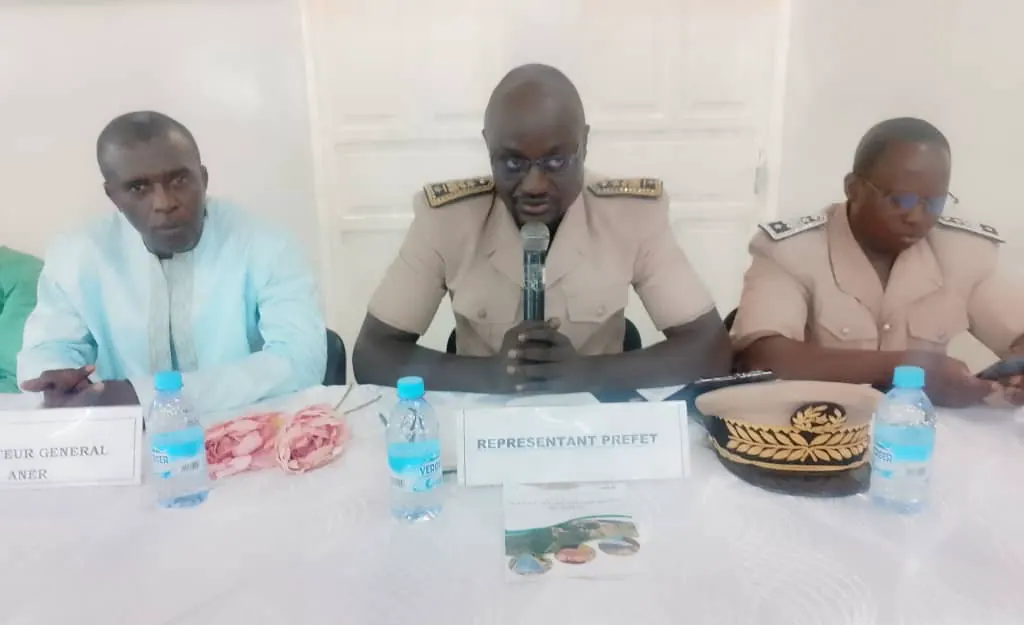
The Senegalese national renewable energy agency, ANER, has initiated a project to deploy solar-powered irrigation systems across the country. An atelier was held at the Centre interprofessionnel pour la formation aux métiers de l'agriculture (Cifa) in the village of Ndiaye Mberess, in the commune of Diama, to discuss the project with stakeholders. The goal is to facilitate access to water for farmers, reducing production costs and enhancing food security.
The project aims to address the challenges faced by farmers in accessing affordable energy and water. According to ANER's director general, Professor Diouma Kobor, one of the fundamental problems in Senegal is access to affordable food. He noted that farmers struggle to compete with imported products, such as rice, due to high water and energy costs. The solar-powered irrigation systems are expected to provide a cost-effective solution.
The ANER project has two main objectives: to support farmers in accessing solar-powered irrigation systems and to develop solar-powered cold storage facilities for product conservation. Professor Kobor emphasized that the initial investment in solar-powered irrigation systems can be a barrier, but the agency is working with financial partners to make the equipment accessible with a lower monthly cost.
The project has already secured support from international partners, including the International Solar Alliance (ISA), which has committed to installing 2,000 to 2,500 solar-powered pumps. The German Development Cooperation (GIZ) and other donors are also involved in the project. The program is national in scope, with the Saint-Louis region being a priority target due to its agricultural potential.
The project's impact is expected to be significant, with the potential to increase food security, reduce production costs, and enhance the competitiveness of Senegalese farmers. The project's focus on rural areas is also expected to contribute to the country's rural electrification goals, with the current rate of rural electrification standing at 65%, compared to 98% in urban areas.
Local authorities have welcomed the initiative, with the deputy prefect of the Dagana department, Landing Diatta, emphasizing the importance of water control for agricultural production. He noted that the solar-powered irrigation systems will contribute to food sovereignty, reduce production costs, and enhance self-sufficiency.
The ANER project marks a significant step towards a more sustainable and equitable agricultural sector in Senegal. With the support of international partners, the project is expected to have a lasting impact on the country's agricultural sector and contribute to its economic development.
Key points
- The project aims to install 2,000 to 2,500 solar-powered pumps across Senegal.
- The program is national in scope, with a focus on rural areas.
- The project is expected to reduce production costs and enhance food security for Senegalese farmers.