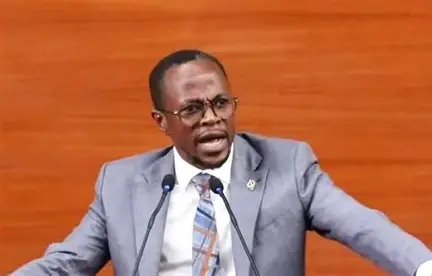
On October 13, 2026, Abdou MBOW, a member of the Alliance for the Republic (APR), strongly criticized Ousmane SONKO's approach to parliamentary inquiry commissions. MBOW accused SONKO, the President of the National Assembly, of instrumentalizing the institution for political purposes, particularly in cases involving the Senegalese Rural Electrification Agency (ASER) and special funds. MBOW expressed concerns that SONKO's actions could undermine the institution's credibility.
In a statement titled "Ousmane SONKO's Obstinacy in the Process of Vacuolization of Our Parliamentary Institution," MBOW argued that SONKO has confused institutional authority with partisan interests. He claimed that announcements of parliamentary inquiries are often accompanied by public accusations targeting political opponents. MBOW emphasized that the National Assembly is not an extension of the PASTEF party, nor is it a personal tribunal or a tool for SONKO's majority.
MBOW specifically contested the proposed inquiry into 37 billion CFA francs related to ASER. He argued that a parliamentary commission cannot investigate a case already examined by the judiciary. Citing Article 54 of the National Assembly's internal regulations and the separation of powers, MBOW insisted that Parliament must respect ongoing judicial procedures. This stance highlights the tension between the legislative and judicial branches in Senegal.
Furthermore, MBOW criticized the announcement of an inquiry into special funds of institutions from 2012 to 2021. He accused SONKO of limiting the investigation to this period, thereby excluding the management of the current majority since 2024. MBOW questioned SONKO's explanation, which reportedly attributed the limitation to a slip-up. This selective approach to accountability has raised concerns about the impartiality of the parliamentary inquiries.
The APR lawmaker also accused the majority of confusing parliamentary control with political score-settling. He recalled that the National Assembly's responsibilities include voting laws, controlling government action, representing citizens, and evaluating public policies, not conducting audits within other institutions. MBOW's criticism reflects a broader debate about the role of Parliament in Senegal's governance.
MBOW's statement concluded with a challenge to SONKO, suggesting that the President of the National Assembly is selectively targeting past administrations while resisting scrutiny of the current government's actions since 2024. This confrontation highlights the complexities of Senegal's parliamentary system and the delicate balance of power between different branches of government. The controversy may have implications for the country's democratic processes.
The dispute between MBOW and SONKO has sparked a national conversation about the proper use of parliamentary powers and the importance of maintaining institutional integrity. As the situation unfolds, it will be crucial to monitor the National Assembly's actions and their impact on Senegal's governance and democratic institutions. Key stakeholders, including citizens and civil society organizations, will be watching closely.
Key points
- Abdou MBOW criticizes Ousmane SONKO for allegedly misusing parliamentary inquiry commissions for political gain.
- MBOW contests the proposed inquiry into 37 billion CFA francs related to ASER, citing ongoing judicial procedures.
- The controversy highlights the tension between the legislative and judicial branches in Senegal, with implications for the country's democratic processes.