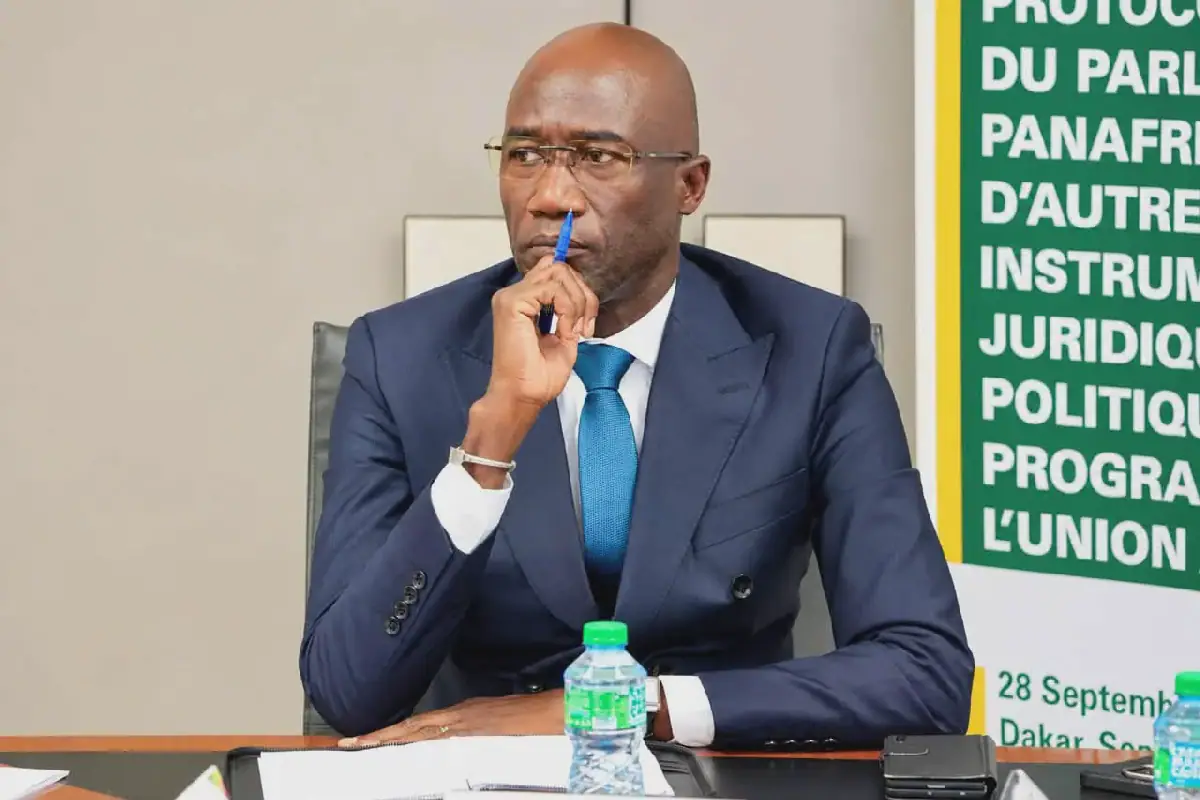
Senegal's Justice Minister, Moussa Sarr, has presented the 2027 budget plan for the Ministry of Justice, which stands at 85.76 billion FCFA in payment credits, representing a 6.2% increase from the 2026 budget. This increase is attributed mainly to expenses for goods and services, which rose by 14.3 billion FCFA, and personnel expenses, which increased by 1.49 billion FCFA. The budget plan was presented to the Finance and Budget Control Commission, expanded to include the Law Commission.
The 2027 budget plan for the Ministry of Justice allocates 46.6% of its credits to personnel expenses, followed by goods and services at 35.6%, investments at 13.8%, and current transfers at 4.1%. The Judicial Justice program is set to receive 32.54 billion FCFA, marking a 24.3% increase, largely due to the JUCICOM project, which saw a 61% increase. The Child Judicial Protection program will receive 9.22 billion FCFA, a 13.2% increase, while the Good Governance and Human Rights program will receive 1.12 billion FCFA, a 47.6% increase.
In contrast, the Penitentiary Administration program will see a 5.4% decrease in funding, with a budget of 29.24 billion FCFA, while the Steering program will experience a 7.5% decrease, with a budget of 13.44 billion FCFA. For detainees, 6.27 billion FCFA has been allocated for food and 1.14 billion FCFA for healthcare. The digitization of justice services will continue, with 1.15 billion FCFA allocated for 2027, as part of a global cost of 10.7 billion FCFA for 2025-2029.
Minister Moussa Sarr also highlighted his department's achievements in 2026, including 3,595 presidential pardons, 243 conditional releases, 918 sentence reductions, 7,049 detainees trained or in apprenticeships, and 15,533 cases handled by justice houses. He emphasized the need for increased resources, stating that the Ministry of Justice requires "more means" to effectively carry out its duties.
The digitization of justice services is a key aspect of the Ministry's plans, with the "eJustice" platform launched on September 10, allowing for the dematerialization of procedures in pilot jurisdictions. This initiative aims to improve the efficiency and accessibility of justice services in Senegal.
The Minister's call for increased resources is set against a backdrop of challenging public finances. Despite this, the Ministry of Justice is working to improve its services, including the protection of children's rights and the promotion of good governance and human rights.
As the Ministry of Justice continues to implement its 2027 budget plan, it will be crucial to monitor its progress and assess the impact of increased funding on the delivery of justice services in Senegal. The Ministry's commitment to digitization and improved resource allocation will likely play a significant role in shaping the future of justice in the country.
Key points
- The 2027 budget plan for Senegal's Ministry of Justice represents a 6.2% increase from the 2026 budget, with a focus on personnel expenses, goods and services, and investments.