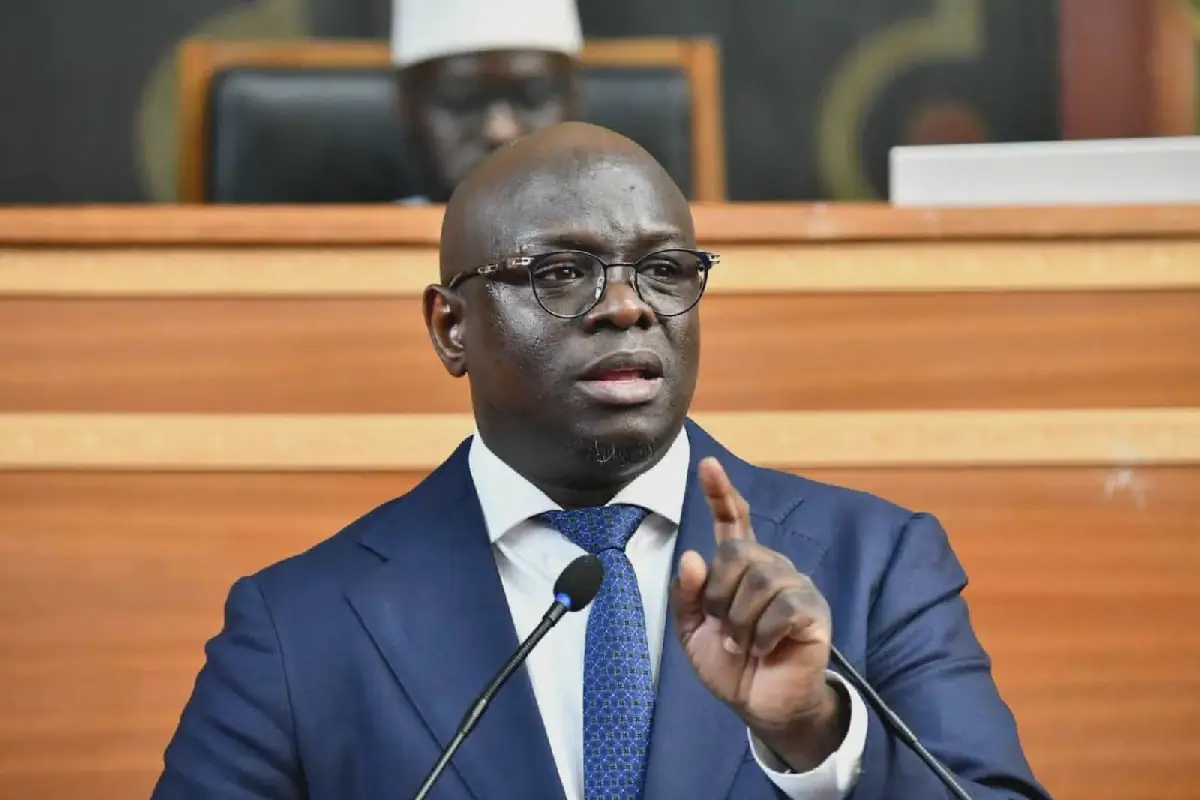
Senegal's Minister of Economy, Finance and Planning, Cheikh Diba, recently presented the 2027 budget plan to the National Assembly, emphasizing the government's commitment to financing socio-economic priorities without increasing debt. The plan aims to mobilize more domestic resources and optimize spending. Diba highlighted that the budget's success will be judged by its impact on the population and the confidence it inspires.
The 2027 budget projects a 5.8% increase in domestic revenue, excluding hydrocarbons. This growth is deemed prudent, considering the country's fiscal potential. The government aims to broaden the tax base, ensure equitable contributions, and combat fraud without burdening compliant taxpayers. The new General Tax Code and Customs Code will come into effect in 2027, modernizing the fiscal and customs systems.
A key aspect of the budget is the allocation of 480 billion FCFA to settle outstanding debts to the private sector. This move is expected to inject liquidity into the economy, stimulate private investment, and preserve jobs. Between 2025 and 2027, the government plans to clear 1,280 billion FCFA in debt owed to the private sector. The payments will be made transparently, based on objective criteria.
The government is also implementing reforms in the parapublic sector, focusing on performance contracts and reliable financial information. Companies like SONACOS, SODEFITEX, SAED, SODAGRI, and Air Sénégal will undergo restructuring to reduce their dependence on subsidies. A relaunch fund, capitalized at 22 billion FCFA, has been established to support companies in difficulty.
To improve debt management, the government has created a General Directorate for Financing and Debt. All external financing will be executed through the SYSBUDGEP application, ensuring that every borrowed franc is recorded, tracked, and justified. This move aims to enhance transparency and credibility in public finances.
The 2027 budget outlines revenue of 5,653.9 billion FCFA and expenditures of 7,005.6 billion FCFA, resulting in a deficit of 1,351.7 billion FCFA, or 4.7% of GDP. The primary deficit is expected to be 0.2% of GDP. Minister Diba emphasized that the budget meets the requirements of rigor, sincerity, and transparency.
The minister invited parliamentarians to examine the budget and grant their confidence, highlighting that approving the budget is not just about validating an accounting balance but also about endorsing a national commitment to restoring trust, liberating productive energies, and building a common, just, and solidarity-based future.
Key points
- The 2027 budget allocates 480 billion FCFA to settle outstanding debts to the private sector.
- The government aims to broaden the tax base and combat fraud without burdening compliant taxpayers.
- The new General Tax Code and Customs Code will modernize the fiscal and customs systems in 2027.