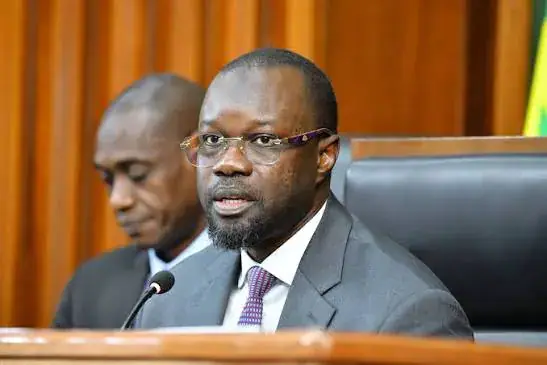
The Senegalese government's 2026 budget rectification bill will be reviewed by the National Assembly on November 3, 2026, at 10 am. This comes after two successive rejections in the Finance and Budget Control Committee, sparking uncertainty about the bill's outcome. The bill's examination began on October 20, with the ruling coalition, PASTEF-Les Patriotes, expressing disagreements with the government over budget allocations, financing modalities, and guarantees sought by lawmakers.
On October 23, the Finance Committee rejected the bill in its entirety, along with two government-proposed amendments. In response, Prime Minister Ousmane Sonko defended the government's budget choices on October 25, urging lawmakers to propose concrete alternatives. The government then requested a referral of the bill back to committee, under Article 84 of the internal regulations, to continue discussions. However, this attempt at rapprochement did not yield results, with the committee rejecting the bill for a second time on October 30.
Despite these challenges, the government remains committed to pushing the bill through. During a Council of Ministers meeting on October 28, 2026, President Bassirou Diomaye Faye emphasized the need to ensure the continuity of public authorities. He instructed the Prime Minister to take necessary legal steps to implement policies outlined in the 2026 budget rectification bill and the 2027 budget bill. This presidential directive reflects the government's determination to maintain the continuity of its action in a context marked by disagreements over the budget rectification.
The rejection of the bill in committee does not automatically determine the outcome of the vote in the plenary session. However, given the positions expressed so far, a new parliamentary setback remains possible. The government's ability to secure the adoption of its bill or face a third rejection will be known on November 3. The National Assembly's decision will have significant implications for the government's policy implementation and the country's budget.
The Finance Committee's rejection of the bill was based on concerns over budget allocations, financing modalities, and guarantees. The committee sought additional information on energy subsidies, family security grants, and priority spending. Despite the government's efforts to address these concerns, the committee remained unconvinced. The government's explanations did not suffice to win over the lawmakers, leading to the second rejection.
The 2026 budget rectification bill is crucial for the government's policy implementation and the country's budget. The bill's adoption will enable the government to reallocate resources, address emerging priorities, and ensure the continuity of public services. A rejection of the bill could have significant implications for the country's economic and social development, as it may delay or hinder the implementation of key policies and programs.
The National Assembly's review of the bill on November 3 will be a critical step in determining the country's budget and policy trajectory. The government's efforts to secure the adoption of its bill will be closely watched by stakeholders, including lawmakers, civil society organizations, and the general public. The outcome of the vote will have far-reaching implications for Senegal's economic and social development.
Key points
- The Senegalese government's 2026 budget rectification bill will be reviewed by the National Assembly on November 3, 2026.
- The bill was rejected twice in the Finance and Budget Control Committee due to concerns over budget allocations and financing modalities.
- The government's ability to secure the adoption of its bill will have significant implications for its policy implementation and the country's budget.