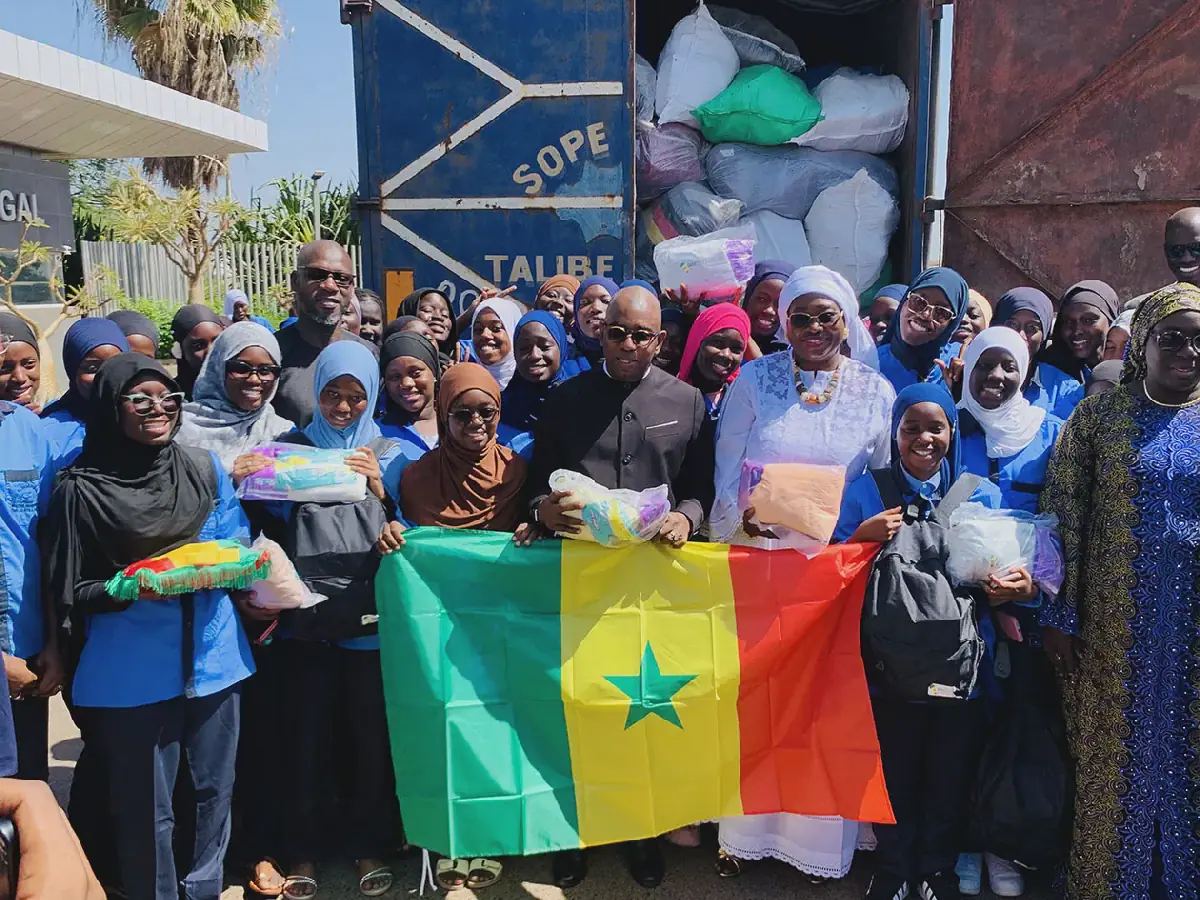
The Senegalese government has received a significant shipment of 34,818 school and menstrual hygiene kits as part of its efforts to improve girls' education. The kits, valued at nearly 500 million FCFA, were handed over to 11 academies across the country. This initiative is part of the "Maintaining Girls in School" project, implemented by the Ministry of Education and the Ministry of Family, Social Action, and Solidarity, with support from the World Bank and the United Nations Population Fund.
The Minister of Education, Moustapha Guirassy, and his counterpart, Minister of Family, Social Action, and Solidarity, Marie Angélique Diouf, jointly launched the distribution of the kits. Guirassy emphasized that access to education is not just about enrolling in school but also about providing a conducive and secure learning environment. He acknowledged that many girls, especially those from vulnerable families, face challenges that can disrupt their education, including poverty, lack of school supplies, and menstrual hygiene difficulties.
Minister Diouf, who has 16 years of experience in the education sector as a teacher and director of studies, highlighted the specific challenges girls face during menstruation. She noted that many girls miss school due to lack of access to sanitary products and the stigma associated with menstruation. Diouf advocated for a dedicated budget line for sanitary kits in schools and the provision of kits in school infirmaries to help girls manage their menstruation with dignity.
The "Maintaining Girls in School" project aims to address the obstacles that prevent girls from continuing their education. The project involves a coordinated approach, including the distribution of school and menstrual hygiene kits, awareness-raising activities, and community engagement. The initiative targets 11 academies and aims to ensure a rigorous, transparent, and equitable distribution process.
The kits will be distributed based on objective vulnerability criteria, and the distribution process will be fully tracked. The project also includes awareness-raising activities on menstrual health, to be conducted with the help of NGOs, teachers, parents, and community relays. The goal is to ensure that girls can continue their education without interruption, and the project will monitor and evaluate its impact on girls' education.
The Senegalese government's efforts to improve girls' education have shown progress, but challenges persist. According to Guirassy, the ministry is committed to working with partners to address the obstacles that prevent girls from accessing education. The distribution of school and menstrual hygiene kits is a significant step towards creating a more conducive learning environment for girls.
The project has received support from the World Bank and the United Nations Population Fund, highlighting the importance of international cooperation in addressing education challenges. The initiative is expected to have a positive impact on girls' education and help reduce the dropout rate. With the distribution of the kits, the Senegalese government is taking a significant step towards promoting girls' education and empowerment.
Key points
- The Senegalese government receives 34,818 school and menstrual hygiene kits to support girls' education.