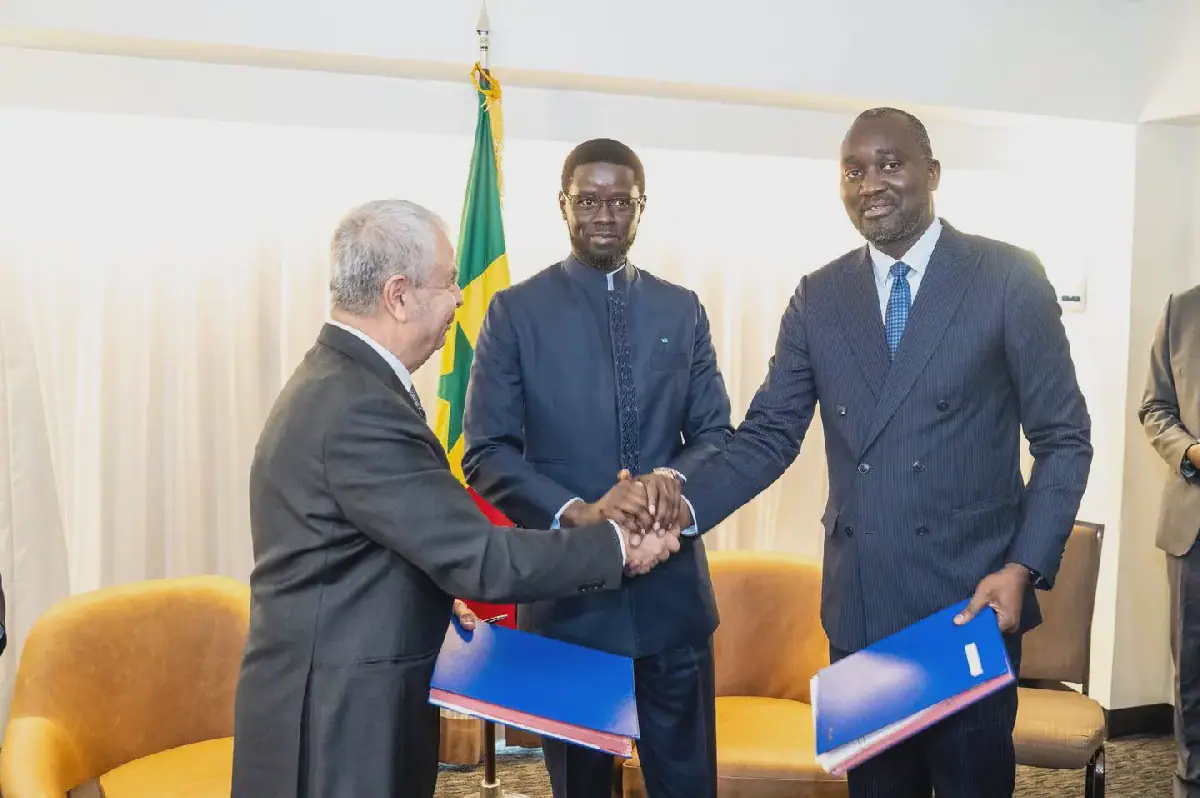
On the sidelines of the 81st United Nations General Assembly, Senegalese President Bassirou Diomaye Diakhar Faye presided over the signing of a protocol agreement between the Société africaine de raffinage (SAR) and Turkish company Yamata. The agreement paves the way for a vast program aimed at strengthening refining capacities and accelerating Senegal's march towards energy sovereignty. The document was signed by SAR's Managing Director, Mamadou Abib Diop, and Yamata's President and CEO, Cengiz Duyar.
The agreement provides for the construction of a second refinery with an annual capacity of 4 million tonnes. The facility will be designed to process crude oil from Sangomar, as well as a wide range of crude oils available on the international market. The estimated cost of this new infrastructure is between $2 and $3 billion. The partnership also includes the modernization of the Mbao refinery, currently in operation, for an additional investment of $300-500 million.
Yamata will be responsible for the engineering, procurement, construction, and financing of the project. The Turkish company aims to mobilize the necessary resources from its financial partners, without a sovereign guarantee from the Senegalese state. The signing of the protocol marks a new stage in the process, allowing for the finalization of detailed engineering studies, the last phase before the start of construction.
Since the start of its oil production in 2024, Senegal has remained largely dependent on imports of petroleum products. The commissioning of a new refinery is expected to reduce this dependence. According to the presidency, the future facility will cover the country's entire national market and generate surpluses for the sub-regional markets. The project is part of a broader ambition to transform Senegal from a crude oil producer into a country capable of processing a significant portion of its production and becoming a regional supplier of refined products.
The project's impact goes beyond fuel production, as increased refining capacity will also provide inputs to various sectors of the economy, including agriculture, transportation, industry, and construction. The partnership also provides for the development of petrochemical projects, aiming to promote local transformation of petroleum derivatives and create new industrial value chains.
The project is expected to generate over 15,000 direct jobs during the construction phase, with a significant focus on local content. Engineering, maintenance, and industrial logistics are among the areas that will benefit from this dynamic. Through this partnership, the head of state reaffirms the objective of strengthening Senegal's energy sovereignty, while ensuring that the financing is private, without a sovereign guarantee, to avoid directly burdening public finances.
The project's implementation is expected to have a catalytic effect, stimulating investments, developing skills, and promoting the participation of Senegalese companies in various sectors. The presidency presents this initiative as a strategic project that will contribute to the country's economic growth and development, while ensuring a sustainable and environmentally friendly approach.
Key points
- The second refinery will have a capacity of 4 million tonnes per year.
- The project is expected to generate over 15,000 direct jobs during the construction phase.
- The estimated cost of the project is between $2 and $3 billion.