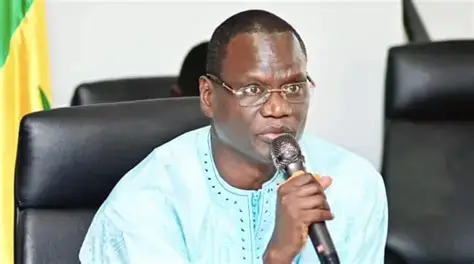
Senegal's hydrocarbon sector is poised for significant growth, with oil production commencing in June 2024 and gas production set to begin in January 2025. According to Energy Minister Abdourahmane Diouf, the country is seeking to capitalize on its resources to drive economic growth and achieve energy sovereignty. In an interview with RT en français, Diouf outlined the government's vision for the sector, emphasizing the need for partnerships with experienced producers like Russia to attract investment and develop local expertise.
Diouf highlighted the importance of a transition to renewable energy, but also emphasized the need for a pragmatic approach that takes into account Africa's unique realities. He stressed that Senegal is committed to harnessing its fossil fuel resources while gradually preparing for a shift to renewable energy. The minister noted that gas can play a critical role in poverty reduction and economic development, and that the government is prioritizing the valorization of gas on the domestic market.
The government's "Gas-to-Power" program aims to supply gas-fired power plants and reduce electricity costs. Diouf mentioned that this could lead to a potential decrease of at least 30% in electricity costs once the necessary infrastructure is operational. However, he did not provide a specific timeline for this reduction. The development of the Yakaar-Teranga gas field is another key priority for the government, with Diouf emphasizing the need for Petrosen, the national oil company, to be strengthened through reforms, training, and technology transfer.
Diouf acknowledged that Petrosen currently lacks the capacity of major international oil companies, but stressed that the company must develop its expertise over time. He emphasized that energy sovereignty is not just a slogan, but a reality that must be achieved on the ground. To achieve this, the government is pursuing a strategy of diversifying partnerships, including with Russia, France, the United States, China, the European Union, and Gulf countries.
The Senegalese government is also prioritizing the interconnection of West African electricity networks to improve energy supply and achieve universal access to electricity by 2029-2030. Diouf noted that this will require significant investment and cooperation with regional partners. The minister expressed confidence that Senegal can achieve its energy goals through a combination of domestic expertise and international partnerships.
Diouf's comments highlight the ambitious plans of the Senegalese government to develop its hydrocarbon sector and achieve energy sovereignty. The government's strategy emphasizes the need for a balanced approach that takes into account both the country's fossil fuel resources and its renewable energy potential. With oil and gas production set to commence in the coming years, Senegal is poised to become a significant player in the regional energy market.
The development of Senegal's hydrocarbon sector has significant implications for the country's economic growth and energy security. With the right partnerships and investments, the sector could become a major driver of economic growth and poverty reduction. As the government moves forward with its plans, it will be critical to ensure that the benefits of the sector are shared equitably among all Senegalese citizens.
Key points
- Senegal aims to leverage its oil and gas resources to drive growth and energy sovereignty.
- The government is prioritizing the valorization of gas on the domestic market through its "Gas-to-Power" program.
- Senegal is pursuing a strategy of diversifying partnerships to develop its hydrocarbon sector.