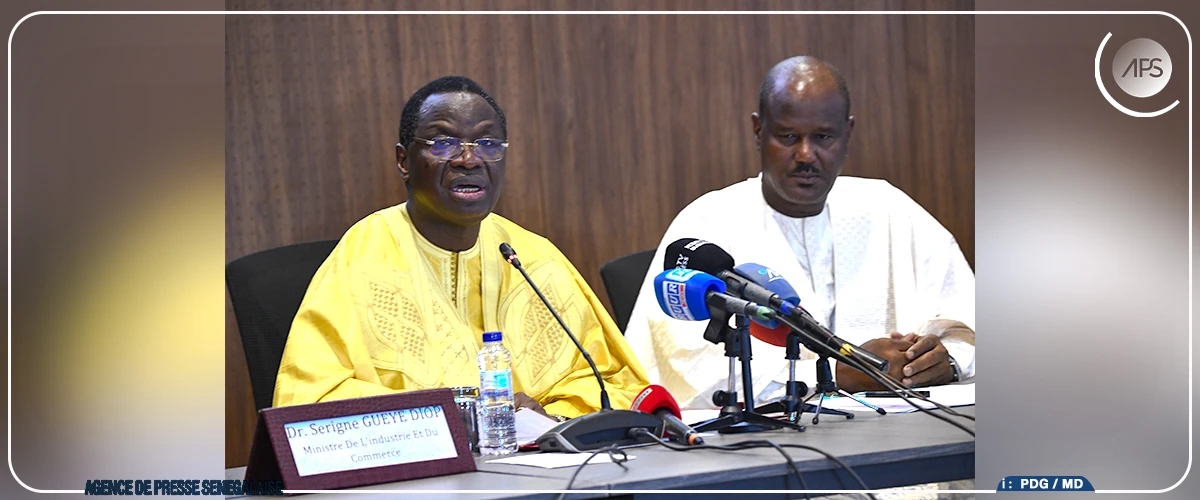
The Senegalese Ministries of Industry and Commerce, and Agriculture, Food Sovereignty and Livestock, have announced a collaborative effort to improve the country's agricultural value chain. This initiative aims to better anticipate and address challenges related to production, marketing, processing, financing, and storage. The ministries' joint approach is part of a broader effort to enhance public policy implementation and coordination. By working together, the two ministries hope to overcome recurring problems that have hindered the sector.
The Minister of Industry and Commerce, Serigne Guèye Diop, highlighted the need for a more coordinated governance approach to address the country's agricultural challenges. He noted that the same issues, such as insufficient production, marketing, and industrialization problems, recur every year. To address these issues, a permanent inter-ministerial committee will be established, led by the two ministries' secretaries general. This committee will oversee the implementation of conclusions and recommendations from value chain discussions.
Minister Diop emphasized the importance of a unified approach, stating that the ministries must work together on all stages of the value chain, from production to marketing. He also stressed the need to strengthen storage capacities, particularly for refrigeration, to reduce production losses. The minister recalled the difficulties encountered during the previous agricultural campaign and highlighted the importance of addressing these challenges.
The Minister of Agriculture, Food Sovereignty and Livestock, Cheikh Oumar Ba, underscored the need for greater consultation between ministerial departments. He stated that this collaborative approach is essential for reinforcing synergies between ministries and promoting government solidarity. According to Minister Ba, this effort will enable the anticipation of challenges and the development of solutions.
The joint initiative aims to establish a roadmap for coordination between the two ministries, complete with indicators for monitoring and evaluation. Minister Ba explained that the goal is not only to increase production and productivity but also to ensure that final consumers have access to resources and income that enable them to improve their living conditions. This approach is expected to contribute to improved producer incomes, better living conditions, and the achievement of food sovereignty.
Minister Ba provided an example of the potential for improvement, citing the average loss of 5.6 billion CFA francs per year in the Podor department due to crop losses. He emphasized that achieving food sovereignty requires not only increased production but also effective storage, marketing, and distribution. The ministers' initiative is expected to be followed by further consultations with operators, producers, and women producers to deepen discussions on value chain challenges.
The collaborative effort between the two ministries marks a significant step towards a more coordinated and effective approach to Senegal's agricultural sector. By working together, the ministries aim to address long-standing challenges and improve the livelihoods of producers and consumers alike. The initiative is expected to yield positive results, contributing to the country's economic growth and food security.
Key points
- The Senegalese government has established a committee to oversee the implementation of conclusions and recommendations from value chain discussions.
- The initiative aims to improve the country's agricultural value chain, addressing challenges related to production, marketing, processing, financing, and storage.
- The collaborative effort is expected to contribute to improved producer incomes, better living conditions, and the achievement of food sovereignty.