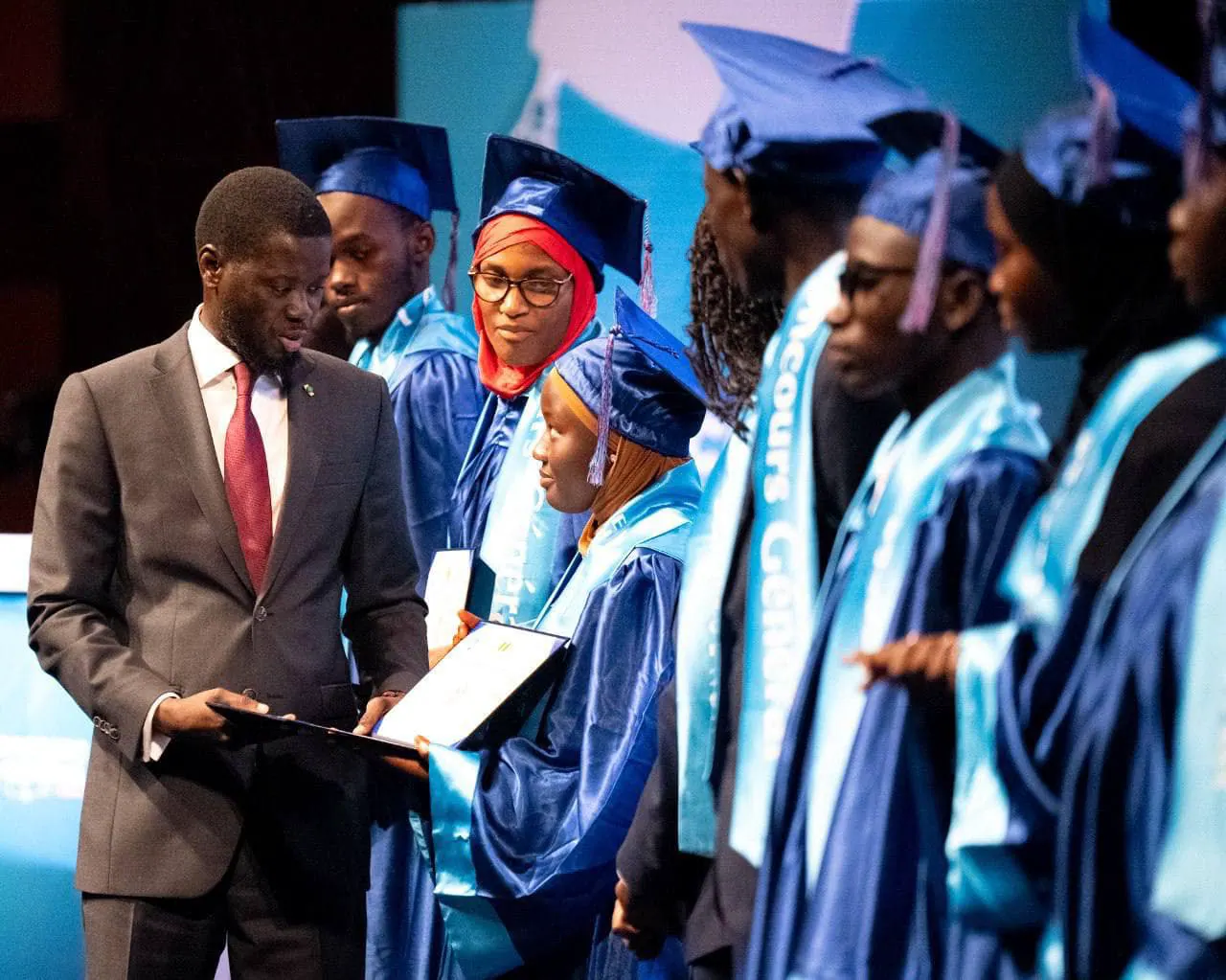
The Senegalese government has prioritized higher education, aiming to improve study conditions, student life, and campus infrastructure. In November 2024, President Bassirou Diomaye Faye instructed the government to create an emergency plan to accelerate university project completions, including amphitheaters, classrooms, restaurants, and dormitories. This plan was integrated into the 2025 emergency plan to address accumulated delays and enhance student life.
The government's efforts are starting to materialize, with a focus on providing additional student accommodations. A program aims to add 10,100 beds in universities by the end of 2026. On September 30, Minister of Infrastructure Dethié Fall attended the handover of a 1,000-bed dormitory and a 1,000-seat restaurant at the University of Bambey. Previously, on August 29, 2026, 2,100 beds were delivered to the Amadou Makhtar Mbow University in Diamniadio.
The program plans to add 1,000 beds to each of the universities in Ziguinchor, Fatick, Kaolack, Kaffrine, Tambacounda, and Matam. Additionally, seven university restaurants with 7,000 seats will be delivered. These initiatives aim to reduce the concentration of university students and promote equal access to education across the country.
One of the key projects is the University of Senegal Oriental in Tambacounda, which will help decentralize higher education. During his visit to the site in February 2026, President Bassirou Diomaye Faye inspected the infrastructure, including the rectorate, research units, and social housing for students and teachers.
The government is also strengthening the University of Senegal Cheikh Hamidou Kane's digital platform and expanding open digital spaces and professional training institutes nationwide. This approach aims to address the growing number of students while diversifying and professionalizing education.
In December 2025, President Bassirou Diomaye Faye instructed the government to develop digital education and research, strengthen the University of Senegal Cheikh Hamidou Kane, and expand open digital spaces. A convention was signed on March 20, 2025, enabling the university to train 105,000 national education personnel in digital skills and artificial intelligence.
The development of digital infrastructure helps bring higher education closer to all territories. These initiatives demonstrate the government's commitment to improving the quality of higher education in Senegal and making it more accessible to students across the country.
Key points
- The Senegalese government has launched initiatives to improve higher education quality, focusing on infrastructure development and digitalization.
- A program aims to add 10,100 beds in universities by the end of 2026.
- The government is strengthening the University of Senegal Cheikh Hamidou Kane's digital platform and expanding open digital spaces and professional training institutes nationwide.