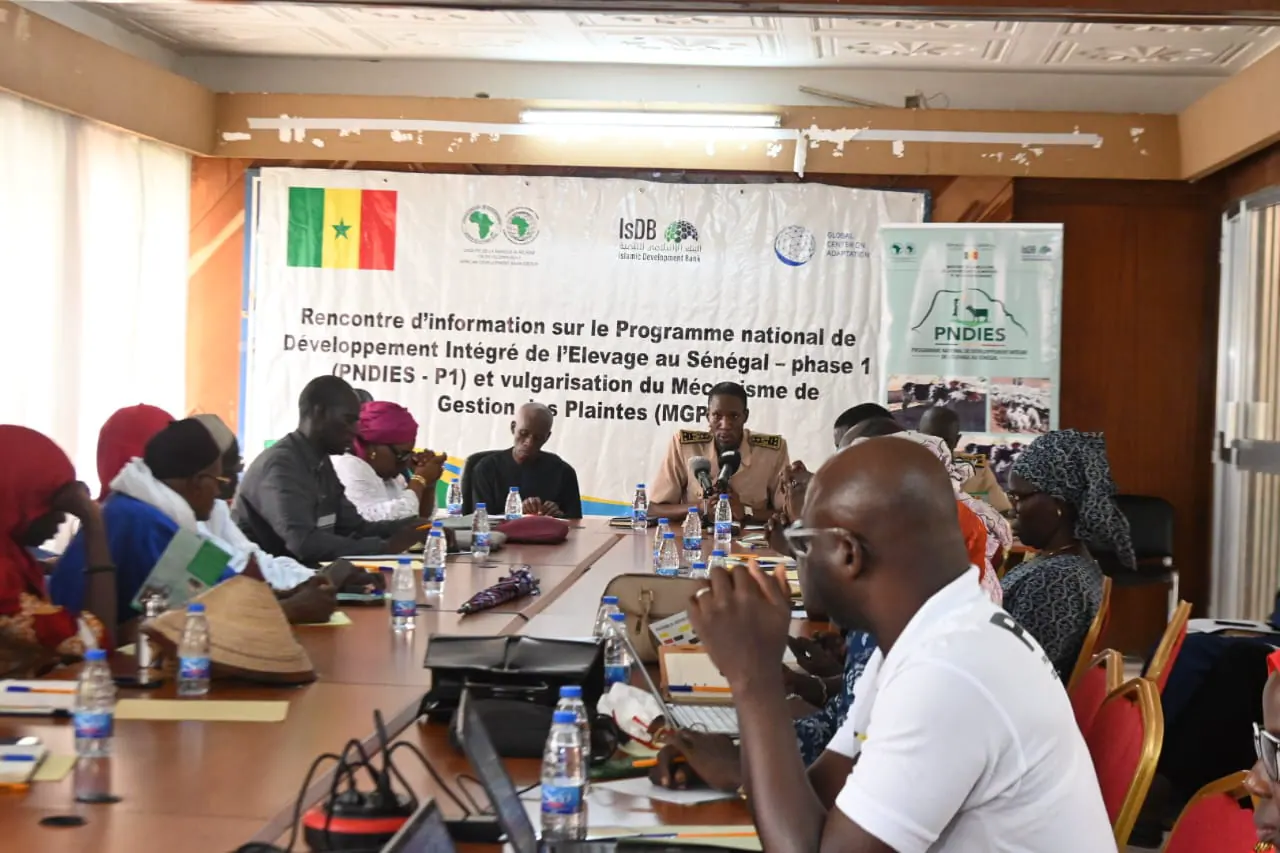
The Senegalese government has initiated the National Integrated Livestock Development Program (PNDIES) with a budget of 51 billion CFA francs. The program aims to develop resilient animal value chains, create jobs, and contribute to food sovereignty. It will be implemented in 14 regions across Senegal. The program's objectives and components were presented to local stakeholders at an information workshop in Kaolack.
The workshop, presided over by Mouhamadou Habib Kamara, the deputy governor in charge of development, focused on the program's three main pillars: goods, services, and infrastructure. The program plans to establish livestock markets, stores, service platforms, veterinary posts, vaccination parks, fodder production units, and bovine production centers. According to Dame Sow, the program's coordinator, some infrastructure projects will start in Kaolack, including veterinary posts and vaccination parks.
The PNDIES is built around three strategic axes: increasing animal productivity and production, improving the transformation and marketing of livestock products, and strengthening the professionalization of actors. By 2028, the program aims to create 3,500 enterprises and 18,000 jobs, with 32,000 direct beneficiaries and 950,000 indirect beneficiaries, including 51% women. The program also emphasizes the importance of supporting actors and addressing their concerns.
The program's implementation will be accompanied by a complaint management mechanism (MGP) to address issues related to land, animal feed, pastoral areas, and market access. A regional complaint management committee has been established in Kaolack, and departmental committees will be set up soon to bring the system closer to populations and animal value chain actors.
The PNDIES coordinator, Dame Sow, announced that 2027 will be a crucial year for the program's implementation. The program's success will depend on the involvement of local stakeholders, including young people and women, who are expected to benefit significantly from the initiative. The program's impact is expected to be felt beyond the livestock sector, contributing to the country's economic growth and food security.
The launch of the PNDIES in Kaolack marks an important step in the program's implementation. The program's objectives align with the Senegalese government's efforts to promote economic development and improve the living standards of its citizens. The program's success will be closely monitored, and its impact is expected to be significant.
The PNDIES is a key initiative in Senegal's efforts to transform its livestock sector and enhance food sovereignty. With its focus on job creation, professionalization, and infrastructure development, the program has the potential to make a significant impact on the country's economy and food security. Key stakeholders will be watching closely as the program unfolds.
Key points
- The program aims to create 3,500 enterprises and 18,000 jobs by 2028.
- The program has a budget of 51 billion CFA francs and will be implemented in 14 regions across Senegal.
- The program's objectives include increasing animal productivity and production, improving the transformation and marketing of livestock products, and strengthening the professionalization of actors.