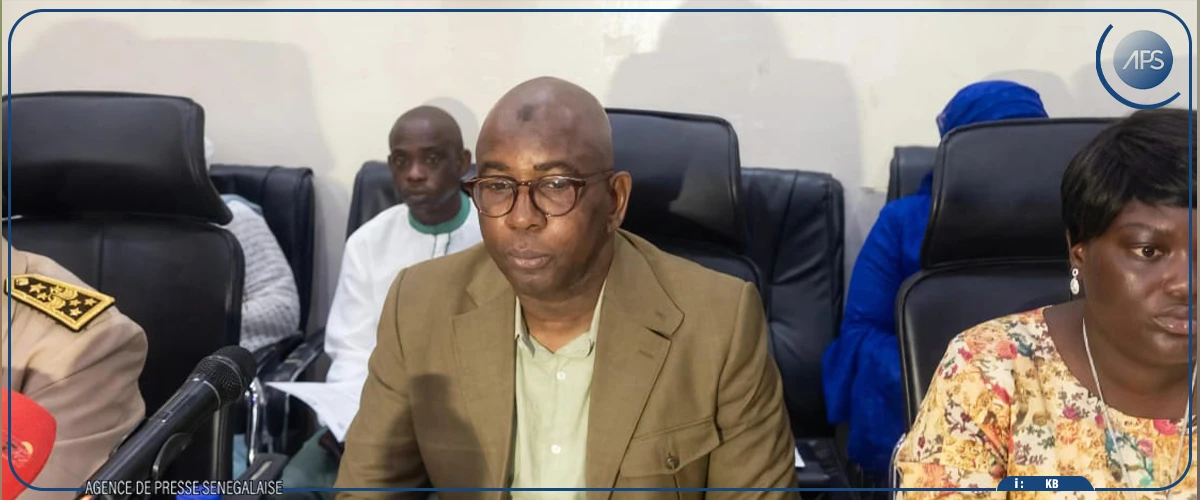
On Monday, September 28, 2026, Senegal's Minister of National Education, Moustapha Mamba Guirassy, announced the establishment of a "Grand Prix du Chef de l'Etat pour l'Alphabétisation et les Langues Nationales" (Grand Prize of the Head of State for Literacy and National Languages) in Fatick, Senegal. This initiative aims to stimulate local innovation in education, associative action, and community impact. The Grand Prize will be awarded annually to recognize and reward outstanding efforts in these areas.
The announcement was made during a special regional development committee meeting focused on the national month of literacy, with this year's theme being "Literacy, a lever for entrepreneurship and employability for sustainable social and economic inclusion." Minister Guirassy emphasized the importance of linking literacy to concrete professional pathways. He believes that literacy should not be limited to theoretical knowledge but should be connected to everyday realities, particularly in rural areas.
According to Minister Guirassy, literacy is not just about learning to read and write but also about providing opportunities for emancipation. He noted that between 2013 and 2023, the rate of illiteracy among people over 10 years old decreased from 54.6% to 37.1%, a significant decline of over 17 points. This progress is attributed to the dedication of facilitators, associations, local authorities, and community teachers.
Despite this progress, Minister Guirassy acknowledged that there is still much work to be done. He stated that nearly 500 new classes are opened every year, with around 18,500 learners benefiting from them in 2026 alone. However, he emphasized that 37% of Senegalese citizens who are illiterate is still a significant challenge, particularly in rural areas and among women.
Minister Guirassy highlighted the need for a more sustainable financing model for literacy programs. He criticized the current situation where the education sector's budget is often skewed in favor of formal education, with literacy programs receiving only a marginal share of resources. He advocated for a more equitable distribution of funds and greater involvement of local authorities and the private sector in supporting literacy initiatives.
The Minister also discussed the recent validation of Senegal's national linguistic policy document, which provides a clear direction for the country's language education. He mentioned that the deployment of the Model for Harmonized Bilingual Education in Senegal (MOHEBS) in 1,951 schools across three academies is a step in the right direction. This model aims to promote bilingual education and improve learning outcomes.
The introduction of the Grand Prize for Literacy and National Languages is seen as a significant move to promote literacy and national languages in Senegal. The Minister's emphasis on community involvement, innovative financing, and sustainable solutions highlights the government's commitment to addressing the country's literacy challenges. The impact of this initiative on Senegal's education sector and its people remains to be seen.
Key points
- The Senegalese government has introduced a new Grand Prize to promote literacy and national languages, aiming to stimulate local innovation and community impact.