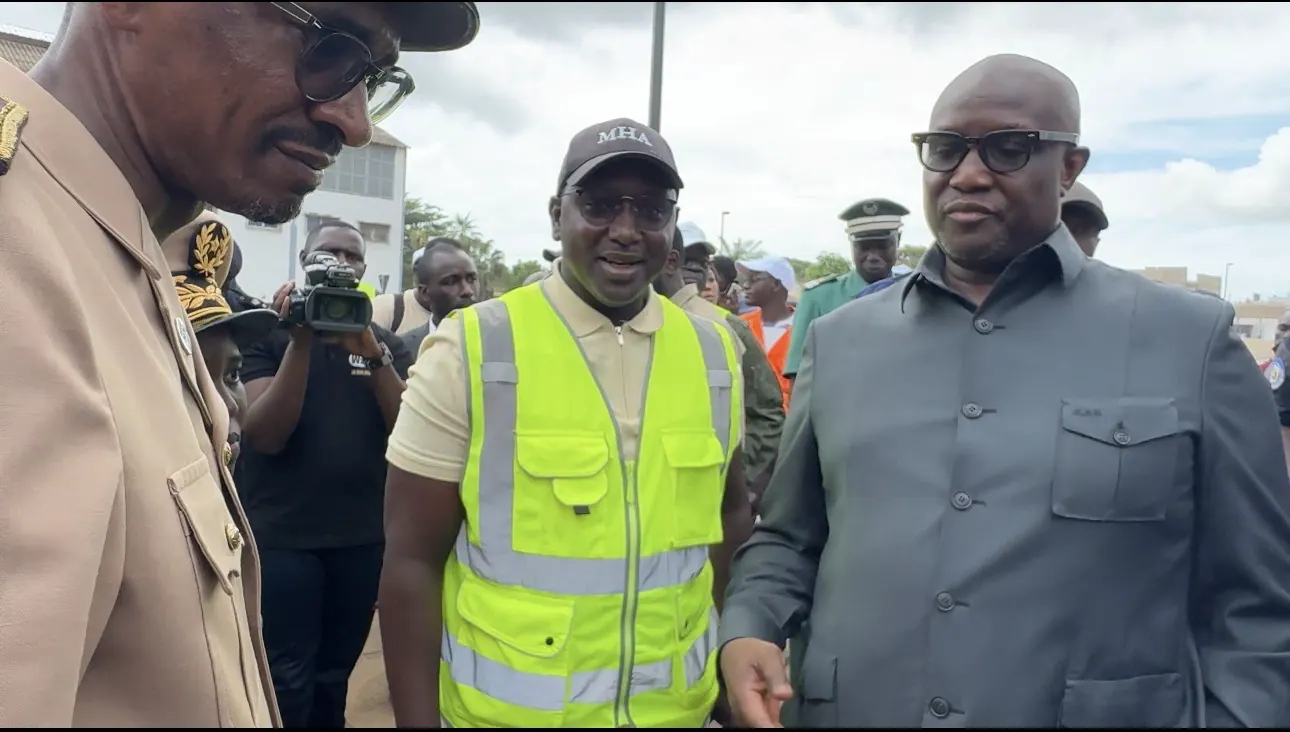
The Senegalese government has launched a national integrated strategy to manage flood risks, following recent heavy rainfall in Dakar. A delegation of ministers, including the Minister of Hydraulics and Sanitation, Cheikh Tidiane Dieye, visited the affected areas to assess the situation and evaluate the effectiveness of existing flood management systems. The strategy aims to provide a long-term solution to the country's flooding problems.
The recent rainfall in Dakar resulted in significant flooding, with 137 millimeters of rain recorded between Saturday night and Sunday evening. The heavy rainfall put a strain on the city's drainage infrastructure, which was designed to handle much smaller populations and urban expansion. Minister Dieye noted that the existing infrastructure was built in the 1960s, 1970s, and 1980s, and is no longer sufficient to handle the current needs of the city.
The government has identified several factors contributing to the flooding, including the aging infrastructure, rapid urbanization, and obstruction of drainage networks by waste. The minister emphasized that the government's strategy will address these issues and provide a coordinated response to flooding. The plan has been presented to President of the Republic and will be implemented in several phases, including 2027-2030 and 2035-2045.
The national strategy on flood risk management is an inter-ministerial approach that brings together various departments concerned with flood prevention and management. The goal is to provide a cohesive response to flooding and mitigate its impact on communities. Minister Dieye announced that the plan will be presented to the Senegalese people in the coming days.
The recent flooding in Dakar has highlighted the need for a comprehensive approach to managing flood risks. The government has deployed emergency response teams to assist affected communities and provide support to those affected. The ministers of Interior and Public Security, Transport, and Hydraulics and Sanitation visited the affected areas to assess the situation and provide support.
The Senegalese government has urged citizens to take precautions to minimize the impact of flooding. The government has also called on citizens to report any blockages or obstructions in drainage networks to prevent further flooding. The strategy on flood risk management is expected to reduce the impact of flooding and provide long-term solutions to the country's flooding problems.
The government has assured citizens that it is committed to implementing the strategy and providing support to affected communities. The minister of Hydraulics and Sanitation emphasized that the government will work tirelessly to ensure that the strategy is effective and sustainable. The implementation of the strategy is expected to begin soon, with the first phase focusing on emergency response and infrastructure development.
Key points
- The Senegalese government has launched a national integrated strategy to manage flood risks, following recent heavy rainfall in Dakar.
- The strategy aims to provide a long-term solution to the country's flooding problems, addressing issues such as aging infrastructure, rapid urbanization, and obstruction of drainage networks by waste.
- The plan has been presented to President of the Republic and will be implemented in several phases, including 2027-2030 and 2035-2045.