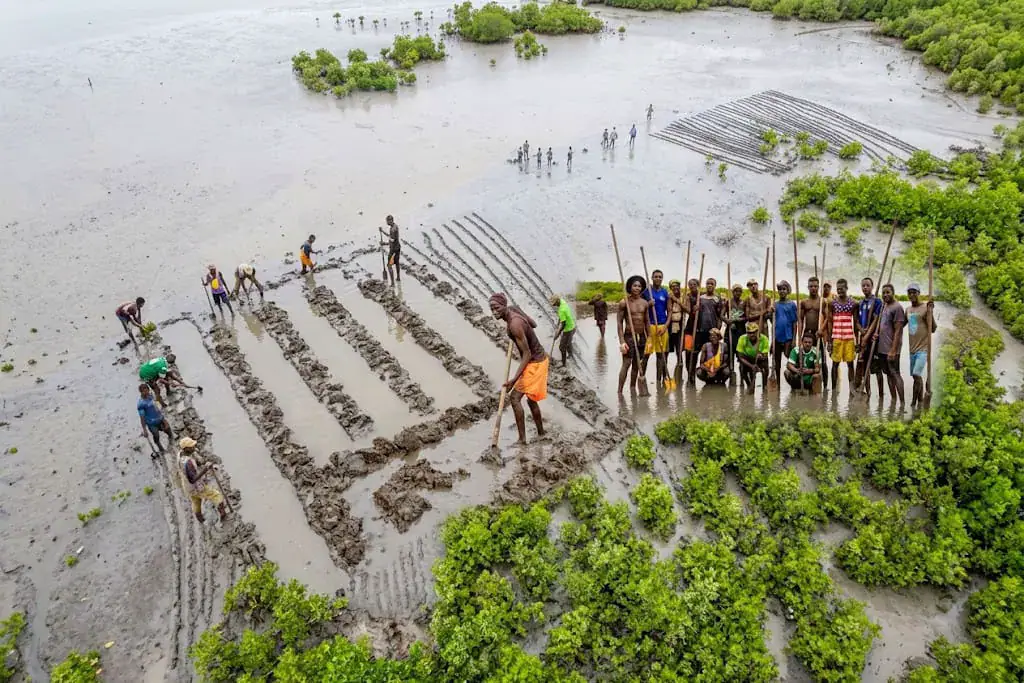
In a bid to preserve coastal ecosystems and marine biodiversity in Casamance, Wetlands International Afrique has set up an experimental mangrove restoration site in Kaléane village, Nyassia commune, within the Ufoyaal Kassa-Bandial Marine Protected Area (AMP). The initiative, part of the "Only One en Casamance" project, aims to address the degradation of the coastal vegetation belt, crucial for protecting against coastal erosion, carbon absorption, and sustaining socio-economic activities of local communities.
The project, which ran from October 20 to 22, 2026, involves a scientific protocol on 1.5 hectares with five comparative blocks. The site tests various intervention techniques, including a control block, seeded mounds, direct sowing, mounds only, and assisted natural regeneration. The experiment focuses on two key mangrove species in West Africa: Avicennia germinans (black mangrove) and Laguncularia racemosa (white mangrove). This approach will help identify the most effective method for mangrove restoration.
Local community involvement is central to the project's success. A total of 31 members from Kaléane were mobilized, trained, and will ensure continuous environmental monitoring of the site. By engaging local residents, the initiative aims to foster a sense of ownership and ensure the long-term sustainability of the restoration efforts. The site's design and implementation were tailored to the specific conditions of the area, increasing the likelihood of success.
The experimental site in Kaléane is part of a broader effort to enhance mangrove ecosystems in Senegal's coastal regions. Mangroves provide vital ecosystem services, including shoreline protection, nursery habitats for marine life, and carbon sequestration. However, these ecosystems are under threat from human activities and climate change, necessitating urgent conservation and restoration actions.
Wetlands International Afrique and its partners aim to identify the most effective restoration technique through this experiment. The findings will inform the development of a scalable model for mangrove restoration across the network of marine protected areas and bolongs in Casamance. This approach has the potential to contribute significantly to coastal resilience and biodiversity conservation in the region.
According to Liboire SAGNA, the successful implementation of this project requires continued collaboration between conservation organizations, local communities, and government agencies. The restoration of mangrove ecosystems can have far-reaching benefits, including enhanced livelihoods for coastal communities and improved environmental health. The project's outcomes will be closely monitored and could serve as a model for similar initiatives in other coastal regions.
The "Only One en Casamance" project, which funded the experimental site, underscores the importance of collaborative efforts to address environmental challenges. By supporting innovative conservation approaches, such as assisted natural regeneration, stakeholders can work together to protect and restore critical ecosystems like mangroves. The project's progress and results will be crucial in informing future conservation strategies in Senegal and beyond.
Key points
- Wetlands International Afrique has launched an experimental mangrove restoration site in Kaléane village, Senegal, to test various techniques for restoring degraded mangrove ecosystems.