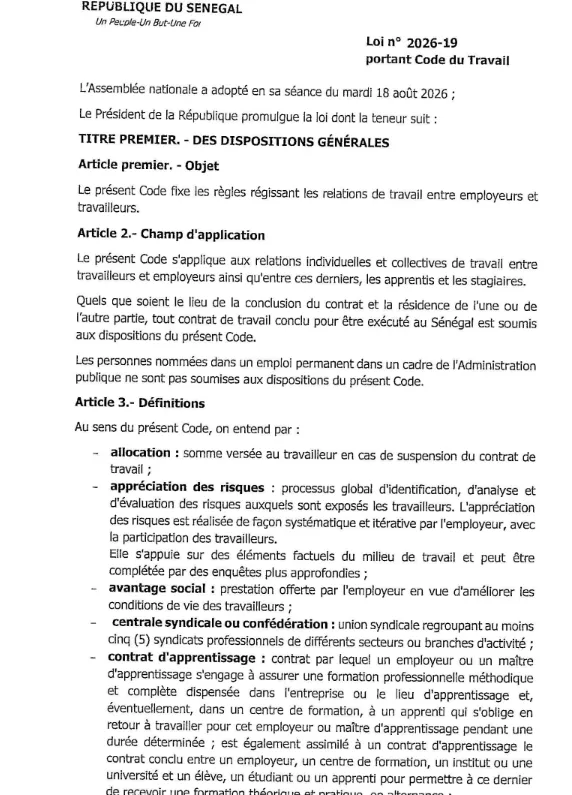
The Senegalese government has enacted a new Labor Code, Loi n° 2026-19, which came into effect on September 3, 2026. The code is a comprehensive legislative text that regulates work relations between employers and employees. It outlines the rights and obligations of both parties, ensuring a fair and safe working environment. The code is available in PDF format, weighing 69.7 MB, and can be accessed online.
The new Labor Code defines various types of employment contracts, including fixed-term, indefinite-term, apprenticeship, and internship contracts. It establishes rules for contract termination, including procedures for personal and economic-related dismissals. The code also prohibits forced labor, discrimination, and workplace harassment, promoting a safe and respectful work environment. Additionally, it sets out guidelines for social dialogue, collective bargaining, and union representation.
One of the key aspects of the Labor Code is its scope of application, which covers individual and collective work relations, excluding public administration employees. The code sets out specific regulations for employment contracts, including a maximum duration of two years for fixed-term contracts, which can be renewed once. It also outlines procedures for dismissals, requiring a genuine and serious reason, prior notice, and severance pay.
The Labor Code provides enhanced protection for employee representatives, requiring prior authorization from labor inspectors for their dismissal. It also prohibits the worst forms of child labor and sets out obligations for workplace safety and health. Employers are required to assess risks, implement prevention measures, and establish a workplace safety and health committee.
The code regulates working hours, setting a standard 40-hour workweek, and governs overtime and paid leave. Employees are entitled to two working days of paid leave per month of effective service. The code also establishes penalties for harassment, discrimination, obstruction of labor inspections, and illegal work.
The new Labor Code maintains existing collective agreements that are not contrary to the code. It also establishes a National Consultative Council for Labor and Social Security to promote social dialogue and address labor-related issues. The code aims to promote a fair and equitable work environment, protecting the rights of both employers and employees.
The enactment of the new Labor Code is expected to have a positive impact on Senegal's labor market, promoting social justice and protecting workers' rights. The code's implementation will be closely monitored by relevant stakeholders, including government agencies, employers, and employee representatives.
Key points
- The Labor Code prohibits forced labor, discrimination, and workplace harassment.
- The code regulates working hours, setting a standard 40-hour workweek.
- Employee representatives are protected, requiring prior authorization for their dismissal.