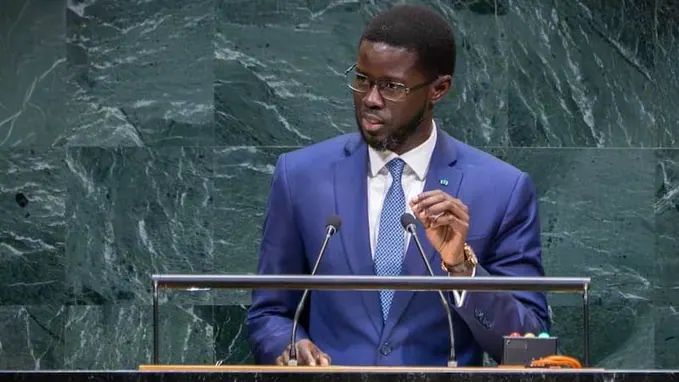
Senegalese President Bassirou Diomaye Faye announced on September 22, 2026, in New York that Senegal will present its candidacy for a non-permanent seat on the UN Security Council for the 2032-2033 term. This move is seen as a strategic step to increase Senegal's influence on the global stage. The announcement was made during the general debate of the 81st session of the UN General Assembly.
A non-permanent member of the UN Security Council has significant influence, although different from that of the five permanent members. The five permanent members - the United States, Russia, China, France, and the United Kingdom - hold veto power. Non-permanent members, on the other hand, are elected by the General Assembly for two-year terms and have one vote each.
Senegal has previously held a non-permanent seat on the UN Security Council three times: 1968-1969, 1988-1989, and 2016-2017. The country aims to leverage its experience and position to contribute to international decision-making processes. The UN Security Council consists of 15 members, including five permanent and ten non-permanent members.
Non-permanent members can play a crucial role in shaping international decisions. They can bring attention to regional or continental issues, such as financing peace operations and combating terrorism in the Sahel region. As a non-permanent member, Senegal can also preside over the Security Council for a month, providing additional visibility and influence.
The presidency of the Security Council rotates among its 15 members every month, in alphabetical order of their English names. When a non-permanent member assumes the presidency, it gains enhanced visibility and facilitation capabilities. Non-permanent members can also chair committees and subsidiary bodies, including sanctions committees.
One of the limitations of being a non-permanent member is the lack of veto power. Only the five permanent members hold this power. However, non-permanent members can still influence decisions by negotiating with permanent members and building coalitions. Senegal's bid for a non-permanent seat is seen as an opportunity to strengthen its diplomatic visibility and influence.
If elected, Senegal's two-year term on the UN Security Council will provide a platform to promote African priorities and interests. The country aims to contribute to key discussions on international peace and security, sustainable development, and human rights. Senegal's candidacy is expected to garner support from the international community, given its commitment to multilateralism and peacebuilding.
Key points
- Senegal to run for non-permanent seat on UN Security Council for 2032-2033 term.
- Non-permanent members have significant influence, but no veto power.
- Senegal aims to leverage its experience and position to contribute to international decision-making processes.