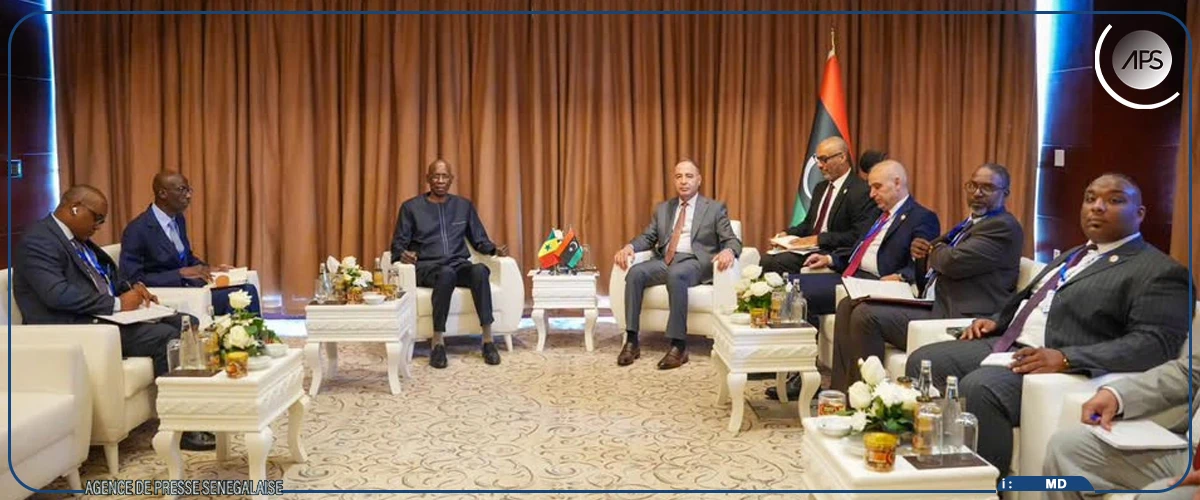
The governments of Senegal and Libya have reaffirmed their commitment to promoting a fair and equitable representation of Africa at the United Nations Security Council. This commitment was made through a joint statement by their foreign ministers, Cheikh Niang of Senegal and Taher Salam Al-Baour of Libya. The statement was released following a meeting in Tripoli, Libya, where the two ministers discussed key issues related to the reform of the UN Security Council.
The meeting between the Senegalese and Libyan foreign ministers took place on the sidelines of the 14th ministerial meeting of the Committee of Ten (C-10) of the African Union. The C-10 is a group of heads of state and government tasked with promoting African interests at the UN Security Council. During their discussion, Niang and Al-Baour reviewed the main challenges facing the C-10 and reiterated their countries' commitment to working within the African Union to achieve a more representative and equitable distribution of seats at the UN Security Council.
The two ministers' commitment to equitable representation is in line with the Ezulwini Consensus and the Sirte Declaration. These agreements aim to promote African unity and solidarity in international affairs. The Ezulwini Consensus, in particular, calls for the reform of the UN Security Council to make it more representative and inclusive of African voices. Senegal and Libya have pledged to continue their efforts to achieve this goal.
Cheikh Niang expressed his appreciation for the Libyan government's initiative to host the C-10 meeting. He also acknowledged Libya's historical role in promoting African unity and cooperation through initiatives such as the Community of Sahel-Saharan States (CEN-SAD). Niang's comments highlight the importance of Libyan-Senegalese cooperation in promoting African interests at the international level.
The C-10 meeting in Tripoli brought together ministers from various African countries to discuss strategies for promoting African representation at the UN Security Council. The meeting provided a platform for African countries to coordinate their efforts and develop a unified approach to this issue. The participation of Senegal and Libya in this meeting underscores their commitment to working together to achieve a more equitable distribution of seats at the UN Security Council.
The issue of African representation at the UN Security Council has been a longstanding concern for many African countries. The current composition of the Security Council does not reflect the diversity and complexity of the African continent. African countries have been calling for reforms to make the Security Council more representative and inclusive of their voices.
The joint commitment by Senegal and Libya to promote equitable African representation at the UN Security Council reflects a broader African effort to assert its influence in international affairs. This effort is driven by a desire to ensure that African voices are heard and that the continent's interests are represented at the highest levels of international decision-making.
Key points
- Senegal and Libya have reaffirmed their commitment to promoting a fair and equitable representation of Africa at the UN Security Council.
- The two countries' commitment is in line with the Ezulwini Consensus and the Sirte Declaration, which aim to promote African unity and solidarity in international affairs.
- The issue of African representation at the UN Security Council has been a longstanding concern for many African countries, with calls for reforms to make the Security Council more representative and inclusive of African voices.