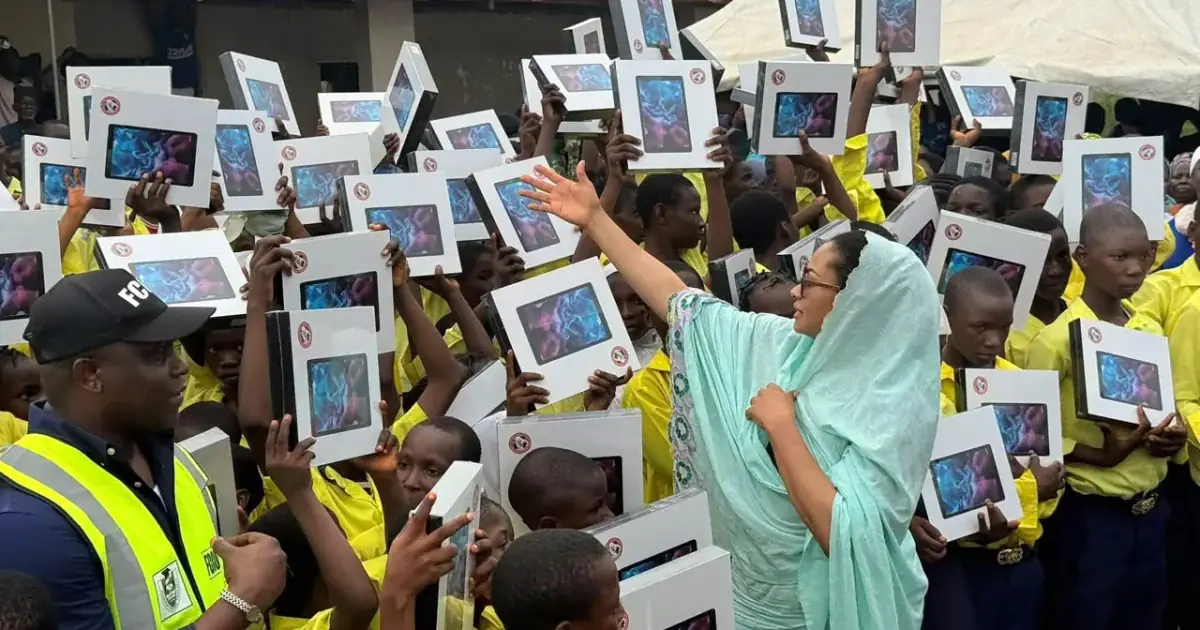
Senator Natasha Akpoti-Uduaghan, representing Kogi Central, marked her third anniversary in the Senate by distributing smart devices, including laptop computers, to selected secondary schools in her district. This initiative, which took place on November 2, 2026, is part of her commitment to quality representation, educational development, and empowering young people. The senator visited several schools, including OCSS Oboroke, Adavi Model Secondary School, Adavi Eba, and Community Secondary School, Obangede, all in Kogi State.
Akpoti-Uduaghan emphasized that the essence of representation is not just occupying an office or making speeches, but making a difference in the lives of the people who elected her. She believes that education is a crucial investment in the future of society and that these smart devices will serve as instruments of opportunity, learning, innovation, and empowerment for the students. The senator urged the students to make effective use of the devices, embrace digital literacy, and remain committed to their studies.
The senator's media aide, Mike Idoko, disclosed the details of the intervention in a statement issued in Abuja on Tuesday, November 3, 2026. Akpoti-Uduaghan's constituency development efforts cover various sectors, including education, healthcare, infrastructure, agriculture, youth empowerment, and economic development. In the health sector, she has advocated for the establishment of the Federal Medical Centre, Ihima, through Senate Bill 521, aimed at improving access to specialist medical services in Kogi Central and neighboring communities.
Akpoti-Uduaghan has also made significant contributions to other areas, including advocacy for improved roads, potable water, school facilities, solar-powered infrastructure, skills acquisition, and support for women and young people. She has spoken on public accountability, social justice, equitable resource allocation, and responsive governance. The senator's efforts have been recognized by the Chairman of the Governing Council of Community Secondary School, Obangede, Dr. Shehu Sule, who commended her for extending the intervention to the school.
Dr. Sule praised Akpoti-Uduaghan's representation and contributions to education and human capital development, describing her as the most popular, outstanding, and celebrated female office holder in contemporary Nigerian politics. He appealed for continued collaboration between the senator and the school, noting that the devices would support learning and expose students to wider educational opportunities. Sule also requested an award for the senator in recognition of her outstanding leadership and commitment to education.
The distribution of laptops comes as access to digital tools and technology-based learning becomes increasingly important in education. Akpoti-Uduaghan's initiative aims to bridge the gap in access to educational resources and provide opportunities for students in Kogi Central to compete with their peers globally. The senator's office has assured that she will continue to pursue people-oriented initiatives aimed at improving the social and economic well-being of her constituents.
As Akpoti-Uduaghan looks to the future, her reputation extends beyond Kogi Central, with many optimistic about her political prospects. The senator's commitment to education and human capital development has earned her recognition and admiration from various stakeholders, including students, teachers, and school administrators. With her focus on quality representation and constituency development, Akpoti-Uduaghan is poised to continue making a positive impact in the lives of her constituents.
Key points
- Senator Natasha Akpoti-Uduaghan distributes laptops to secondary schools in Kogi Central to enhance digital learning and access to educational resources.
- The initiative is part of Akpoti-Uduaghan's commitment to quality representation, educational development, and empowering young people in her district.
- The senator's constituency development efforts cover various sectors, including education, healthcare, infrastructure, agriculture, youth empowerment, and economic development.