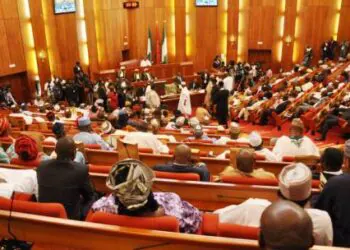
The Nigerian Senate has passed a bill extending the implementation period of the capital component of the 2025 Appropriations Act from September 30 to December 31, 2026. This move aims to prevent the abandonment of ongoing projects and ensure effective utilisation of funds already appropriated and released. The bill, which was taken through second and third readings on the same day, addresses concerns that several ministries, departments, and agencies had yet to fully utilise funds released for capital projects under the 2025 budget.
The Senate's decision was influenced by implementation bottlenecks affecting capital expenditure, with Senator Tahir Mongunno, Chief Whip, attributing delays to the centralised payment system domiciled in the Office of the Accountant-General of the Federation. Mongunno urged the Executive to review the policy, arguing that it contributes to delays in budget execution. He suggested that unless the centralised payment arrangement is reconsidered, the National Assembly might continue to face requests to extend the lifespan of budgets.
The Senate Leader, Opeyemi Bamidele, presented the bill, explaining that the extension is necessary to provide ministries, departments, and agencies with additional time to complete capital projects for which appropriations have already been made and funds released. He noted that capital budget implementation involves several processes, including procurement, contract execution, mobilisation, certification of works, and payment, which need to be properly coordinated before projects can be completed.
Bamidele further explained that allowing the September 30 deadline to lapse without an extension could create difficulties for ministries, departments, and agencies seeking to complete projects already at advanced stages of implementation. He stressed that a significant amount of capital funds released to these agencies remained unutilised and that the proposed extension is designed to prevent resources already appropriated and released from being wasted.
The bill, numbered SB 1067, was referred to the Committee of Supply for clause-by-clause consideration. The Committee of Supply considered the bill and recommended amendments to the Appropriation Act 2025, Section 12, the short title, explanatory memorandum, and long title. The Senate later reverted to plenary, where the report of the Committee of Supply was considered and adopted.
Following the suspension of the relevant Senate rule, the bill was subjected to third reading and subsequently passed. The Senate President, Godswill Akpabio, thanked senators for their contributions and described the extension as necessary to prevent the proliferation of abandoned projects across the country. He emphasised that it would have been inappropriate to allow the September 30 deadline to expire without giving the Federal Government additional time to settle outstanding obligations associated with the 2025 capital projects.
Akpabio added that the extension should be used to ensure that payments are made and ongoing projects brought to levels where Nigerians can see and benefit from the infrastructure being provided. The Senate's decision aims to ensure that appropriated funds are utilised effectively, transparently, and for the intended purposes, ultimately benefiting the Nigerian people.
Key points
- The Nigerian Senate has extended the implementation deadline of the 2025 capital budget to December 31, 2026.
- The extension aims to prevent the abandonment of ongoing projects and ensure effective utilisation of funds.
- The Senate also urged the Executive to review the centralised payment system contributing to delays in budget execution.