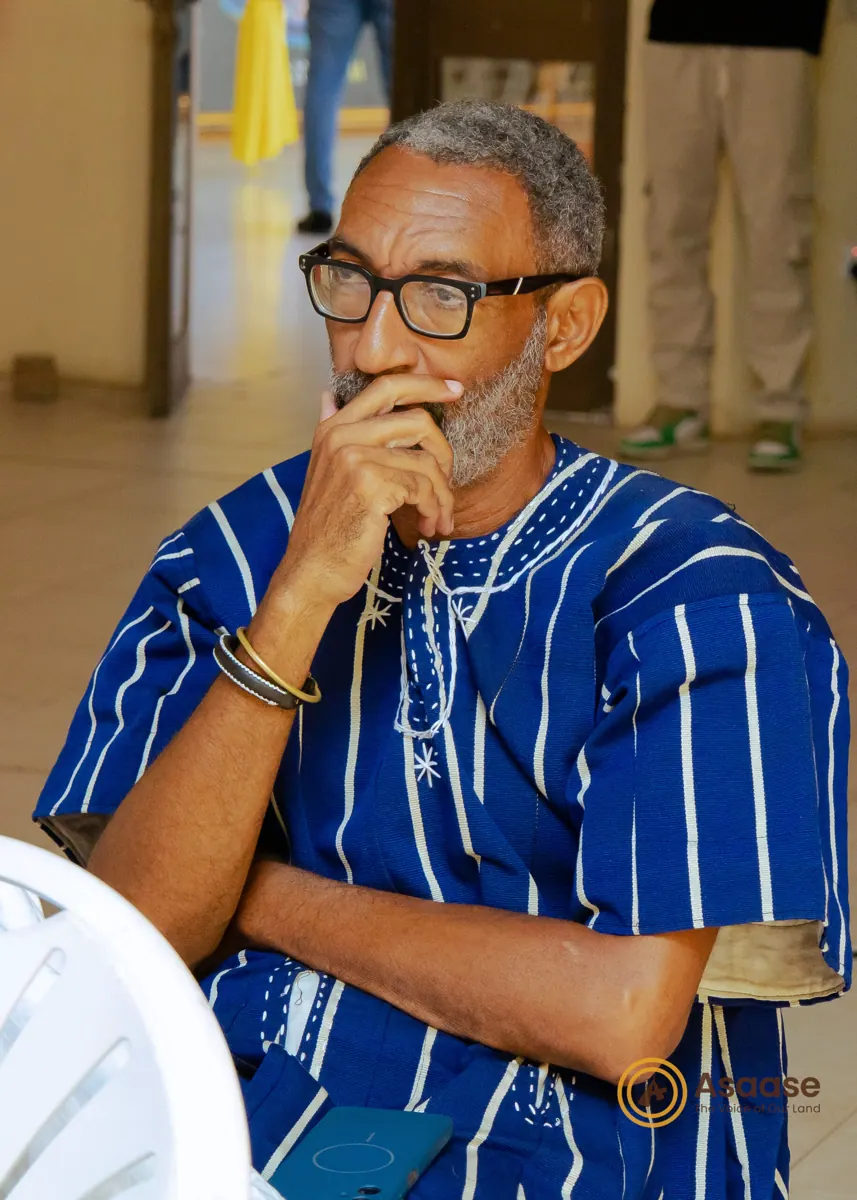
Host of The Last Word on Asaase Radio, Sekou Nkrumah, has expressed concerns about the effectiveness of Ghana's local government system. He cited poor roads, inadequate sanitation, faulty streetlights, and stalled community projects as signs of weak service delivery. Nkrumah emphasized that local government should be measured by its impact on the everyday lives of people in communities, rather than by large-scale projects that attract greater public attention.
Nkrumah's comments were made during a discussion on The Last Word on Asaase Radio on Thursday, September 17. He highlighted the persistent problems with basic infrastructure and sanitation in Accra, which he had observed during his regular walks around the city. The issues he mentioned included poor roads, non-functional streetlights, lack of sidewalks, indiscriminate parking, and choked gutters.
The host also raised concerns about waste management in Accra, citing delays in collecting refuse and the way waste is transported in some parts of the city. He noted that some locally initiated waste collection businesses were helping to provide livelihoods but needed support to operate with appropriate equipment. Nkrumah emphasized that waste could remain in some residential areas for days, which is unacceptable.
Nkrumah also criticized commercial and industrial activities in residential communities, including workshops, roadside trading, and cooking near open drains. He argued that such activities could interfere with residents' quality of life and should be better regulated by local authorities. The issue of stalled projects was also raised, with Nkrumah citing a footbridge intended to provide a safer route for schoolchildren but had remained unfinished.
According to Nkrumah, the gap between Ghana's decentralization framework and the conditions experienced by residents raises questions about how effectively the system is functioning. He called for greater fiscal and administrative capacity for local assemblies, arguing that communities should have sufficient resources to address local infrastructure, sanitation, and other development needs.
Nkrumah's comments come as the government places renewed emphasis on strengthening local governance. Local Government Minister Mahama Ayariga recently stated that Ghana did not necessarily need to redesign its local government system but needed stronger implementation of existing laws and structures. This has sparked a conversation about the role of local government in addressing the needs of communities.
The issue of local governance is crucial in Ghana, with the decentralization framework placing Metropolitan, Municipal, and District Assemblies at the local level of governance. Article 240 of the 1992 Constitution provides for a system of local government and administration that is decentralized as far as practicable. The Local Government Act, 1993 (Act 462) provides the legislative framework for the system.
Key points
- Sekou Nkrumah urges Ghana's local government to prioritize basic infrastructure and sanitation over large-scale projects.
- Nkrumah criticizes the delays in collecting refuse and the way waste is transported in Accra.
- The host calls for greater fiscal and administrative capacity for local assemblies to address local infrastructure and development needs.