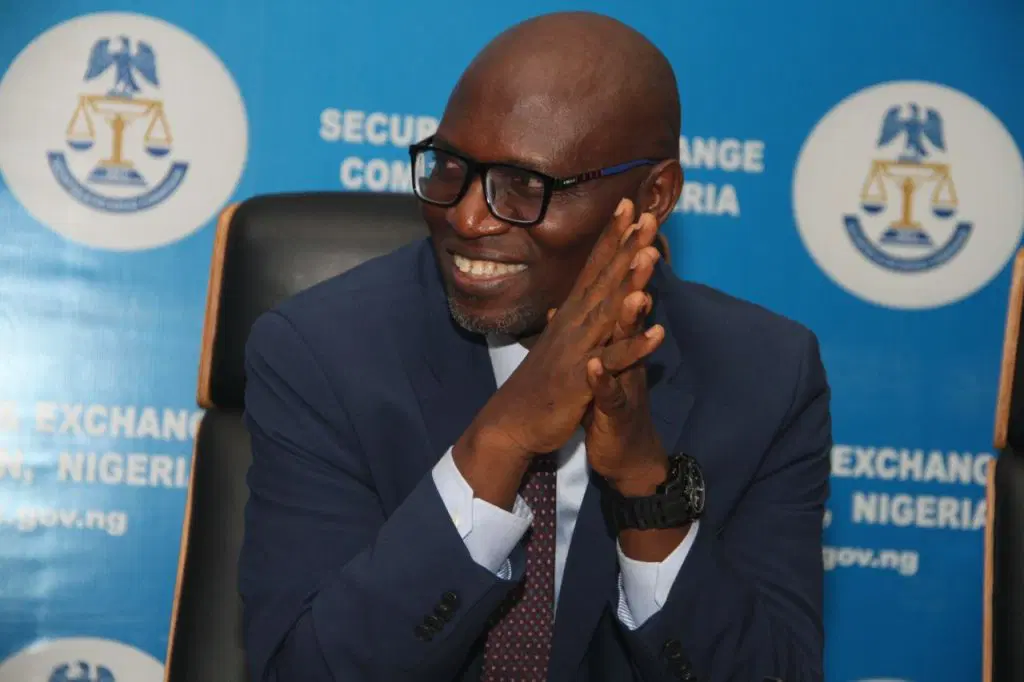
Nigerian universities have been urged to diversify their funding sources and tap into the capital market to reduce dependence on government allocations. The call was made by Dr. Emomotimi Agama, Director-General of the Securities and Exchange Commission (SEC), at the University of Ibadan Alumni Association Annual Public Service Lecture. The lecture, themed "First and Best But Whose Capital Built It? Rethinking How Nigeria Funds Its Own Future," highlighted the need for universities to explore alternative funding options.
Dr. Agama traced the University of Ibadan's foundation to a bold capital decision in 1948, when the chiefs and people of Ibadan donated 2,500 acres of land to the institution on a 999-year lease. Despite its achievements, including producing a Nobel laureate and heads of state, the university has never accessed the capital market to raise long-term funds. Agama noted that the university's financial reliance on government appropriations is unsustainable given Nigeria's current fiscal realities.
The University of Ibadan, with 41,700 students, faces accommodation challenges, with its halls of residence built to accommodate fewer than 10,000 students, forcing thousands to live off campus. Agama emphasized that the problem is not a scarcity of capital in Nigeria but a failure to translate available capital into productive investments. He cited the pension assets of N31.48 trillion and the total market capitalization of N215.09 trillion on the Nigerian Exchange (NGX) as evidence of available capital.
Agama contrasted the N4.65 trillion raised by banks through recapitalization over 24 months with the N2.53 billion allocated to a university by the Tertiary Education Trust Fund (TETFund), representing a ratio of about 1,000 to one. He argued that long-term capital is available, and the university needs to explore bankable, long-term investment opportunities to address its funding needs.
Dr. Agama proposed five financing instruments that the university could explore under the Investments and Securities Act 2025. These include a properly constituted endowment fund, issuing bonds and sukuk, a Real Estate Investment Trust (REIT) or concession arrangement for student housing, a university innovation fund, and a diaspora bond. He emphasized that these options could help the university tap into the capital market and reduce its dependence on government allocations.
The SEC Director-General stressed that student housing is the university's most urgent opportunity, with thousands of students currently paying rent to private landlords. He proposed a REIT or concession arrangement to convert this rent into a revenue stream for the institution. Agama also highlighted the potential for a university innovation fund to take equity stakes in spin-off companies emerging from its laboratories.
The lecture aimed to rethink how Nigeria funds its future, with Dr. Agama emphasizing the need for universities to take ownership of their capital formation and investment. The SEC Director-General's proposals are expected to spark a conversation on alternative funding options for Nigerian universities, enabling them to reduce their dependence on government allocations and tap into the capital market.
Key points
- Nigerian universities are urged to diversify funding sources and access capital market funding.
- The University of Ibadan has never accessed the capital market to raise long-term funds despite its achievements.
- The SEC proposes five financing instruments for universities to explore, including endowment funds, bonds, and REITs.