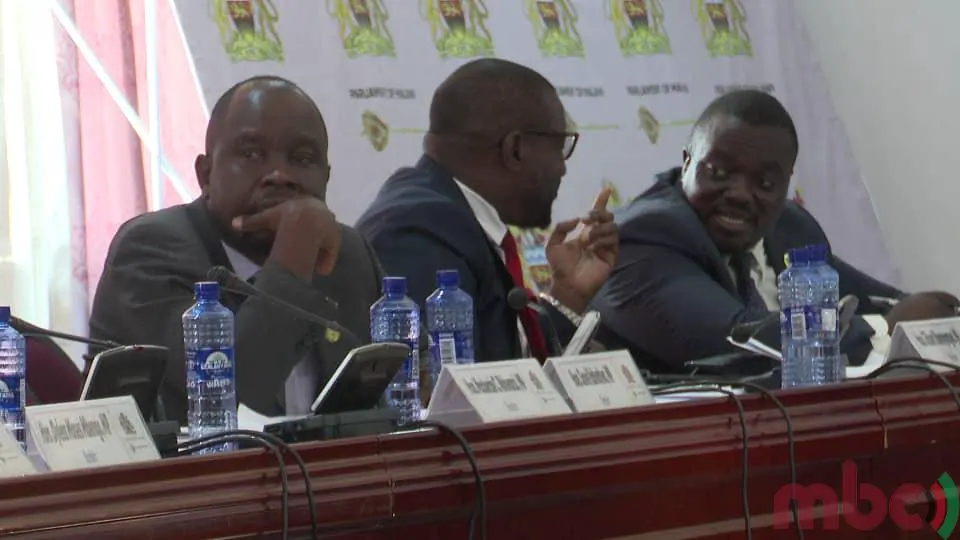
The Ad Hoc Committee of Parliament in Malawi investigating the tragic plane crash that claimed the life of Vice President Dr Saulos Chilima and eight others has heard testimony from Major General Richard Chagonapanja, the leader of the search and rescue operation at the time of the incident. The committee, which is tasked with uncovering the circumstances surrounding the crash, began hearing from witnesses as part of its probe. Major General Chagonapanja's testimony provided insight into the challenges faced by the search and rescue teams.
According to Major General Chagonapanja, the Malawi Defence Force and the Police in Mzuzu quickly instituted a joint search and rescue operation upon receiving information about the missing plane. However, the operation was hampered by bad weather, with foggy conditions making visibility difficult. The teams also faced challenges due to the difficult terrain in the area. Major General Chagonapanja's account highlighted the complexities of the search effort and the factors that contributed to the delay in locating the crash site.
The search and rescue teams were ill-equipped to handle an operation of such magnitude, Major General Chagonapanja told the committee. Furthermore, the absence of an Emergency Locator Transmitter, a critical radio device that sends distress signals to aid in locating a crashed aircraft, significantly worsened the situation. This revelation has raised questions about the preparedness of Malawi's aviation authorities and the equipment available for search and rescue operations.
Major General Chagonapanja also disclosed that inaccurate information about the reported sighting of the aircraft led the search teams to concentrate their efforts in the wrong directions, resulting in wasted time. Despite an order to suspend the search on the night of 10 June, the army continued with the operation. The persistence of the search teams ultimately led to the location of the crash site at 11:58, although three bodies, including that of a pilot, were still trapped in the wreckage.
The long time it took to locate the aircraft should not be interpreted as a failure, Major General Chagonapanja told the committee. Instead, he emphasized that it should serve as a lesson for future search and rescue operations. The committee, which has moved to the Northern Region, aims to fill critical gaps and seek answers to unresolved public questions surrounding the plane crash.
The Ad Hoc Committee's inquiry is expected to provide a comprehensive understanding of the circumstances leading to the tragic plane crash. By hearing from various witnesses, including Major General Chagonapanja, the committee hopes to shed light on the events that unfolded on the day of the crash. The findings of the committee will be crucial in determining the cause of the crash and identifying measures to prevent similar incidents in the future.
The investigation into the plane crash that killed Vice President Dr Saulos Chilima and eight others is ongoing, with the committee working to gather all relevant information. The testimony of Major General Chagonapanja and other witnesses will be crucial in piecing together the events surrounding the tragic incident.
Key points
- The search and rescue operation was hampered by bad weather, difficult terrain, and a lack of critical equipment.
- The absence of an Emergency Locator Transmitter significantly worsened the situation.
- The committee's findings will be crucial in determining the cause of the crash and identifying measures to prevent similar incidents in the future.