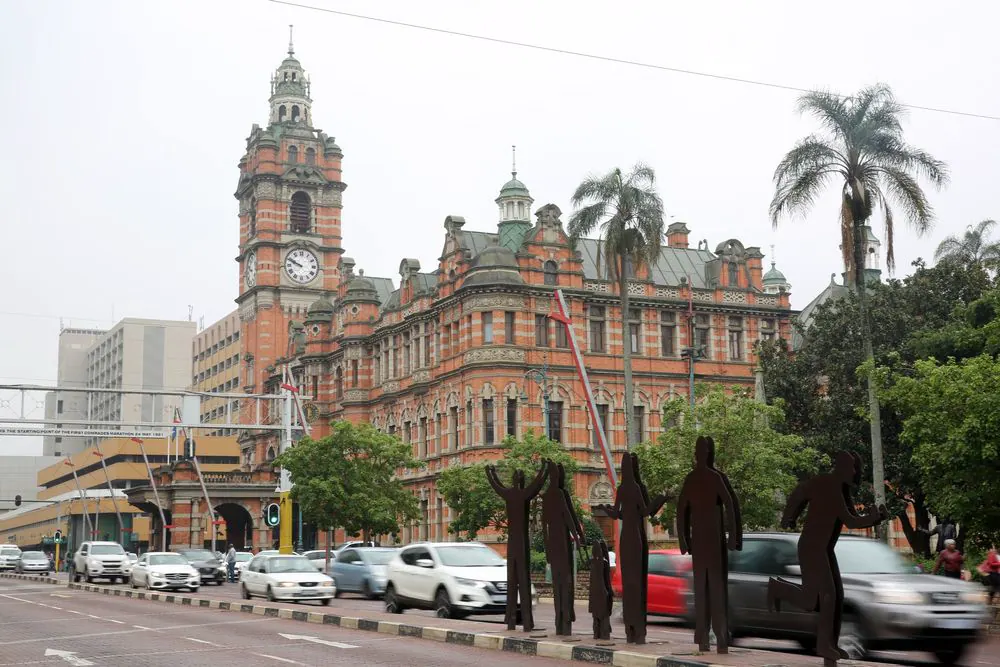
South Africa's Parliamentary Standing Committee on Public Accounts (Scopa) has expressed concerns over the financial and service-delivery failures of two municipalities, Msunduzi in KwaZulu-Natal and Masilonyana in the Free State. The committee conducted oversight visits to the municipalities and found that they face operational, governance, and financial crises that severely compromise their ability to deliver essential services. The municipalities experience revenue collection challenges, mounting debt burdens, and widespread non-compliance with supply chain management regulations.
The committee's report highlighted that both municipalities exhibit significant human resource vulnerabilities marked by prolonged leadership vacancies and widespread staff non-compliance with minimum qualification requirements. There is also a breakdown in internal consequence management where oversight bodies fail to enforce timely disciplinary action. The municipalities' operational delivery is heavily crippled by crumbling, poorly maintained infrastructure, leading to utility distribution losses in both water and electricity.
Msunduzi's audit outcomes for the 2024/25 financial year improved from the qualified audit opinions of previous years, but significant issues persist regarding performance reporting, compliance, financial management, and infrastructure delivery. The Auditor-General of South Africa (AGSA) reported that despite the municipality spending 88% of its 2024/25 financial year budget, it only achieved 57.9% of its basic service delivery targets. The municipality failed to meet key service delivery targets, including the percentage of mainline bursts repaired and sewer blockages resolved.
The municipality incurred fruitless and wasteful expenditure of R114.060 million in the 2024/25 financial year, up from R25m the previous financial year. The main contributors to fruitless and wasteful expenditure were interest charged on late payments, mostly Eskom and Umngeni Water. Other contributions were overpayments to senior officials and other employees, and payments to then-Premier Soccer League team Royal AM. The municipality wrote off R126.088 million as irrecoverable during the financial year under review.
Scopa expressed concerns about the municipality failing to conclude disciplinary cases timeously. Employees remain on paid suspensions for extended periods, resigning or retiring before disciplinary hearings can be concluded, which ultimately allows no action for wrongdoing. The municipality occasionally reinstates suspended employees to different units while their disciplinary investigations continue to prevent fruitless and wasteful expenditure caused by long paid suspensions.
Masilonyana municipality is characterised by severe administrative dysfunction, poor record-keeping, and financial instability. The committee noted that the problems it identified in May were the same that its predecessor found in August 2022. The municipality was placed under administration in February due to governance failures, financial distress, and inability to fulfil statutory service delivery obligations. The committee found serious weaknesses in governance, financial management, service delivery, record-keeping, project management, revenue collection, supply chain management, and consequence management.
Scopa wants to intensify its oversight of local municipalities to strengthen financial accountability and improve service delivery. The committee is concerned about a lack of consequences for wrongdoing and wants to scrutinise the role of provincial governments and municipal public accounts. The committee's oversight visits and reports aim to hold municipalities accountable and improve their performance in delivering essential services to citizens.
Key points
- Msunduzi and Masilonyana municipalities face operational, governance, and financial crises.
- The municipalities experience revenue collection challenges and non-compliance with supply chain management regulations.
- Scopa wants to intensify its oversight of local municipalities to strengthen financial accountability and improve service delivery.