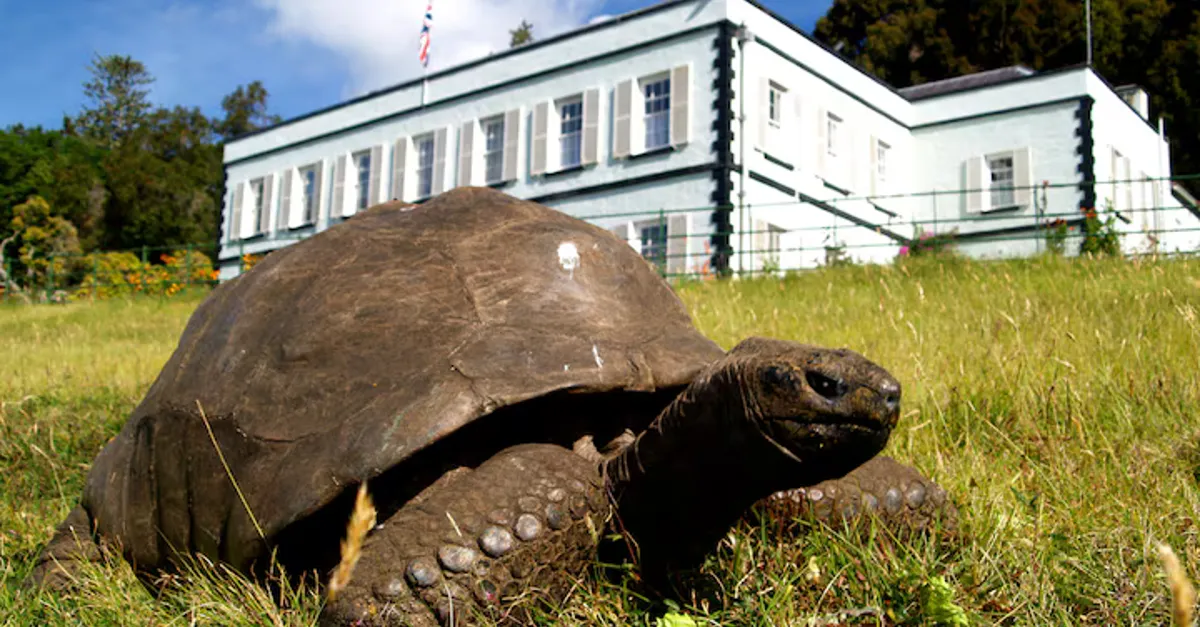
A recent study published in the journal Science Advances has shed light on the genetic factors contributing to the extraordinary longevity of Jonathan, a 194-year-old Seychelles giant tortoise. Researchers found that Jonathan's remarkable age may be attributed to a combination of genetic traits and its ability to maintain key cellular functions in a relatively youthful state. The study's lead author, Benjamin Weissfiel, noted that Jonathan has the most documented evidence supporting its age compared to other Aldabra tortoises.
The research team focused on sequencing Jonathan's genome and analyzing its epigenome, identifying genetic changes in pathways associated with longevity, including DNA repair, mitochondrial function, insulin regulation, and telomere function. The findings revealed 287 genes with unique variants in Jonathan, linked to tumor suppression and DNA repair, as well as additional copies of a gene targeting senescent and cancerous cells. These genetic characteristics may have played a crucial role in Jonathan's extended lifespan.
To gain a deeper understanding of Jonathan's genetic makeup, researchers compared its data to that of four other Aldabra tortoises of varying ages. By taking samples from under the tortoise's tongue, scientists were able to gather valuable insights into Jonathan's genetic profile. This comparative analysis provided a unique opportunity to study the genetic factors contributing to Jonathan's exceptional longevity.
Jonathan was relocated to St. Helena Island in 1882, at maturity, and currently resides in a controlled environment under the care of veterinarians. Despite suffering from near-total blindness due to cataracts, Jonathan remains healthy, with a strong appetite and responsiveness to its surroundings. According to veterinarian Joe Hollins, Jonathan's overall health is remarkable, considering its advanced age.
While the study suggests that genetic factors may have contributed to Jonathan's longevity, researchers acknowledge that environmental factors and diet may have also played a role. The study's findings are consistent with research on human centenarians, indicating that similar mechanisms may be at play across different species. Further research is needed to fully understand the complex interplay of factors contributing to exceptional longevity.
The study's results have significant implications for our understanding of the aging process and the factors that contribute to extended lifespan. By identifying genetic traits and mechanisms associated with longevity, researchers may be able to develop new strategies for promoting healthy aging and preventing age-related diseases. The study's findings also highlight the importance of continued research into the biology of aging.
As the world's oldest living land animal, Jonathan continues to fascinate scientists and the general public alike. Its remarkable longevity serves as a reminder of the complex and multifaceted nature of aging, and the need for continued research into the factors that contribute to extended lifespan. Key points from the study include the identification of genetic traits associated with longevity and the potential for environmental factors to influence lifespan.
Key points
- The study identified 287 genes with unique variants in Jonathan, linked to tumor suppression and DNA repair.
- Jonathan's longevity may be attributed to a combination of genetic traits and its ability to maintain key cellular functions in a relatively youthful state.
- The study's findings are consistent with research on human centenarians, indicating that similar mechanisms may be at play across different species.