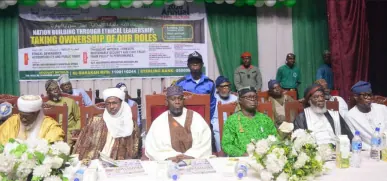
The 2026 Annual State Lecture of The Muslim Congress, TMC, Lagos State, brought together Muslim scholars and public affairs experts to discuss the importance of ethical leadership and responsible citizenship in Nigeria. The event, held on October 4, had the theme "Nation Building Through Ethical Leadership: Taking Ownership of Our Roles." The speakers emphasized that Nigeria's leadership challenges require a collective effort from both government and citizens.
The speakers, including Alhaji Abdur-Razaq Adegbooyega Abdussalam, former Director of Public and Corporate Affairs at Voice of Nigeria, VON, stressed that public trust can only be built with a combination of ethical government, governance, and accountability. Abdussalam warned that when citizens lose confidence in government, they may resort to self-help, leading to insecurity, corruption, poverty, and social dislocation.
Sheikh AbdurRahman Olanrewaju Ahmad, National Missioner and Chief Imam of Ansar-Ud-Deen Society of Nigeria, urged Nigerians to demand accountability from elected leaders. He emphasized that citizens should not only complain about poor governance but also question public officials about their promises, policies, and management of public resources. Sheikh Ahmad highlighted the importance of using legal mechanisms, such as the Freedom of Information Act, to demand information from ministries, departments, and agencies.
Professor Lakin Akintola, Director of the Muslim Rights Concern, MURIC, called for transformative leadership anchored on integrity, transparency, accountability, and responsiveness. He challenged political office seekers to remain committed to the promises they made during campaigns. Akintola urged political leaders to draw lessons from the leadership of prominent Islamic figures, such as Abu Bakr Siddiq, Umar ibn al-Khattab, Uthman ibn Affan, and Ali ibn Abi Talib.
Sheikh Sulaimon Oluwatoyin Abu-Nolla, Spiritual Father of the Day and Chief Imam of Lagos, urged Nigerians to participate actively in the electoral process and carefully evaluate candidates seeking public office. He emphasized the importance of obtaining Permanent Voter Cards and using them to participate in elections. Abu-Nolla also stressed that voter participation must be accompanied by careful consideration of the character and capacity of candidates.
The Lagos State Wali and Coordinator of The Muslim Congress, Tajudeen Yusuf Olusesi, said the choice of leadership as the focus of the annual lecture was deliberate, particularly as Nigeria approaches another election cycle. He emphasized that TMC aims to contribute to the national conversation and promote societal reformation. Olusesi highlighted the importance of examining leadership from both sides: the responsibilities of those occupying public positions and the duties of citizens.
The Amir of The Muslim Congress, Alhaji Abdulwasiu Bangbala, urged Muslims to see nation building as a collective responsibility. He stressed that the lessons of the lecture should not be directed only at political leaders but also at citizens, who must ensure that leaders fulfill their obligations. The speakers' call for accountability and responsible citizenship resonated with the audience, emphasizing the need for collective action to rebuild public trust and advance Nigeria's development.
Key points
- Muslim scholars and public affairs experts emphasize the importance of ethical leadership and responsible citizenship in Nigeria.
- Speakers urge Nigerians to demand accountability from elected leaders and participate actively in the electoral process.
- The 2026 Annual State Lecture of The Muslim Congress highlights the need for collective action to rebuild public trust and advance Nigeria's development.