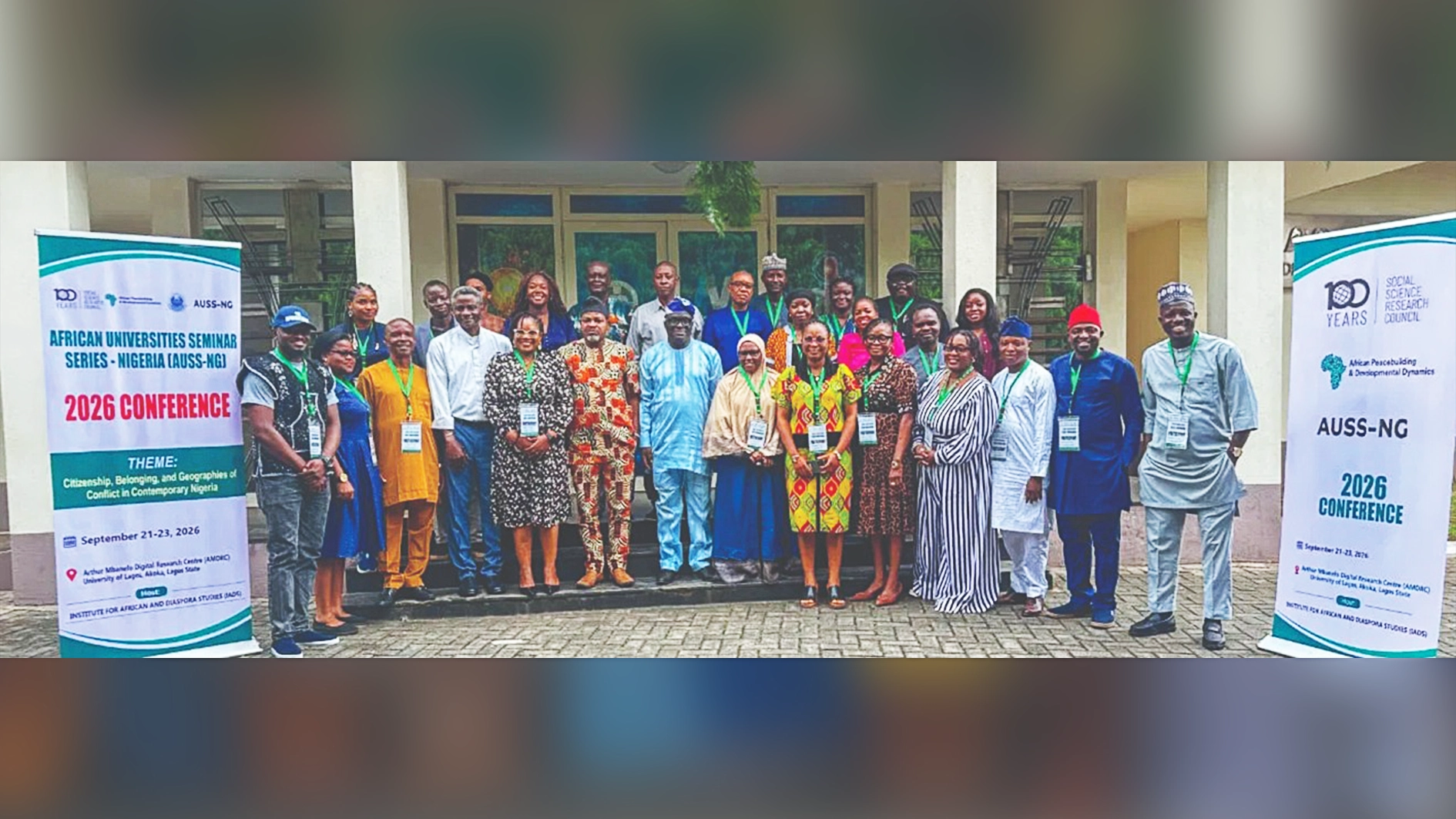
Scholars from within and outside Nigeria have called on the country's leaders to prioritize human security over elite protection and reconsider the constitutional definition of citizenship. This was a key theme at the African Universities Seminar Series – Nigeria (AUSS-NG) 2026 Conference, hosted by the Institute for African and Diaspora Studies (IADS) at the University of Lagos (UNILAG). The conference brought together experts to discuss Nigeria's most pressing issues: citizenship, belonging, and the geographies of violence.
The conference was designed to move beyond theoretical discussions and focus on providing mechanisms for advancing peace and security. Dr. Cyril Obi, Director of the Social Science Research Council (SSRC) and African Peacebuilding and Development Dynamics (APDD) program, emphasized the importance of self-organized scholarly engagements in Africa. He expressed hope that the seminar would generate innovative ideas to shape the continent's future.
In his keynote address, Prof. Afe Adogame of Princeton Theological Seminary argued that Nigeria has mistaken state security for human security, with severe consequences. He noted that security agencies and policymakers often focus on physical security, neglecting the real insecurities faced by Nigerians, such as economic hardship, health crises, and environmental threats. Adogame criticized the police for inspiring fear rather than safety, saying, "The police are there to extort money from you, not to protect you."
Adogame proposed a human security perspective that prioritizes trust, legitimacy, intimacy, and accountability as social capital. He linked Nigeria's kidnapping, banditry, and insurgency epidemics to failures in human security, which are often rooted in poverty, youth unemployment, and illiteracy. To sustain peace, Adogame suggested a bottom-up approach anchored on epistemic humility and indigenous knowledge.
Prof. Jimam Lar of the University of Jos (UNIJOS) emphasized the need to redefine citizenship in Nigeria, suggesting a residency-based model rather than one based on indigeneity. He argued that this would promote inclusion and reduce violence. Lar warned that Nigeria's diversity, while a blessing, is often manipulated for violent purposes, and that scholarship must meet power to effect change.
The conference co-chairs, Dr. Joyce Agofure of Ahmadu Bello University (ABU) and Dr. Sani Adam of Bayero University, Kano (BUK), highlighted the importance of addressing governance, insecurity, and grievances to promote peacebuilding and conflict resolution. They emphasized that the conference aimed to sensitize people to these issues, provide a platform for scholars to discuss topical issues, and offer recommendations for government and other agencies.
The scholars' proposals and critiques highlight the need for a comprehensive approach to addressing Nigeria's security challenges. By prioritizing human security and rethinking citizenship, the government can work towards creating a more inclusive and peaceful society. The conference has provided a platform for scholars to engage with these issues and offer recommendations for policy change.
Key points
- Scholars call for a shift in focus from state security to human security to address Nigeria's worsening security challenges.
- A residency-based citizenship model is proposed as a way to promote inclusion and reduce violence.
- The conference emphasized the need for scholarship to meet power to effect change in Nigeria's governance and security landscape.