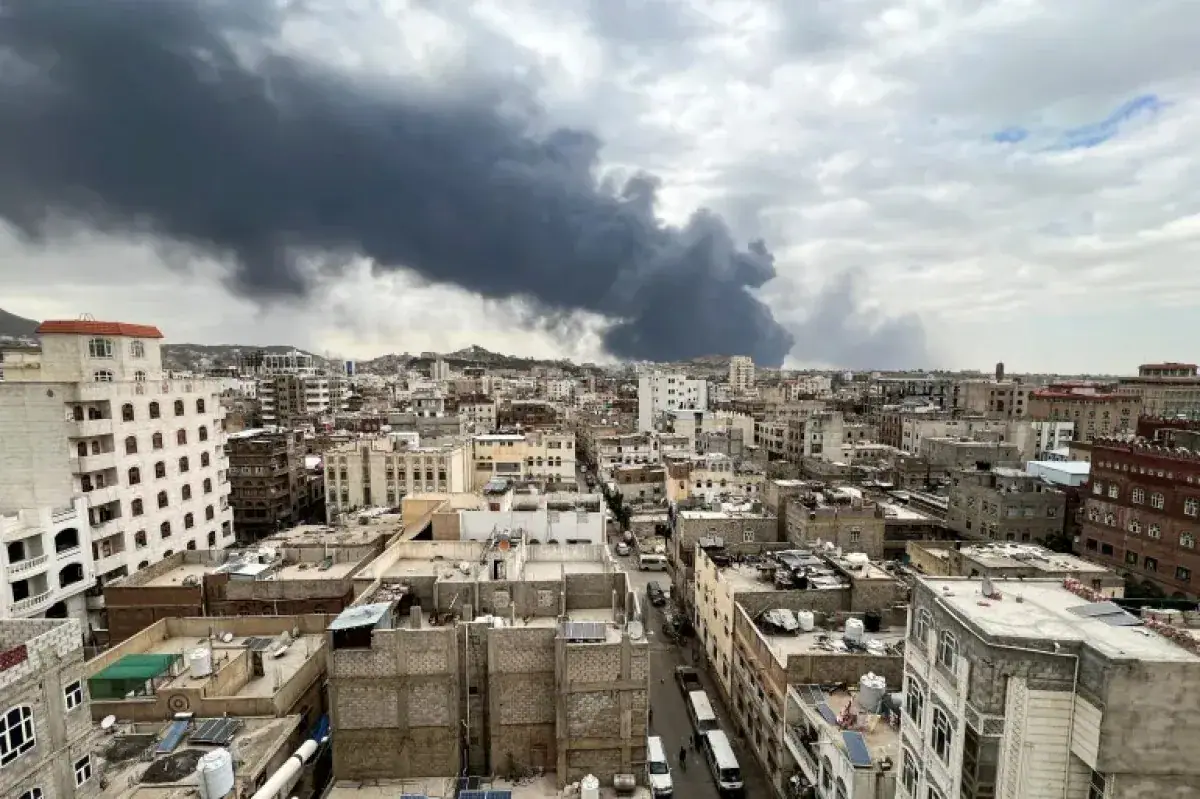
The Saudi-led coalition has carried out airstrikes on 60 military sites belonging to the Houthi group in Yemen. The strikes were part of a specially planned military operation aimed at targeting key Houthi military installations. According to Turki al-Maliki, spokesperson for the coalition, the airstrikes destroyed military sites, underground tunnels, and missile storage facilities used by the Houthis. The operation was conducted on Tuesday and targeted sites in the provinces of Sanaa, Hudaydah, Amran, and Saada.
The airstrikes occurred as Houthi fighters continued to advance on the city of Aden in southern Yemen, which serves as the temporary capital of the internationally recognized Yemeni government. In recent days, Yemeni government forces and their allies have retreated from the Dhubaab airport and areas near the strategic Bab al-Mandab waterway in the Taiz governorate. The forces reportedly withdrew to strengthen their defenses in Aden as Houthi military activities escalated. Clashes have also resumed in the Tur al-Baaxa area of the Lahj governorate, where government forces and Houthi fighters have been locked in a standoff.
Fierce fighting has been reported in the Taiz governorate, with Al Jazeera correspondent Hadeel al-Yamani describing the situation as "very heavy clashes" between government forces and Houthi fighters. Al-Yamani reported that local authorities accused the Houthis of firing artillery at civilians and their neighborhoods. She also stated that villages in the Jabal Sabr mountains are under a complete blockade, with residents calling for safe corridors to evacuate.
The ongoing clashes and airstrikes have exacerbated the humanitarian crisis in Yemen, with civilians bearing the brunt of the violence. Al-Yamani reported that repeated attacks by snipers have targeted civilians, resulting in numerous deaths and injuries, mostly among women and children. The escalating violence has raised concerns among the civilian population, particularly in areas where fighting is intense and neighborhoods are besieged by warring parties.
The Saudi-led coalition's airstrikes on Houthi military sites aim to weaken the group's capabilities, but the conflict's complexity and multiple parties involved make a swift resolution challenging. The Yemeni government's internationally recognized administration faces significant hurdles in regaining control over territory captured by the Houthis. The situation on the ground remains fluid, with frequent clashes and shifting alliances.
The humanitarian situation in Yemen continues to deteriorate, with civilians facing dire living conditions, shortages of basic necessities, and a collapsing healthcare system. The international community has expressed concern over the escalating violence and its impact on civilians. Efforts to negotiate a ceasefire and find a peaceful resolution to the conflict have been ongoing, but a lasting solution remains elusive.
The conflict in Yemen has entered its seventh year, with no end in sight. The Saudi-led coalition's military campaign and the Houthi group's advances have resulted in significant human suffering and infrastructure damage. The international community must continue to push for a peaceful resolution to the conflict and provide humanitarian assistance to those affected by the violence.
Key points
- The Saudi-led coalition conducted airstrikes on 60 Houthi military sites in Yemen, targeting key installations and disrupting the group's military capabilities.