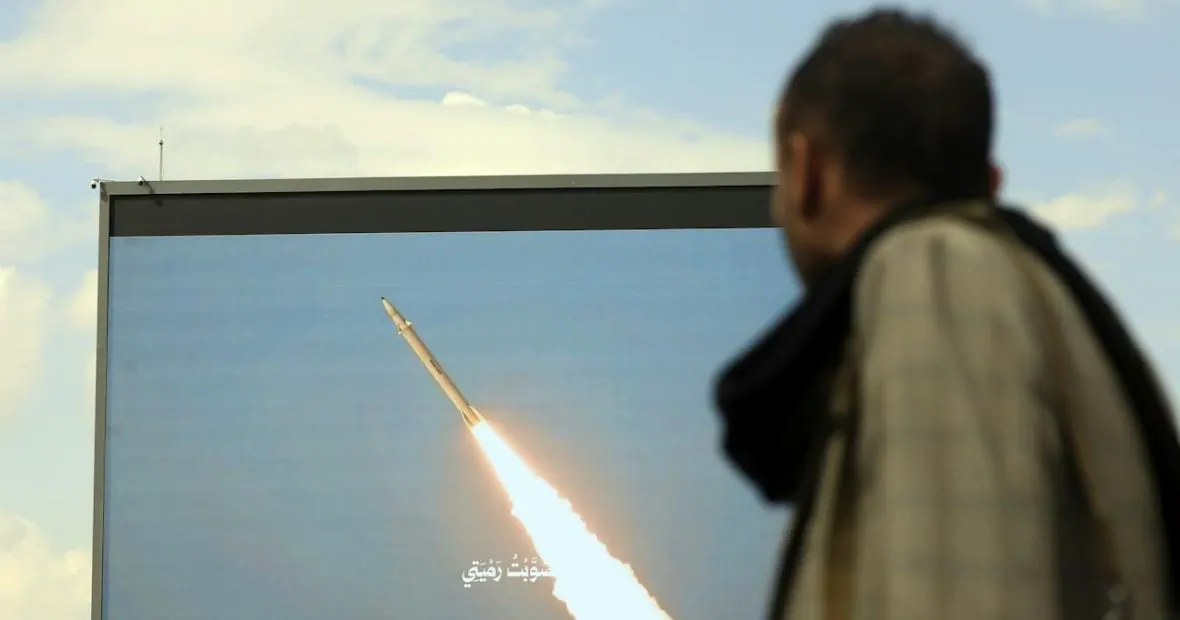
The ongoing conflict in the Middle East has taken a critical turn, with Saudi Arabia's new defence pact with Turkey and Pakistan facing its first major test. The Iran-backed Houthis in Yemen have launched attacks on sensitive sites in Saudi Arabia's capital, Riyadh, using missiles and drones. This escalation has raised concerns about the effectiveness of the Mecca pact, a defence agreement signed in August between Saudi Arabia, Turkey, and Pakistan. The pact aims to provide an alternative to US security guarantees, which have been called into question.
The conflict in Yemen has been ongoing for seven months, with the Houthis making significant territorial gains in recent weeks. The group has tightened its grip on the Red Sea, a critical waterway for global maritime trade, and has targeted Saudi ships and oil facilities. The attacks have had a significant impact on the global economy, with oil prices rising and the repair of a damaged pipeline expected to take weeks. The situation has also led to growing disillusionment among US-allied Gulf Arab states with the Trump administration's handling of the conflict.
The Mecca pact has been seen as a significant development in the region, with Turkey and Pakistan pledging to support Saudi Arabia's defence. However, the agreement has yet to be tested in practice, and the Houthi attacks on Riyadh have raised questions about its effectiveness. Turkey and Pakistan have voiced support for Saudi Arabia, but have not yet entered the conflict. Turkish Foreign Minister Mevlut Cavusoglu has indicated that his country could help meet Saudi Arabia's military needs, but details of how this would work in practice remain unclear.
The conflict has also had significant implications for Iran, which has been accused of backing the Houthis. The Iranian government has welcomed the Mecca pact and has reportedly been invited to join the agreement, although it has denied receiving a formal invitation. Iran has faced significant economic and human costs as a result of the conflict, but has continued to pursue a robust defence strategy. The country's Islamic Revolutionary Guard Corps has prepared for potential escalation, rather than de-escalation.
US President Donald Trump has faced criticism for his handling of the conflict, with some accusing him of being too soft on Iran. Trump has said he has a "big decision" coming up about Iran's regime, but has not provided details. The US has rebuffed a Saudi request for strikes against the Houthis, with Trump seemingly hesitant to involve the US in another conflict. US Vice President JD Vance has said Washington is on top of the issue, signalling mediation between the Houthis and Riyadh.
The conflict has had significant implications for the global economy, with oil prices rising and the repair of a damaged pipeline expected to take weeks. The situation has also raised concerns about the impact on global maritime trade, with the Red Sea being a critical waterway for the transportation of oil and other goods. The international community has called for a negotiated settlement to the conflict, but prospects for a peaceful resolution appear grim.
The coming weeks will be critical in determining the effectiveness of the Mecca pact and the future of the conflict in Yemen. Turkey and Pakistan will need to decide whether to take a more active role in supporting Saudi Arabia, while Iran will need to consider its next moves in the region. The US will also need to decide how to proceed, with Trump's pending decision on Iran's regime likely to have significant implications for the conflict.
Key points
- The Mecca pact, a defence agreement between Saudi Arabia, Turkey, and Pakistan, is facing its first major test amid escalating conflict in Yemen.
- The conflict has had significant implications for the global economy, with oil prices rising and the repair of a damaged pipeline expected to take weeks.
- The international community has called for a negotiated settlement to the conflict, but prospects for a peaceful resolution appear grim.