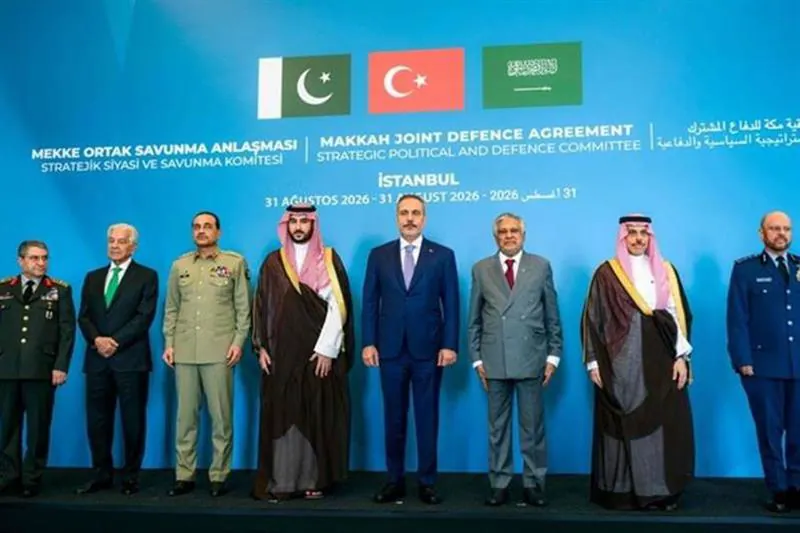
Saudi Arabia is set to convene an emergency meeting with its allies, Turkey and Pakistan, to bolster security cooperation in the face of escalating Houthi attacks. The meeting, which will bring together the chiefs of staff of the three countries, aims to activate a defense pact signed in August. This pact stipulates that an attack on one signatory is considered an attack on all three parties. The talks will focus on means of supporting Riyadh against the Houthi threat.
The Houthi movement, backed by Iran, has intensified its attacks on Saudi territory and infrastructure. On September 24, the group claimed to have launched dozens of missiles and drones against Saudi targets, with the Saudi authorities intercepting six ballistic missiles. The attacks have prompted widespread alerts in several areas, including Mecca, Jeddah, and Yanbu, a major oil port on the Red Sea. The Houthis have also made gains along the western coast of Yemen, capturing strategic locations.
The defense pact, signed on August 7, aims to provide a collective defense framework for the three signatories. The agreement includes the creation of a secretariat and commissions to oversee its implementation. The pact was discussed during a meeting in New York between Saudi Foreign Minister Prince Faisal bin Farhan, Turkish Foreign Minister Hakan Fidan, and Pakistani Deputy Prime Minister and Foreign Minister Ishaq Dar. The three ministers condemned the attacks on Mecca and Saudi civilian and economic installations.
The emergency meeting will be attended by Turkish Chief of General Staff General Selçuk Bayraktaroğlu, who will meet with his Saudi and Pakistani counterparts. The talks are expected to focus on military cooperation and technical assistance to enhance Saudi defenses. Turkey and Pakistan have already expressed their willingness to support Riyadh, with Turkish Foreign Minister Hakan Fidan mentioning potential military needs.
The international community has offered support to Saudi Arabia in the face of the Houthi threat. France has agreed to deploy troops, radar systems, and anti-aircraft defense equipment to protect the strategic port of Yanbu. The United Kingdom has also pledged support, offering a Royal Air Force Voyager tanker aircraft to assist in Saudi defensive operations.
The Houthi attacks have disrupted Saudi oil exports, with the group announcing a maritime blockade on Saudi-linked vessels. The attacks have also raised concerns about the security of the Red Sea and the Bab el-Mandeb strait, a critical waterway for international shipping. The Saudi-led coalition has been working to intercept Houthi missiles and drones, with the support of international partners.
The United Nations has condemned the Houthi attacks on Saudi Arabia, with the Security Council calling for an end to the violence. The international community remains concerned about the escalating conflict and its impact on regional stability. The emergency meeting between Saudi Arabia, Turkey, and Pakistan is seen as a key step in bolstering defenses against the Houthi threat.
Key points
- Saudi Arabia, Turkey, and Pakistan to enhance security cooperation amid Houthi attacks
- International community offers support to Saudi Arabia in face of Houthi threat
- Houthi attacks disrupt Saudi oil exports and raise concerns about Red Sea security