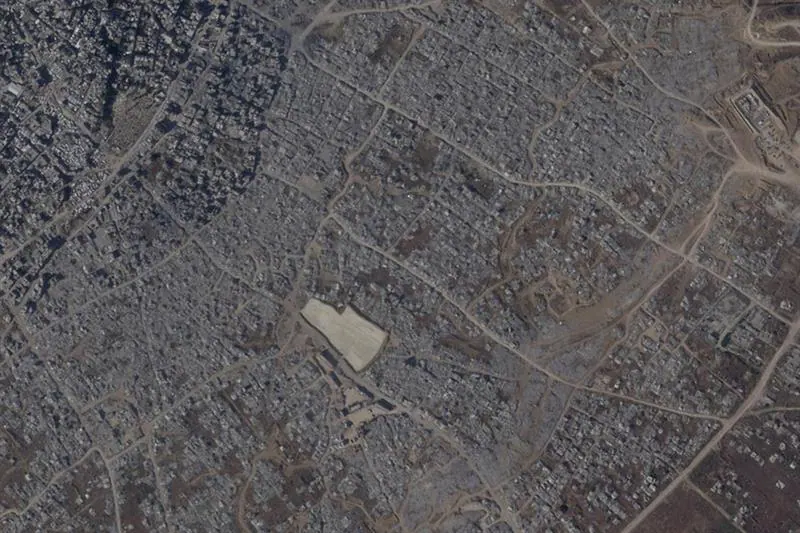
Satellite images taken by Planet Labs PBC reveal the devastating impact of Israel's war on the Gaza Strip, which began on October 7, 2023. The images show that much of Gaza's urban landscape has been erased, with entire neighborhoods reduced to rubble. From Beit Hanoun in the north to Rafah in the south, the destruction is widespread, with over 60% of the territory still under Israeli control. The images depict a landscape that has been systematically razed, with bulldozers and explosives used to demolish buildings and infrastructure.
The war has had a catastrophic impact on Gaza's population of 2 million Palestinians, with over one in ten people killed or wounded by Israeli fire. Many families have been forced to flee their homes multiple times to escape fighting and Israeli evacuation orders. The coastal territory is now one of the world's most populated tent cities, with ramshackle shelters blanketing beaches and former agricultural lands. The ceasefire deal reached a year ago has not brought an end to the suffering, with Israel continuing to launch strikes that regularly kill women, children, and other family members.
The destruction in Gaza is not limited to the territory's residential areas. Satellite images show that Israel has built at least 50 military outposts throughout the Israeli-held part of Gaza, with many constructed on top of former neighborhoods. The outposts have been built using rubble from demolished buildings, with some areas cleared of debris to make way for new military bases. The U.N.-appointed expert has warned that the scale of destruction could constitute a crime against humanity or reach the level of genocide.
The Israeli military has continued to demolish buildings in Gaza, even in areas that were previously spared. In Rafah, most of the city was razed before the ceasefire, but images show that troops continue to demolish the few remaining buildings. Several abandoned U.N. buildings have been spared, as well as a municipal sports field that now appears to contain a military base. The destruction has also had a significant impact on Gaza's economy, with most of the population dependent on international relief.
The war has left thousands of bodies buried under buildings smashed by Israeli strikes. Since the ceasefire, Gaza authorities have slowly been going from site to site to try to find them. For families like that of Haneen al-Khodari, the search for loved ones continues. The impact of the war on Gaza's population has been devastating, with many struggling to come to terms with the trauma they have experienced.
The stories of individuals affected by the war are a stark reminder of the human cost of the conflict. Najwa Abu Eita lost her 7-year-old daughter and was injured in an Israeli strike on her home in September 2024. Her face remains heavily damaged and scarred, and she has trouble breathing. Shadi Barawi, a 35-year-old barber, lost his leg in a strike and is now struggling to support his family.
The future for Gaza's population looks uncertain, with little likely to change in the foreseeable future. The ceasefire agreement's plan for large-scale reconstruction has never gotten off the ground, and Israel's restrictions on construction materials entering Gaza mean that most people cannot rebuild their homes. The international community will be watching closely to see how the situation in Gaza develops in the coming months and years.
Key points
- Israel's war on Gaza has resulted in widespread destruction, with over 60% of the territory still under Israeli control.
- The conflict has had a devastating impact on Gaza's population, with over one in ten people killed or wounded by Israeli fire.
- The international community has expressed concern over the scale of destruction in Gaza, with some warning that it could constitute a crime against humanity or reach the level of genocide.