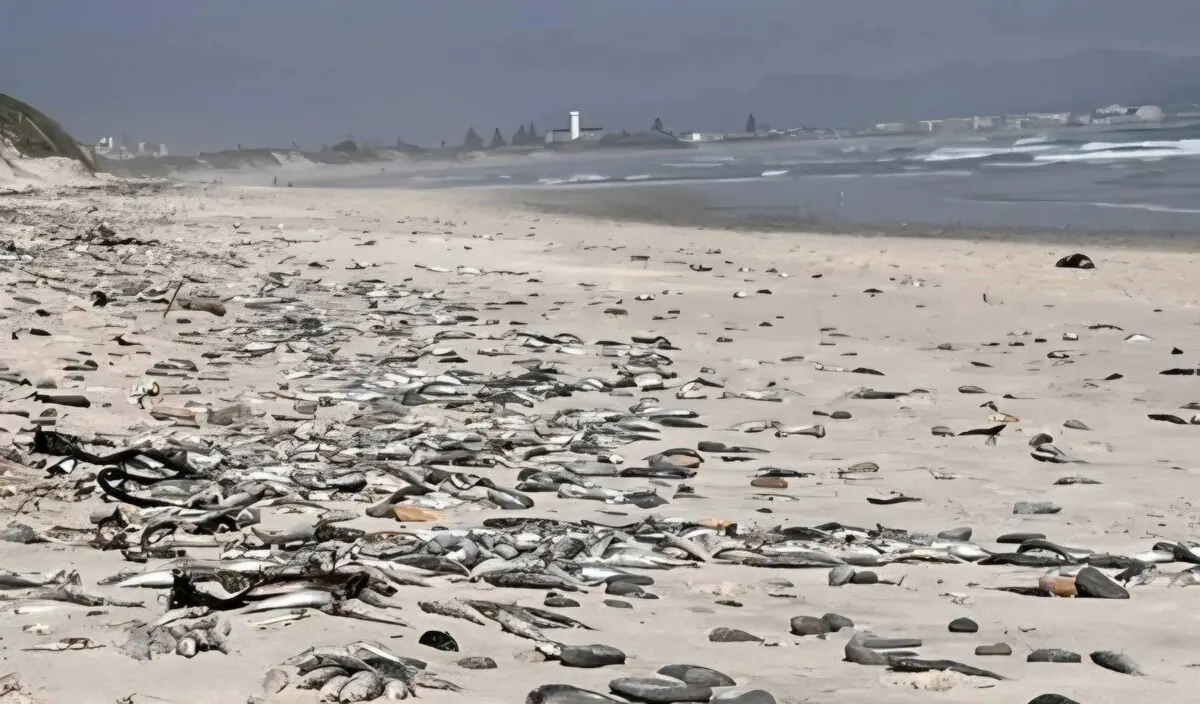
The widespread sardine deaths along South Africa's coast have decreased over the past week, but a temporary restriction on sardine catches remains in place until October 2. According to Zolile Nqayi, spokesperson for the Department of Forestry, Fisheries and the Environment, the department is still monitoring the situation. No new widespread deaths have been reported, with the only new case being an isolated sardine stranding near Mbotyi on the northern Wild Coast on September 11.
The temporary precautionary measure, implemented on September 11, restricts holders of fishing rights to only 25% of their remaining allocated quota for 2026. This restriction applies to the western and eastern sides of Cape Agulhas, while monitoring and scientific investigations continue. Nqayi stated that the available evidence did not indicate that the deaths had significantly reduced the sardine population, warranting a complete closure of fishing.
The fishing industry has been impacted by strong winds, which have prevented fishing west of Cape Agulhas. Limited sardine catches have been reported in Algoa Bay, with only one catch of 26 tons recorded since the beginning of September. Nqayi attributed this to the adverse weather conditions.
Pilchard-herpesvirus (PHV) remains the virus most strongly linked to the sardine deaths. Monitoring, sampling, and laboratory investigations are ongoing, with PHV confirmed in affected sardines from the Western Cape and Algoa Bay. A small number of samples from KwaZulu-Natal tested negative for PHV, but further samples are awaited to determine if the virus has spread to the region.
No consequences for seabirds or marine mammals dependent on sardines have been confirmed. The small pelagic scientific working group will convene on September 29 to assess the available information and reconsider the management of the fishery before the temporary measures expire on October 2.
A hydro-acoustic survey planned for October and November is expected to provide the first independent assessment of the sardine population's size and distribution after the deaths. This survey will provide new information on the remaining sardine population and their distribution.
The public has been warned not to collect or consume dead or dying sardines found on beaches or near the coast, as PHV is a fish virus that does not infect humans. However, commercially produced sardine products distributed through regulated channels are considered safe.
Key points
- The Department of Forestry, Fisheries and the Environment has implemented temporary restrictions on sardine catches to protect the sardine population.
- Pilchard-herpesvirus (PHV) remains the primary suspect in the sardine deaths.
- The small pelagic scientific working group will reconvene on September 29 to reassess the situation.