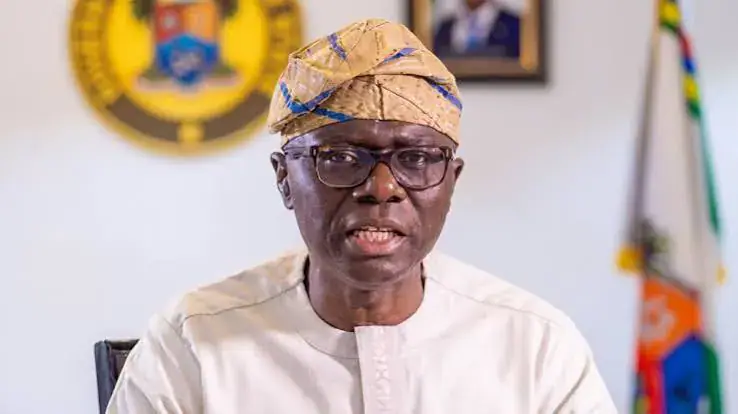
The Governor of Lagos State, Mr Babajide Sanwo-Olu, has reaffirmed the state's position as Nigeria's commercial gateway and a major driver of economic growth. He made this statement at the Lagos Executive Business Breakfast Meeting, organised by the Nigerian-British Chamber of Commerce (NBCC). The meeting, held in Lekki, Lagos, had the theme, "The Future of Lagos: Business, Investment and Global Competitiveness." Governor Sanwo-Olu emphasized the state's commitment to the Lagos State Development Plan 2052.
The Lagos 2052 Development Plan is a long-term blueprint comprising 447 initiatives across 21 strategic sectors. Its aim is to position the state as Africa's model megacity and a globally competitive economic and financial hub. The plan focuses on four major pillars: a thriving economy, a human-centred city, modern infrastructure, and effective governance. Governor Sanwo-Olu's administration is committed to promoting sustainable growth and attracting investment to achieve this goal.
Governor Sanwo-Olu called for sustained investment in infrastructure, technology, human capital, and business-friendly policies. He stated that improved port efficiency, technological innovation, and increased investment in Lagos had significantly boosted manufacturing, created job opportunities, and strengthened economic activity nationwide. Since May 29, 2019, his administration has created opportunities and positively impacted the lives of millions of Lagosians.
The Governor highlighted his administration's achievements, including the development of the Blue and Red rail lines, improvements in electricity regulation, expanded digital connectivity, and investment in healthcare and education. These are critical to Lagos' long-term competitiveness. He also identified the Lekki Deep Sea Port, industrial developments, and the state's growing technology and creative sectors as important drivers of economic growth and regional trade.
Governor Sanwo-Olu disclosed that Lagos was strengthening support for small and medium-sized enterprises through financing and grants, while promoting innovation and developing a skilled workforce to meet the needs of emerging industries. This is part of the state's efforts to build an economy capable of attracting global investment, creating jobs, and improving residents' quality of life.
The Governor revealed that Lagos State's budget had grown from about ₦700 billion in 2019 to ₦4.2 trillion in 2026. This reflects expanding investment needs and the importance of improving revenue generation to sustain development. He urged members of the Nigerian-British Chamber of Commerce to see Lagos as more than a large consumer market, but as a platform for production, innovation, regional trade, and international investment.
The President and Chairman of the Nigerian-British Chamber of Commerce (NBCC), Mr Abimbola Olashore, called for a stronger collaboration between government, businesses, and investors to improve the business environment, attract investment, and strengthen Lagos' global competitiveness. He reaffirmed the Chamber's commitment to promoting Nigeria-United Kingdom trade and investment relations.
Key points
- Lagos aims to grow its economy to nearly one trillion dollars by 2052.
- The state has a long-term blueprint, the Lagos 2052 Development Plan, to achieve this goal.
- Governor Sanwo-Olu called for sustained investment in infrastructure, technology, human capital, and business-friendly policies.