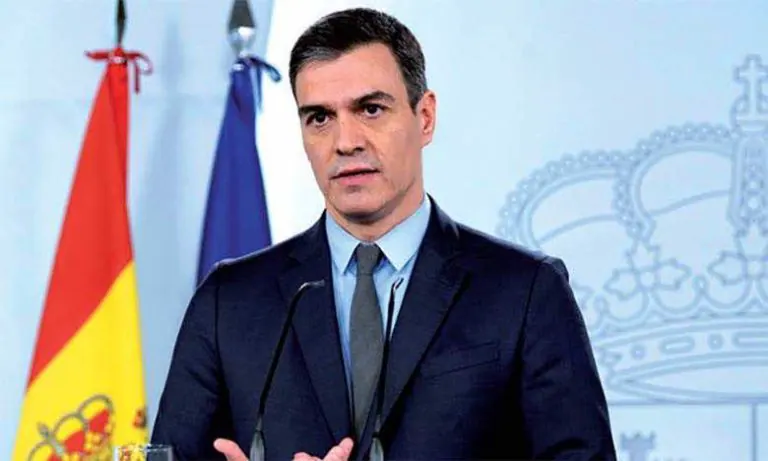
Spanish Prime Minister Pedro Sanchez has stated that his country continues to recognize Morocco's efforts to prevent irregular migration, denying any changes in Spain's position regarding Rabat's cooperation. Sanchez made these remarks at a press conference in New York on the sidelines of the ongoing UN General Assembly. He emphasized the importance of Morocco's cooperation in tackling irregular migration.
Sanchez's comments come after reports questioned whether Spain has changed its stance on Morocco's efforts amid pressure from the far-right and other parties. These parties have been disseminating unfounded allegations, accusing Rabat of a hybrid war and blackmail. Sanchez's recent interview with CNN, where he said Morocco's border control mechanism for Ceuta "failed" during the mass entry on July 30, sparked the controversy.
The mass crossing saw over 70,000 people entering the enclave, sparking one of the largest irregular migration events at Morocco's border. Sanchez insisted that Morocco's cooperation "should be acknowledged" not only by the government but also by political parties. He criticized parties that are quick to criticize but do not acknowledge the efforts made by Morocco.
Sanchez also lashed out at politicians from the right and other parties that blame minors, stating that calling a 10-year-old boy or girl an "invader" sounds strange. He cited that his government's approach is based on border control but also humanitarian management. The Spanish government continues to claim territorial integrity over Ceuta and Melilla, rejecting "dialogue over shared responsibility."
Moroccan officials, however, continue to urge Spain to open dialogue on the fate of the two occupied enclaves. Outgoing Minister of Justice Abdellatif Ouahbi stated that discussion on the two enclaves remains on the table. The issue remains a point of contention between the two countries.
Spain has expressed its willingness to work with Morocco's upcoming government following Wednesday's legislative elections. The Authenticity and Modernity Party (PAM) won 97 seats, with King Mohammed VI expected to appoint a head of government from the winning party. Spain said it is willing to maintain good bilateral ties with Rabat.
Morocco's Foreign Affairs Minister Nasser Bourita said that ties with Spain are based on partnership, mutual respect, and dialogue. He stated that there are "many issues" on which both sides agree and can make progress, while differences should be addressed in a spirit of good-neighborliness and cooperation. The two countries appear committed to maintaining strong relations.
Key points
- Spain's Prime Minister Pedro Sanchez denies change in stance on Morocco's migration cooperation.
- Sanchez emphasizes Morocco's efforts in preventing irregular migration.
- Spain commits to working with Morocco's new government.