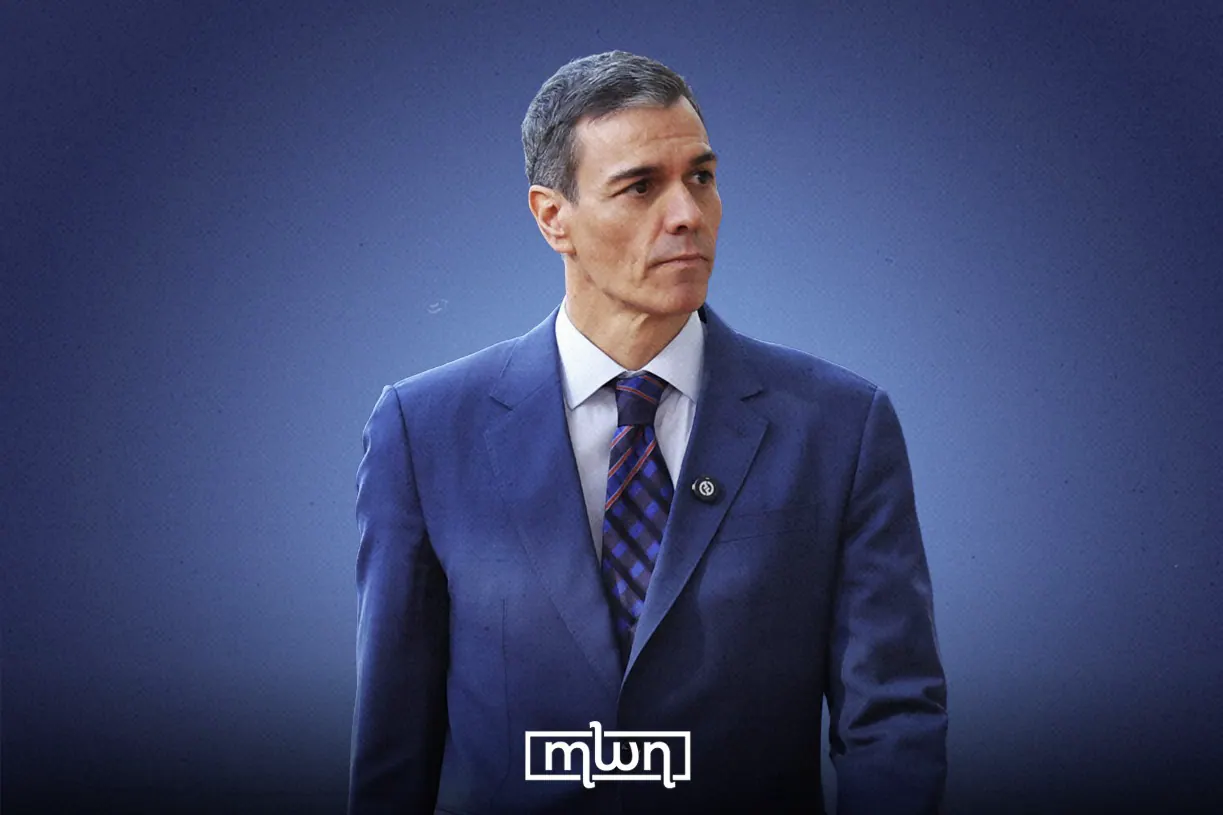
Spanish Prime Minister Pedro Sánchez recently criticized the Popular Party (PP) and Vox for their handling of the Ceuta crisis. At the Socialist Party of Catalonia's annual Rose Festival in Gavà, Barcelona, Sánchez stated that the opposition parties have adopted a "the worse, the better" strategy toward successive crises under his government. He accused PP leader Alberto Núñez Feijóo and Vox leader Santiago Abascal of pursuing a "disloyal" and "destructive" opposition. Sánchez's comments come amid a renewed political dispute over the situation in Ceuta following a sharp increase in arrivals in recent months.
The Ceuta dispute has become a point of contention between the government and the opposition. The PP has accused the government of failing to provide an adequate response to the pressure on the Spanish enclave and has called for additional measures on migration, security, and support for Ceuta and Melilla. Vox has taken a harder line on the issue, planning to force a parliamentary vote on Spain's sovereignty over Ceuta and Melilla. Sánchez, however, reaffirmed his government's commitment to Ceuta while accusing the opposition of seeking political advantage from the crisis.
Sánchez also pointed to a broader pattern of opposition behavior during his time in office. He cited the COVID-19 pandemic, the energy crisis that followed Russia's invasion of Ukraine, and the La Palma volcanic eruption as examples of moments when the opposition adopted a similar approach. Sánchez argued that warnings from the right about deeper divisions in Catalonia had not materialized, stating that "each new crisis is a new act of disloyalty."
The prime minister also targeted Feijóo over a separate controversy involving a luxury penthouse in Madrid's Chamberí district. The penthouse was acquired by the public company Planifica Madrid, and Sánchez linked the dispute to the PP's wider housing policy. He questioned Feijóo's response to the controversy surrounding Madrid regional president Isabel Díaz Ayuso, who referred to the penthouse as an official office, while Feijóo described it as an official residence.
Sánchez also criticized the PP and Vox over their legal challenge to the application of Spain's Democratic Memory Law, commonly known as the "grandchildren law." The law allows certain descendants of Spanish exiles to seek nationality. The Supreme Court recently suspended the inclusion of people who obtained nationality under the law in the electoral census while it examines the case. Sánchez opposed the court's decision, arguing that Spain should not create "first and second class citizens" based on political circumstances.
The prime minister defended his government's record on employment and economic growth, outlining its plans beyond the current political cycle. Sánchez stated that his government's project looks to 2030 and beyond, referencing the period that would follow the next general election. He emphasized his commitment to addressing the challenges facing Spain, despite the opposition's criticism.
Sánchez's comments reflect the ongoing tensions between the government and the opposition in Spain. The situation in Ceuta remains a pressing issue, with the government and opposition parties offering different solutions. The controversy over the penthouse and the legal challenge to the Democratic Memory Law have further strained relations between the PP and the government. As Spain looks to the future, it remains to be seen how these tensions will be resolved.
Key points
- Sánchez accused PP and Vox of pursuing a "disloyal" and "destructive" opposition.
- The Ceuta dispute has become a point of contention between the government and the opposition.
- Sánchez defended his government's record on employment and economic growth.