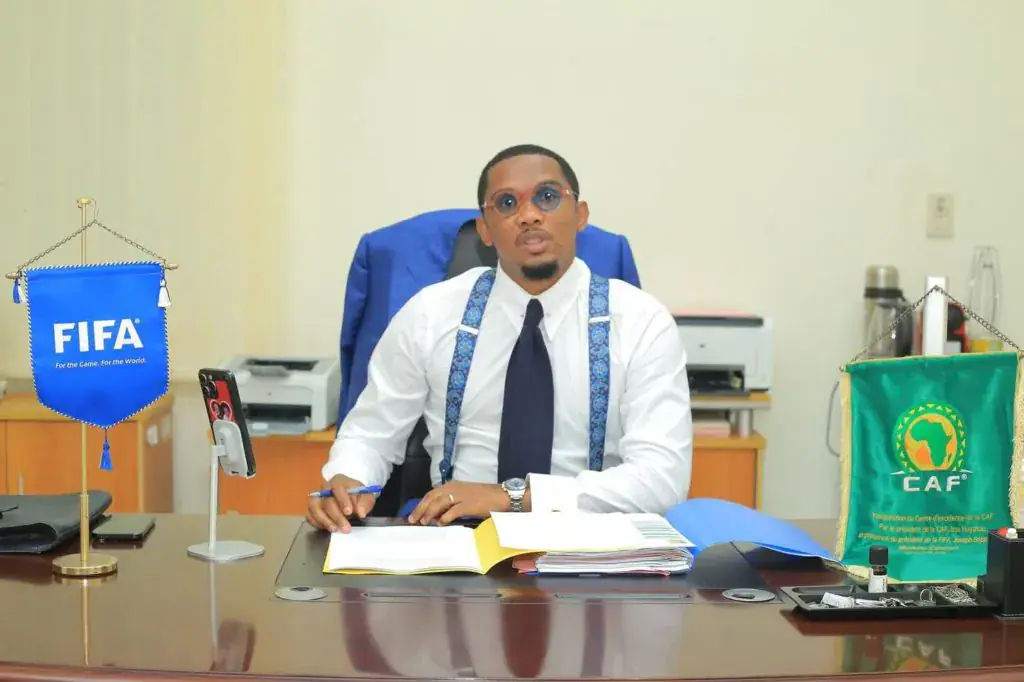
Samuel Eto'o, president of the Cameroonian Football Federation, has responded to criticism from French journalist Daniel Riolo. Eto'o took to Facebook to address Riolo's comments, stating that Africa must now defend its own interests. He claimed that Riolo had no right to judge those in positions of responsibility, citing his own experience as a former international footballer. Eto'o's comments come amid his support for Gianni Infantino's bid for the FIFA presidency.
Eto'o expressed his frustration with Riolo's criticism, saying that the journalist had overstepped his bounds. He told Riolo that he should try winning an election in his own country before commenting on the decisions of those in power. Eto'o emphasized that freedom of expression is a right that should be available to everyone, not just a select few. He argued that a new generation is emerging, one that will choose to defend the interests of its continent.
Eto'o also took issue with Riolo's comments about Patrice Motsepe, the president of the Confederation of African Football. He accused Riolo of speaking about Motsepe in a familiar tone, despite not having a close relationship with him. Eto'o called on Riolo to show respect for Motsepe's position and stature. He emphasized that the times have changed and that Africa can no longer rely on others to defend its interests.
Eto'o highlighted the changing times, saying that Africa must now take charge of its own destiny. He claimed that he and others like him have achieved great things, despite coming from similar backgrounds as Riolo. Eto'o stated that certain eras are now behind us and that Africa must move forward, defending its own interests.
The dispute between Eto'o and Riolo centers on the role of African football administrators. Eto'o is a key figure in African football, supporting Infantino's bid for the FIFA presidency. Riolo's criticism of Eto'o and others has sparked a strong response from the Cameroonian football chief. Eto'o's comments reflect a broader debate about the role of Africa in international football.
Eto'o's Facebook post was seen as a strong rebuke to Riolo and others who have criticized African football administrators. He emphasized that Africa will no longer be lectured to by outsiders. Eto'o's comments have sparked a lively debate about the role of Africa in international football and the limits of free speech.
The controversy highlights the challenges facing African football administrators as they seek to assert their influence on the global stage. Eto'o's response to Riolo reflects a broader determination to defend African interests and assert the continent's influence in international football.
Key points
- Africa must now defend its own interests, according to Samuel Eto'o.
- Eto'o responded to criticism from French journalist Daniel Riolo.
- The dispute centers on the role of African football administrators.