Former Second Lady Samira Bawumia has launched the Powering Safe Delivery Initiative to provide solar power to rural maternity facilities in Ghana. The initiative aims to address the challenges posed by unreliable electricity in these facilities, particularly during nighttime deliveries and emergency procedures. Many rural clinics in Ghana currently rely on phone torches or hurricane lamps when the lights go out, a scenario that Bawumia says should never determine whether a mother survives childbirth.
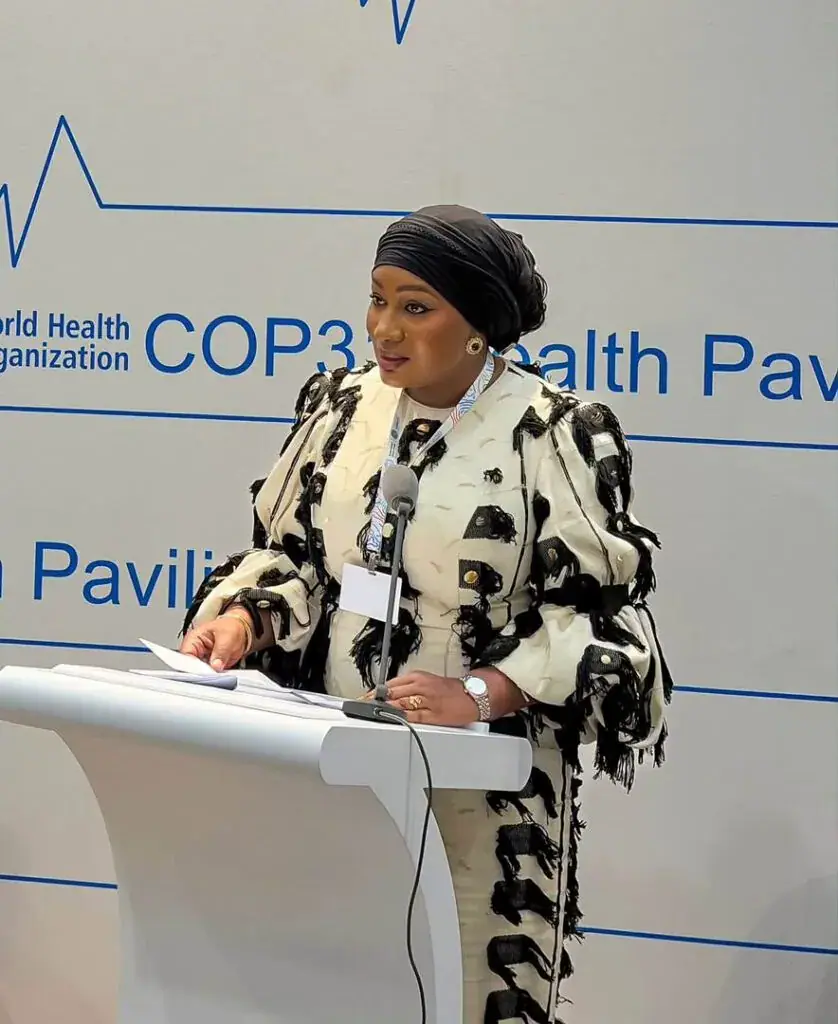
The Powering Safe Delivery Initiative was unveiled at a high-level side event hosted at the World Health Organisation (WHO) Pavilion during the COP31 climate conference in Antalya, Türkiye. The programme will equip selected Community-based Health Planning and Services (CHPS) compounds, maternity facilities, and primary healthcare centres with solar photovoltaic systems, battery storage, and essential maternal healthcare equipment. This initiative targets the gaps created by unreliable electricity, including nighttime deliveries, emergency procedures, medical monitoring, and sterilisation.
The initiative is being run through the Africa Women and Youth Climate Centre (AFRYWOCC), which Bawumia founded, in partnership with the Centre for Climate Change and Sustainability Studies (C3SS) at the University of Ghana and Minagie Energy. Bawumia emphasized that maternal healthcare must be central to Africa's climate adaptation and energy transition planning, stating that "no woman should have to risk her life giving life simply because the lights went out."
According to figures cited by the initiative, an estimated 178,000 mothers and one million newborns die every year in Africa, many from preventable causes. In Ghana, institutional maternal mortality rose from 109.22 per 100,000 live births in 2023 to 110 in 2024, while skilled delivery coverage fell from 60.6 per cent to 55 per cent over the same period. The new programme builds on the Safe Delivery Project run under the Samira Empowerment and Humanitarian Projects (SEHP).
The Safe Delivery Project has distributed more than 11,000 birth kits to expectant mothers in underserved Ghanaian communities and trained 324 community-level personnel, including 164 health workers and 160 traditional birth attendants. However, Bawumia noted that this work has not solved the underlying energy problem, stating that "we can equip a mother with the delivery kit, we can train the midwife who attends to her, but if the facility has no electricity when complications arise, we have left a critical part of the problem unsolved."
Ghana will serve as the starting point for an initial pilot under the Powering Safe Delivery Initiative, with the intention of developing a model that can later be replicated in other underserved African countries. The programme is also designed to create opportunities for young people through technical training, local maintenance services, and jobs in the renewable energy sector. Bawumia called for a structured partnership between AFRYWOCC, Minagie Energy, the University of Ghana, and development partners to identify vulnerable facilities, assess their energy needs, raise financing, and set up sustainable maintenance arrangements.
Bawumia urged governments, development finance institutions, philanthropic bodies, and private investors to back the effort, arguing that reliable electricity in maternity facilities should be treated as core healthcare infrastructure rather than an extra. Progress will be measured by the number of healthcare facilities powered, health workers supported, mothers receiving improved care, and newborns given a safer start to life. The sources do not specify how much the initiative will cost or which facilities will be the first to receive the solar systems.
Key points
- The initiative aims to reduce maternal mortality and improve healthcare outcomes in rural Ghana by providing reliable electricity to maternity facilities.