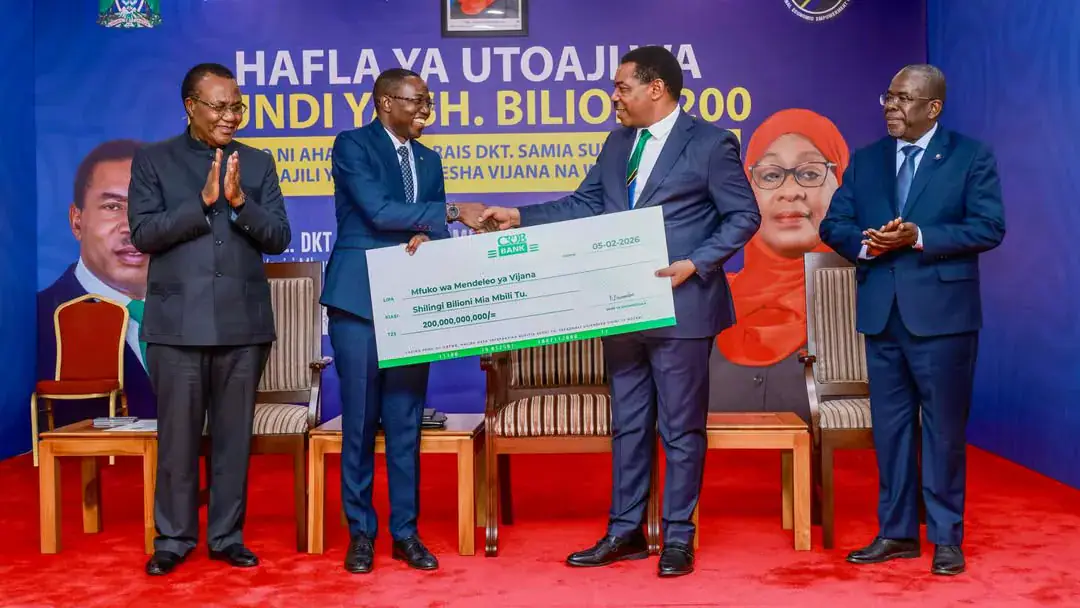
President Samia Suluhu Hassan's first year in her current term has seen significant achievements in economic empowerment, particularly for women and youth. The release of a 200bn/- empowerment fund within the first 100 days of the administration has provided greater opportunities for these groups to access business capital, affordable loans, and markets. This funding is part of efforts to expand economic opportunities for groups that continue to face challenges in accessing finance, business skills, and reliable markets.
The 200bn/- fund is part of implementing the Chama Cha Mapinduzi (CCM) Election Manifesto for 2025–2030 and the Fourth Implementation Plan of the National Development Vision 2050. It complements local government loans, entrepreneurship training, business formalisation, and sector-specific programmes aimed at widening participation in productive economic activities. According to the Ministry of Community Development, Gender, Women and Special Groups, 3,776 groups received 33.45bn/- through the local government loan scheme during the first 100 days.
Women's groups accounted for 2,074 beneficiaries, receiving 15.68bn/-, while 1,357 youth groups received 16.23bn/-. Another 345 groups of persons with disabilities obtained 1.54bn/-. The government has also expanded financing through institutions serving small-scale traders and entrepreneurs. During the period covered by the ministry's first-100-days report, it received 10.5bn/- for loans to small-scale traders at an annual interest rate of seven per cent.
Of this amount, 1.35bn/- had been disbursed to 588 traders through NMB Bank. Through the Women's Development Fund, another 337.97m/- was provided to 45 women entrepreneurs at an annual interest rate of four per cent. Business formalisation has also been a major part of the empowerment agenda, helping entrepreneurs become more visible to institutions providing finance, licences, training, and market opportunities.
The Ministry of Community Development, Gender, Women and Special Groups registered 119,595 small-scale traders through the Small-Scale Traders Management and Registration Information System. Women accounted for 73,341 of those registered, compared with 46,254 men. The group included 103,102 Machinga traders, 12,384 food vendors, and 4,109 motorcycle and three-wheeler operators.
Entrepreneurship training has accompanied financing, recognising that capital alone may not be enough to sustain a business without financial management, production, and marketing skills. Through the Ministry of Industry and Trade and the Small Industries Development Organisation (SIDO), 11,000 entrepreneurs received entrepreneurship and business skills training during the reporting period, while 12,325 obtained loans to expand their capital.
The interventions are intended to improve business management, strengthen compliance with formal requirements, and prepare enterprises to compete for wider economic opportunities. Support for product quality has also been part of the programme, with the Tanzania Bureau of Standards (TBS) training 1,059 entrepreneurs in product quality and management, while 192 entrepreneurs' products received quality marks.
Key points
- President Samia Suluhu Hassan's administration has prioritized economic opportunities for young people, women, persons with disabilities, and older people.
- The government has expanded financing through institutions serving small-scale traders and entrepreneurs.
- Business formalisation and entrepreneurship training have accompanied financing to improve business management and competitiveness.