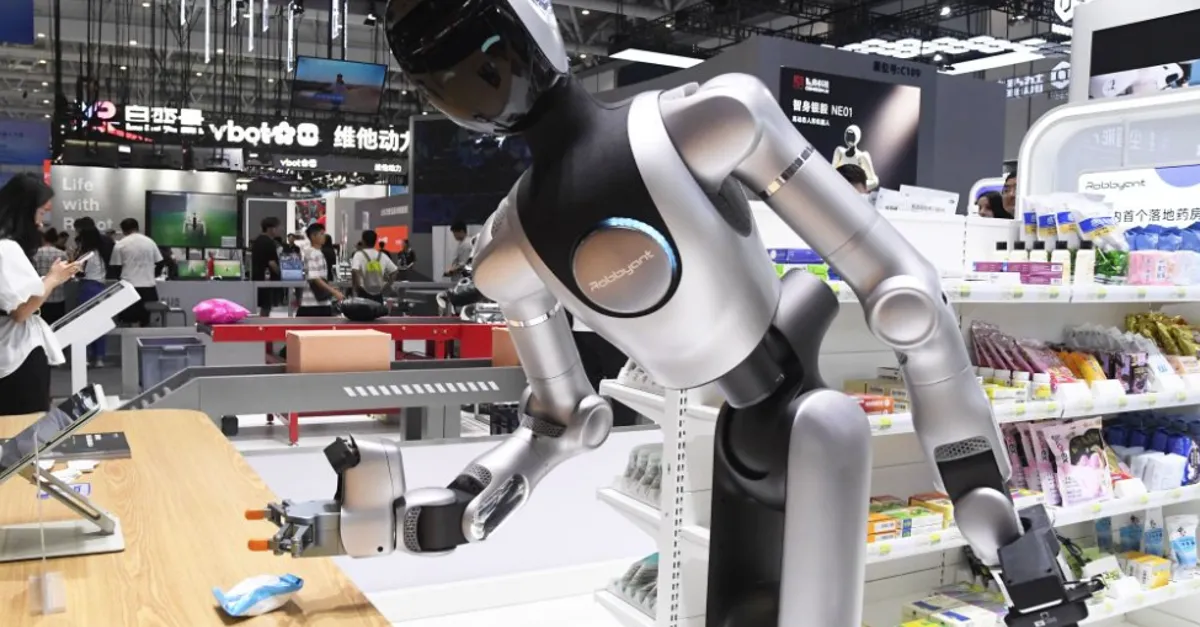
The International Federation of Robotics reported that approximately 7,000 humanoid robots were sold worldwide in 2024 for use in industrial and professional services. This number is relatively small compared to expectations, which predicted a surge in sales in the coming years, particularly in China, the largest market for industrial robots.
To be classified as humanoid, a robot must have a human-like appearance and operate independently in an environment designed for humans, according to the International Federation of Robotics. The organization does not require humanoid robots to have legs. The data, reviewed by Reuters, provides one of the first industry-wide benchmarks for a technology that has attracted billions of dollars in investment.
Susanne Bierer, General Secretary of the International Federation of Robotics, told Reuters that humanoid robots still represent a "small part" of the total number of robots worldwide. In comparison, around 542,000 traditional industrial robots were sold in 2024, and an estimated 199,000 service robots were sold for use in transportation, hospitality, and cleaning.
The International Federation of Robotics will publish 2025 data on industrial and service robots on September 24. Bierer noted that many humanoid robots sold in 2024 were not used for productive work but were instead purchased by research institutions or companies to generate data to improve artificial intelligence models.
Companies in the automotive industry, one of the first to adopt this technology, are running pilot projects using "a few dozen robots in their factories," according to Bierer. The International Federation of Robotics has collected statistics for three decades and began gathering data on humanoid robots alongside its larger numbers for industrial and service robots.
Bank of America Global Research estimates that 90,000 humanoid robots will be shipped this year and 1.2 million by 2030. The International Federation of Robotics' data is based on supplier and national industry association data and excludes consumer and military humanoid robots, while medical robots are classified separately.
The low sales figures for humanoid robots contrast with the attention they have received, including a recent demonstration in China where robots showed off their ability to run and box. Despite the slow start, the industry remains optimistic about the potential for humanoid robots in various sectors.
Key points
- Humanoid robot sales reached 7,000 units in 2024, falling short of expectations.
- The International Federation of Robotics expects to publish 2025 data on industrial and service robots on September 24.
- Bank of America Global Research estimates 1.2 million humanoid robots will be shipped by 2030.